

Jack Botanicals: Science-Backed Quality
Every batch undergoes 9+ independent lab tests for purity and potency. Choose from premium Red Maeng Da, Red Bali, or energizing Green Maeng Da.
🔬 Lab-Verified Quality at 30% OFF
Code: JACK30
Learning how to make kratom tea properly transforms your kratom routine from a chore into a ritual you’ll actually look forward to. Kratom tea has become increasingly popular among enthusiasts who want to enjoy the plant’s benefits while avoiding the gritty texture and bitter taste of traditional powder consumption methods. This ancient preparation method, used for centuries in Southeast Asia, not only improves palatability but can also enhance absorption and provide a more controlled, longer-lasting experience.
Whether you’re new to kratom or looking to refine your brewing technique, mastering the art of kratom tea preparation opens up a world of possibilities. From simple single-serving cups to elaborate ceremonial blends, the right brewing method can make all the difference in your kratom journey.
- Proper temperature control (160-185°F) is crucial for extracting alkaloids without destroying them through excessive heat
- Acidic additions like lemon juice or citric acid significantly improve alkaloid extraction and potency
- Straining techniques determine whether you get a smooth tea or retain some plant matter for enhanced effects
- Steeping time of 15-20 minutes provides optimal alkaloid extraction for most kratom strains
- Storage methods can preserve prepared kratom tea for up to one week when refrigerated properly
Understanding Kratom Tea Basics
What Makes Kratom Tea Different
Kratom tea differs fundamentally from other preparation methods because it relies on water extraction of the plant’s active alkaloids, primarily mitragynine and 7-hydroxymitragynine. This process creates a liquid that’s easier to consume and digest compared to raw powder, while potentially offering improved bioavailability.
The brewing process breaks down cell walls in the kratom leaves, releasing alkaloids into the water. This extraction method can actually enhance the effects for some users, as the alkaloids become more readily available for absorption in the digestive system.
Benefits of Tea Preparation
Enhanced Palatability 🍵
Tea preparation masks much of kratom’s naturally bitter taste, especially when combined with sweeteners or flavor enhancers. This makes the experience more enjoyable and sustainable for regular users.
Better Digestive Tolerance
Many users report fewer stomach issues with tea compared to consuming raw powder. The liquid form is gentler on the digestive system and reduces the risk of nausea that sometimes accompanies powder consumption.
Controlled Dosing
Tea allows for more precise dosing control. You can prepare larger batches and consume measured portions throughout the day, providing consistent effects without the guesswork.
Ritual and Mindfulness
The brewing process itself becomes a mindful ritual that many users find therapeutic. Taking time to prepare tea creates a moment of intention and reflection.
Essential Equipment and Ingredients
Basic Equipment Needed
Brewing Vessel
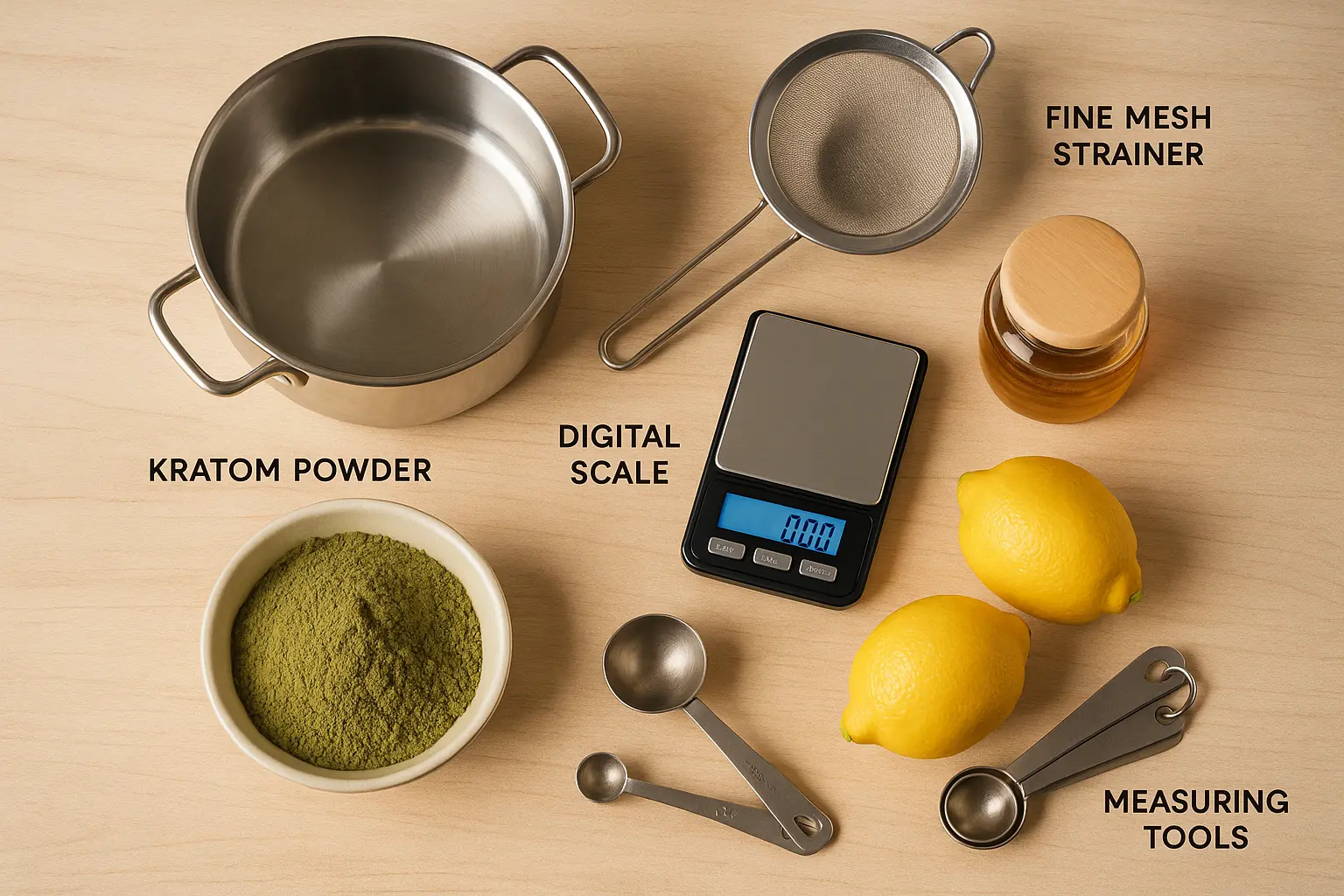
A medium-sized pot or saucepan works best for brewing kratom tea. Stainless steel or enamel-coated pots are ideal as they don’t react with acidic ingredients and maintain consistent heat distribution.
Straining Tools
- Fine mesh strainer or cheesecloth
- Coffee filters for ultra-smooth tea
- French press (optional but effective)
- Tea strainer or infuser
Measuring Tools
- Digital scale for precise kratom measurement
- Measuring cups for water
- Thermometer for temperature control
Storage Containers
- Glass jars or bottles for storing prepared tea
- Airtight containers for kratom powder storage
Key Ingredients
Kratom Powder or Crushed Leaf
Fresh, high-quality kratom is essential for good tea. Different kratom strains will produce varying effects, so choose based on your desired experience. Green strains often work well for daytime teas, while red strains are popular for evening relaxation.
Acidic Enhancers
- Fresh lemon juice (most popular)
- Lime juice
- Citric acid powder
- Apple cider vinegar
Flavor Enhancers
- Honey or agave for sweetening
- Ginger for digestive benefits
- Cinnamon for warmth and flavor
- Mint leaves for freshness
Step-by-Step Kratom Tea Recipes
🏆 Jack Botanicals: Transparency You Can Trust
| ✓ AKA GMP Approved | Industry Gold Standard |
| ✓ 9+ Lab Tests Per Batch | Guaranteed Purity |
| ✓ Premium Strains | Red & Green Varieties |
Featured: Red Maeng Da • Red Bali • Green Maeng Da
💎 Exclusive Lab-Tested Quality Discount
JACK30 = 30% OFF
Basic Kratom Tea Recipe
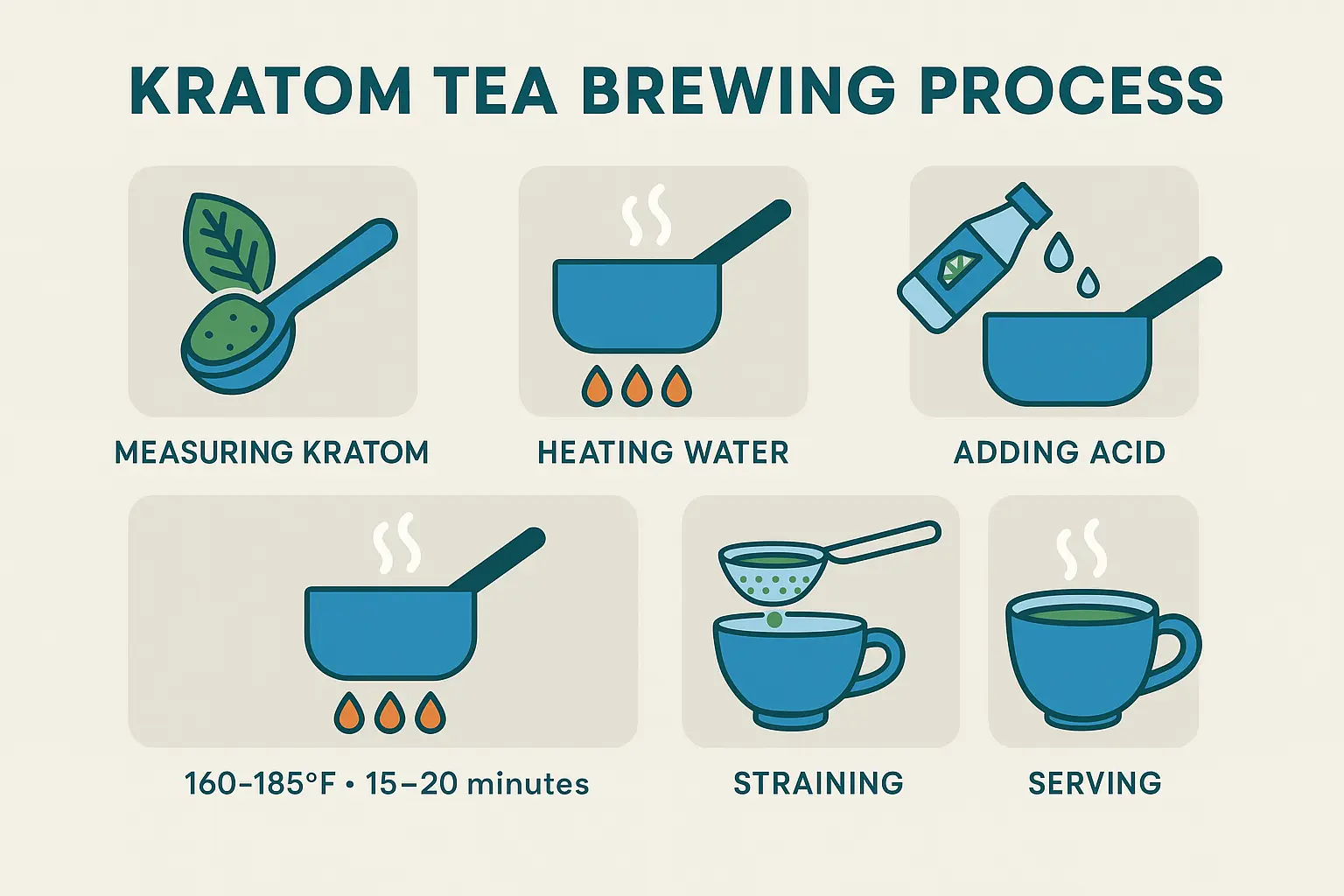
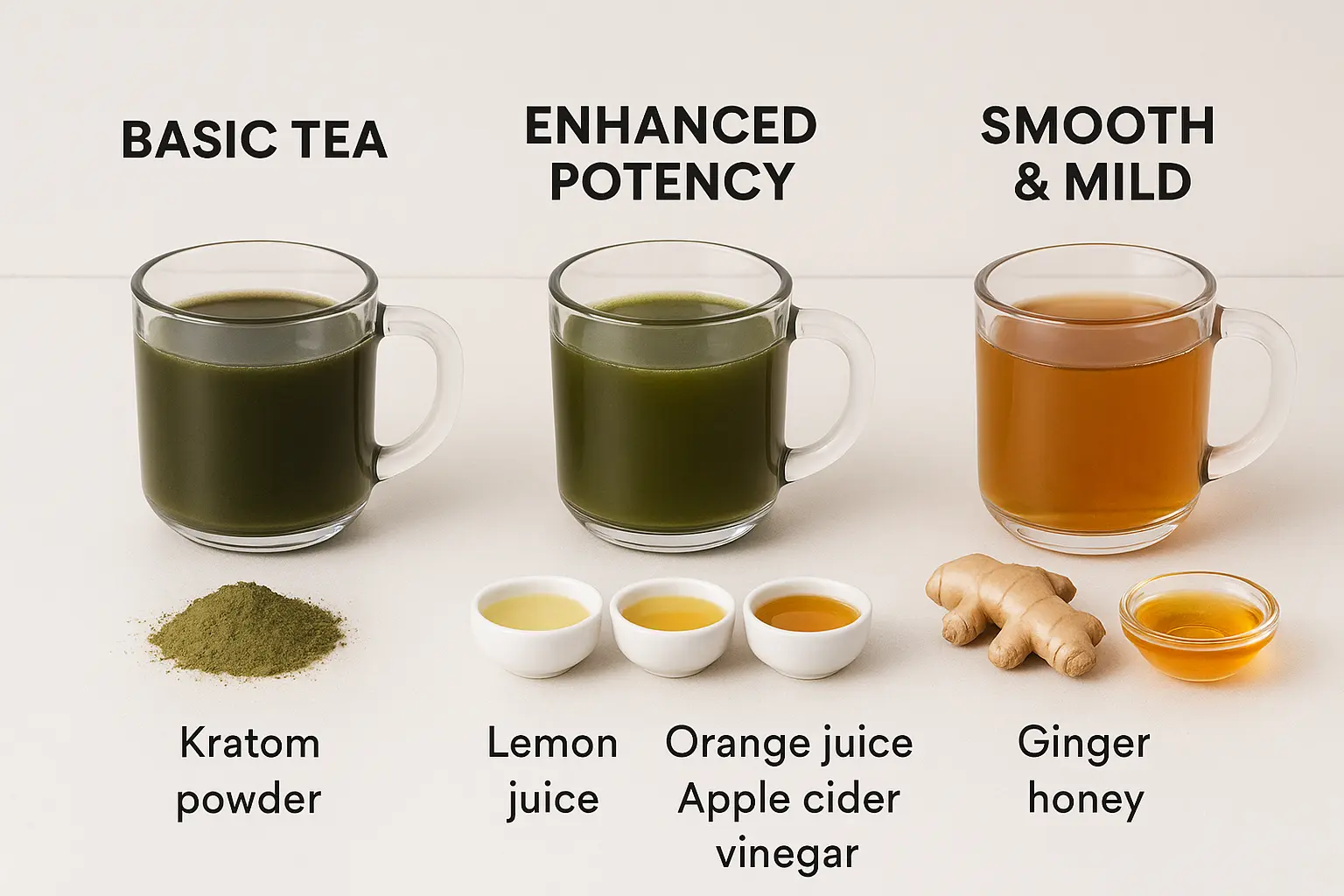
This foundational recipe serves as the starting point for all kratom tea variations. Master this method before experimenting with more complex preparations.
Ingredients:
- 2-4 grams kratom powder
- 2-3 cups water
- Juice of half a lemon
- Honey to taste
Instructions:
- Measure and Prepare
Weigh your kratom dose precisely. Start with 2 grams if you’re new to tea preparation, as the effects may feel different from other consumption methods. - Heat Water
Bring water to approximately 170°F. Avoid boiling, as excessive heat can degrade alkaloids. If you don’t have a thermometer, bring water to a boil and let it cool for 2-3 minutes. - Add Kratom and Acid
Add kratom powder and lemon juice to the hot water. The acid helps extract alkaloids more effectively. - Simmer Gently
Reduce heat to low and maintain a gentle simmer for 15-20 minutes. Stir occasionally to prevent settling. - Strain and Serve
Remove from heat and strain through a fine mesh strainer or cheesecloth. Add honey while the tea is still warm for better dissolution.
Enhanced Potency Recipe
This advanced recipe maximizes alkaloid extraction for users seeking stronger effects.
Ingredients:
- 3-5 grams kratom powder
- 3 cups water
- 1 tablespoon lemon juice
- 1/4 teaspoon citric acid powder
- 1 teaspoon apple cider vinegar
Method:
- Pre-Acidification
Mix kratom powder with lemon juice and citric acid in a bowl. Let sit for 10 minutes to begin alkaloid extraction. - Extended Brewing
Add the mixture to hot water (170°F) and simmer for 25-30 minutes. The longer brewing time and multiple acids enhance extraction. - Double Strain
First strain through cheesecloth, then through a coffee filter for maximum smoothness while retaining potency.
Smooth and Mild Recipe
Perfect for beginners or those with sensitive stomachs.
Ingredients:
- 1.5-2.5 grams kratom powder
- 2 cups water
- 1 teaspoon fresh ginger, grated
- 1 tablespoon honey
- 1/2 teaspoon lemon juice
Preparation:
- Gentle Heat
Use lower temperature water (160°F) and shorter brewing time (12-15 minutes) for a milder extraction. - Ginger Addition
Add fresh ginger during brewing for digestive support and pleasant flavor. - Careful Straining
Strain thoroughly to remove all plant matter for the smoothest possible tea.
Advanced Brewing Techniques
Cold Brew Kratom Tea
Cold brewing offers a different alkaloid profile and can be gentler on the stomach.
Process:
- Mix kratom powder with room temperature water and lemon juice
- Refrigerate for 8-12 hours, stirring occasionally
- Strain and consume cold or gently warm before serving
Benefits:
- Reduced bitterness
- Different alkaloid extraction profile
- Convenient for batch preparation
Kratom Tea Concentrates
Creating concentrates allows for easy dosing and storage.
Method:
- Use a 1:1 ratio of kratom to water (1 gram kratom per 1 cup water)
- Simmer for 45 minutes to 1 hour
- Strain and reduce liquid by half through gentle heating
- Store concentrated tea in refrigerator
- Dilute with hot water when ready to consume
Fermented Kratom Tea
Traditional fermentation can alter alkaloid profiles and create unique effects.
Process:
- Prepare basic kratom tea but don’t strain
- Allow to cool to room temperature
- Cover and let sit for 24-48 hours
- Strain and refrigerate
- Consume within one week
Optimizing Your Kratom Tea Experience
Dosage Guidelines
Beginner Doses (1-2 grams)
Start here if you’re new to kratom or tea preparation. Tea can feel stronger than powder for some users due to improved absorption.
Moderate Doses (2-4 grams)
Most experienced users find their sweet spot in this range for tea preparation.
Strong Doses (4-6 grams)
Reserve for experienced users who understand their tolerance. Tea preparation can intensify effects.
Timing and Consumption Tips
Empty Stomach vs. With Food
Kratom tea typically works best on an empty stomach for maximum absorption. However, if you experience nausea, try consuming with a light snack.
Optimal Timing
- Morning: Green or white strains for energy
- Afternoon: Green strains for focus
- Evening: Red strains for relaxation
Hydration Importance
Kratom can be dehydrating, so maintain adequate water intake throughout the day when consuming kratom tea.
Enhancing Effects Naturally
Turmeric Addition
Adding a pinch of turmeric and black pepper may enhance alkaloid absorption due to curcumin and piperine content.
Magnesium Supplementation
Some users report that magnesium taken 30 minutes before kratom tea enhances effects and reduces tolerance buildup.
Grapefruit Juice
A small amount of grapefruit juice can potentially enhance effects, but use cautiously as it may also intensify them beyond comfort levels.
Flavor Enhancement and Customization
Natural Sweeteners
Honey Varieties
Different honey types offer unique flavor profiles:
- Wildflower honey: Complex, floral notes
- Clover honey: Mild, classic sweetness
- Manuka honey: Rich, slightly medicinal taste
Alternative Sweeteners
- Stevia: Zero-calorie option
- Monk fruit: Natural, intense sweetness
- Agave nectar: Smooth, neutral flavor
Herbal Combinations
Complementary Herbs
Certain herbs pair well with kratom and may offer synergistic benefits:
Chamomile 🌼
Adds gentle relaxation and pleasant floral notes, especially good with red kratom strains in evening teas.
Peppermint
Provides cooling sensation and digestive benefits while masking kratom’s natural bitterness.
Ginger
Offers anti-nausea properties and warming spice that complements kratom’s earthy flavor.
Lemon Balm
Contributes calming effects and citrusy notes that enhance the tea’s overall palatability.
Seasonal Variations
Summer Iced Kratom Tea
- Brew concentrated tea
- Chill thoroughly
- Serve over ice with fresh mint
- Add fruit slices for natural flavor
Winter Warming Blend
- Include warming spices like cinnamon and cardamom
- Add a splash of coconut milk for richness
- Sweeten with maple syrup for seasonal flavor
Storage and Batch Preparation
Proper Storage Methods
Refrigerated Storage
Prepared kratom tea stays fresh for 5-7 days when stored in airtight glass containers in the refrigerator. Always label with preparation date and strain type.
Freezing Options
Kratom tea can be frozen in ice cube trays for portion control. Each cube represents a measured dose, making it easy to thaw exactly what you need.
Concentrated Storage
Concentrated kratom tea lasts longer and takes up less storage space. Mix 1 part concentrate with 2-3 parts hot water when ready to consume.
Batch Brewing Tips
Weekly Preparation
Many users find success preparing a week’s worth of kratom tea on Sunday. This ensures consistency and saves daily preparation time.
Strain Rotation
When batch brewing, consider preparing different strains for different times of day. Store each strain separately and label clearly.
Quality Maintenance
Always use clean equipment and filtered water for best results. Contamination can quickly spoil large batches.
Troubleshooting Common Issues
Bitter Taste Solutions
Insufficient Acid
If your tea tastes overly bitter, you may need more acidic ingredients. Gradually increase lemon juice or add a pinch of citric acid.
Over-Extraction
Brewing too long or at too high temperature can increase bitterness. Reduce brewing time or temperature for milder flavor.
Strain Selection
Some kratom strains are naturally more bitter. Choosing the right strain for tea preparation can significantly impact taste.
Weak Effects
Inadequate Extraction
Ensure you’re using acidic ingredients and proper brewing time. Alkaloids need acid and heat to extract effectively.
Quality Issues
Poor quality kratom won’t produce good tea. Source from reputable vendors who test their products for alkaloid content.
Dosage Adjustment
Tea preparation may require dosage adjustment compared to other methods. Start low and gradually increase as needed.
Stomach Upset
Too Strong Too Fast
Reduce dose or brewing strength. Tea can be more potent than expected for some users.
Empty Stomach Issues
Try consuming with a light snack or adding ginger to your tea recipe for digestive support.
Hydration
Ensure adequate water intake throughout the day, as dehydration can worsen stomach issues.
Safety Considerations and Best Practices
Responsible Usage Guidelines
Start Low, Go Slow
Always begin with lower doses when trying tea preparation for the first time. Effects can differ significantly from other consumption methods.
Tolerance Management
Regular tea consumption can build tolerance just like other kratom preparations. Consider rotating strains and taking occasional breaks.
Drug Interactions
Kratom can interact with certain medications. Consult healthcare providers if you take prescription medications, especially those affecting the liver or central nervous system.
Frequently Asked Questions About Kratom Tea
Red vein kratom strains like Red Bali or Red Maeng Da are excellent for tea due to their smooth, relaxing effects and pleasant taste. Green strains offer balanced effects, while white strains provide more energizing properties. Choose based on your desired experience and time of day.
For beginners, start with 1-2 grams of kratom powder per cup. Experienced users typically use 2-4 grams per cup. Always start with a lower dose to assess your tolerance and gradually increase if needed. Never exceed 8 grams in a single serving.
Use water heated to 175-185°F (79-85°C). Avoid boiling water as excessive heat can break down kratom’s active alkaloids. Let boiling water cool for 2-3 minutes before adding kratom powder, or use a thermometer for precision.
Steep kratom tea for 10-15 minutes for optimal alkaloid extraction. Longer steeping times (up to 20 minutes) can increase potency but may also increase bitterness. Stir occasionally during steeping to ensure even extraction.
Add natural sweeteners like honey or agave, citrus fruits (lemon or lime), ginger, cinnamon, or mint. Mixing with herbal teas like chamomile or green tea can also improve flavor. Avoid artificial sweeteners which may affect absorption.
Straining is optional but recommended for a smoother drinking experience. Use a fine mesh strainer or coffee filter to remove plant matter. However, consuming the powder provides slightly stronger effects as you get 100% of the alkaloids.
Kratom tea effects typically begin within 15-30 minutes and last 3-5 hours. The onset is faster than capsules but may be slightly less intense. Effects duration depends on dosage, individual tolerance, and whether consumed on an empty stomach.
Quality and Sourcing
Lab Testing Importance
Always source kratom from vendors who provide third-party lab testing results. This ensures purity and alkaloid content while screening for contaminants.
Storage of Raw Materials
Store kratom powder in cool, dry places away from direct sunlight. Proper storage maintains alkaloid potency and prevents degradation.
Rotation Strategy
Using different strains and vendors helps prevent tolerance buildup and ensures consistent quality. Many experienced users maintain a rotation of 3-4 different strains.
Legal Considerations
Kratom legality varies by location. Check local laws before purchasing or consuming kratom products. Some areas have specific regulations about preparation methods or possession limits.
Interactive Kratom Tea Calculator
🍵 Kratom Tea Calculator
Tea Parameters
Brewing Specifications
💡 Pro Tips
- Always start with lower doses when trying tea for the first time
- Add lemon juice or citric acid to improve alkaloid extraction
- Keep water temperature between 160-185°F for optimal results
- Strain thoroughly for smooth tea or leave some sediment for stronger effects
Comparing Kratom Tea to Other Methods
Tea vs. Toss and Wash
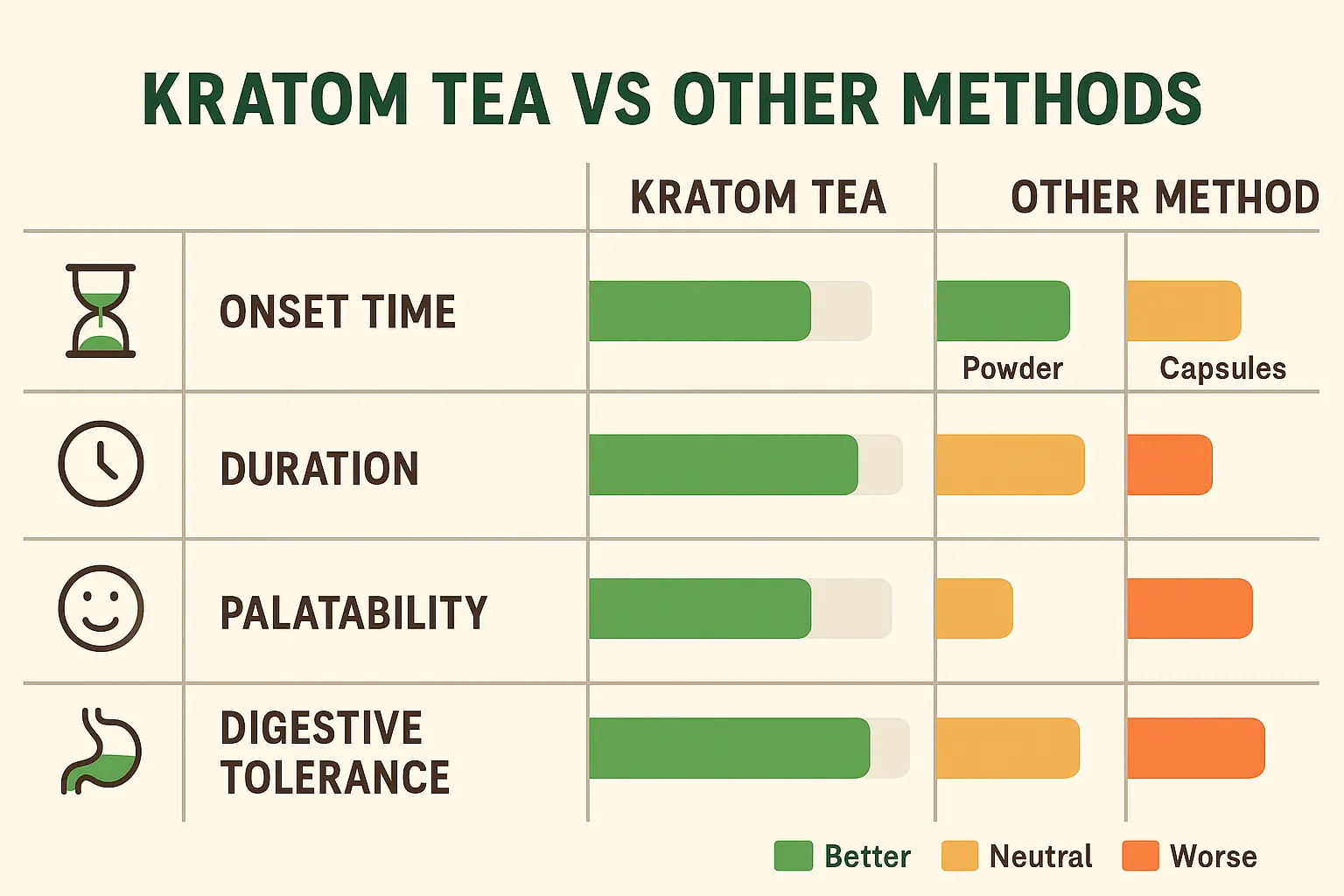
Palatability Advantage
Tea preparation significantly improves the consumption experience compared to the traditional “toss and wash” method. While toss and wash is quick, many users struggle with kratom’s bitter taste and gritty texture.
Onset and Duration Differences
Tea typically has a faster onset (15-30 minutes) compared to powder consumption, but effects may not last quite as long. The liquid form allows for quicker absorption in the digestive system.
Tea vs. Capsules
Cost Effectiveness
Preparing kratom tea is generally more cost-effective than purchasing pre-made capsules. You can buy kratom powder in bulk and prepare tea as needed.
Customization Options
Tea allows for infinite customization of flavor, strength, and additives, while capsules offer fixed doses with no flavor modification options.
Absorption Speed
Tea provides faster effects than capsules, which must first dissolve in the stomach before alkaloids can be absorbed.
Building Your Kratom Tea Routine
Morning Energizing Routine
White or Green Strain Selection
Start your day with energizing strains that promote focus and motivation. Understanding different kratom strains helps you choose the right variety for morning consumption.
Preparation Timing
Prepare tea 30 minutes before you need the effects to kick in. This allows time for brewing and the onset period.
Combination with Morning Habits
Many users incorporate kratom tea into existing morning routines, replacing or supplementing their regular coffee or tea consumption.
Conclusion
Mastering how to make kratom tea transforms the entire kratom experience from a potentially unpleasant necessity into an enjoyable ritual that enhances both the preparation process and the effects themselves. Through proper technique, quality ingredients, and attention to detail, anyone can create smooth, potent kratom tea that delivers consistent results while being far more palatable than traditional powder consumption methods.
As you develop your kratom tea skills, consider exploring different kratom strains and vendors to expand your brewing repertoire. Quality source materials make an enormous difference in the final product, so invest in reputable suppliers who provide lab-tested, fresh kratom.

Christopher is an avid researcher with an interest in ethnobotany, folklore, and the role of plants in shaping cultural identity. His curiosity has led him to study traditions from multiple regions, discovering the values and meanings attached to natural resources. Christopher enjoys presenting this knowledge in ways that encourage thoughtful reflection and appreciation. His goal is to foster awareness of how deeply nature and human culture remain intertwined over time.