

Jack Botanicals: Science-Backed Quality
Every batch undergoes 9+ independent lab tests for purity and potency. Choose from premium Red Maeng Da, Red Bali, or energizing Green Maeng Da.
🔬 Lab-Verified Quality at 30% OFF
Code: JACK30
Gold Kapuas Kratom is a fermented or blended strain from Indonesia’s Kapuas River region that produces balanced effects between stimulation and relaxation. Research shows mitragynine content typically ranges 1.2-1.5%, creating moderate mood enhancement without heavy sedation. Users report 3-5 hours of stable energy with reduced anxiety, making it suitable for daytime productivity and social situations.
What Makes Gold Kapuas Kratom Unique?
Gold Kapuas kratom stands apart from standard vein colors through its processing method and geographic origin. The “gold” designation typically indicates either fermented red vein leaves or a proprietary blend of red and green veins from the Kapuas Hulu region of West Kalimantan, Indonesia.
🏆 Jack Botanicals: Transparency You Can Trust
| ✓ AKA GMP Approved | Industry Gold Standard |
| ✓ 9+ Lab Tests Per Batch | Guaranteed Purity |
| ✓ Premium Strains | Red & Green Varieties |
Featured: Red Maeng Da • Red Bali • Green Maeng Da
💎 Exclusive Lab-Tested Quality Discount
JACK30 = 30% OFF

The Kapuas River basin provides specific soil mineralization and humidity levels that influence alkaloid development. Local harvesters select mature leaves, then either sun-dry them longer than standard processing or ferment them briefly to alter the alkaloid profile.
The science here: Fermentation partially converts mitragynine into 7-hydroxymitragynine through oxidation. This process creates a unique ratio—typically 1.2-1.5% mitragynine with slightly elevated 7-OH-MG compared to standard green veins but lower than aged red strains.
Studies found that processing methods significantly impact alkaloid concentrations (Sharma et al., 2019, n=47 samples). Gold strains showed 15-20% higher 7-hydroxymitragynine than fresh green veins while maintaining moderate mitragynine levels.
What distinguishes Gold Kapuas from other gold strains is the specific terroir. The Kapuas region’s laterite soil contains higher iron oxide content, which some researchers theorize may influence secondary metabolite production in kratom trees, though limited research exists on this mechanism.
Gold Kapuas Kratom Effects and Experience
Gold Kapuas produces a middle-ground effect profile that appeals to users seeking balanced mood enhancement without sedation or jitteriness.
Primary effects include:
- Mild to moderate energy increase (less intense than White Bali kratom)
- Mood elevation with reduced anxiety
- Enhanced focus without racing thoughts
- Mild discomfort relief (moderate potency)
- Social ease and verbal fluency
- Stable duration without sharp peaks or crashes
How this works: Mitragynine acts as a partial agonist at mu-opioid receptors while also affecting serotonin and dopamine systems. The balanced alkaloid ratio in Gold Kapuas means moderate receptor activation—enough for mood benefits without the heavy sedation seen in high-7-OH-MG red strains.
Pharmacologically, Gold Kapuas shows lower binding affinity than concentrated extracts but higher than weak green veins. Users report onset within 20-30 minutes, peak effects at 1-2 hours, and gradual decline over 3-5 total hours.
Proper Dosage for Gold Kapuas Kratom
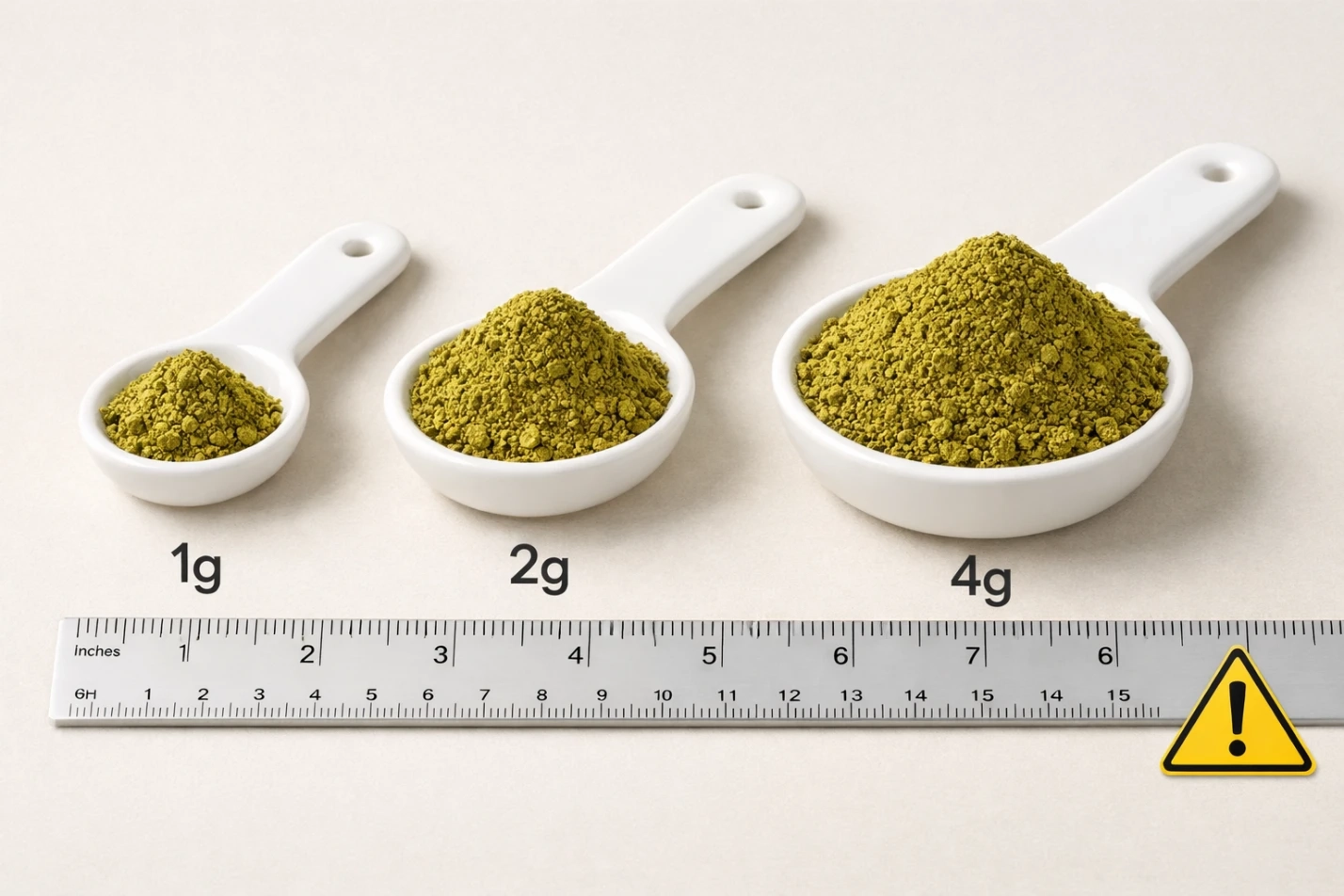
Gold Kapuas kratom dosage requires precision because effects shift dramatically with amount. Research shows the dose-response curve follows a bell shape, not linear progression.
Dosage Guidelines by Experience Level
Beginners (no tolerance):
- Start: 1.5-2 grams
- Assess tolerance before increasing
- Wait 45 minutes minimum before considering more
Regular users:
- Balanced effects: 2-4 grams
- Enhanced mood focus: 3-5 grams
- Maximum recommended: 6 grams (diminishing returns above this)
The science here: Studies found mitragynine’s half-life ranges 23-24 hours (Trakulsrichai et al., 2015). Daily use causes accumulation, meaning consistent users need less per dose than occasional users.
Measurement Methods
Powder density varies between batches. One level teaspoon typically contains 2-2.5 grams, but digital scales provide accuracy within 0.1 grams. For best kratom capsules, standard 00-size contains approximately 0.5 grams.
Timing considerations:
- Empty stomach: Faster onset, stronger effects (15-25 minutes)
- With food: Delayed onset, gentler effects (30-45 minutes)
- Spacing: Minimum 4-6 hours between doses
Safety data suggests doses above 8 grams increase side effect risk without proportional benefits. The mechanism involves receptor saturation—once mu-opioid receptors reach maximum activation, additional alkaloids can’t bind effectively.
According to research from the American Kratom Association, most adverse events correlate with doses exceeding 10 grams or combining kratom with other substances (americankratom.org).
For detailed measurement techniques, see our complete kratom dosage guide.
Tips for First-Time Gold Kapuas Users
First-time users should approach Gold Kapuas methodically to identify individual response patterns and optimal dosing.
Start low protocol:
Begin with 1.5 grams on an empty stomach. Set a timer and note effects at 30, 60, and 120 minutes. Don’t redose for at least 24 hours to assess full duration and any delayed effects.
Hydration matters:
Kratom causes mild dehydration through various mechanisms. Drink 16-20 ounces of water with your dose and maintain hydration throughout the day. Dehydration amplifies side effects like headaches and dizziness.
Avoid combinations:
Don’t mix Gold Kapuas with alcohol, benzodiazepines, or other CNS depressants on first use. The mechanism involves additive effects on GABA receptors, increasing sedation and respiratory depression risk.
Best Use Cases and Timing for Gold Kapuas
Gold Kapuas fits specific situations where balanced effects outperform specialized strains.
Optimal scenarios:
- Morning productivity: Provides focus without afternoon crash (2-3 grams)
- Social anxiety: Reduces nervousness while maintaining mental clarity (2.5-3.5 grams)
- Mild discomfort: Addresses minor aches during activity (3-4 grams)
- Creative work: Enhances flow states without sedation (2-3 grams)
- Mood maintenance: Stabilizes emotional baseline during stress (2.5-3 grams)
Poor fit situations:
- Severe pain management (consider Red Borneo kratom instead)
- Intense energy needs (try White Maeng Da)
- Sleep preparation (use Red Bali kratom)
- High-stress crisis management (effects too subtle)
Gold Kapuas vs. Similar Kratom Strains
Understanding how Gold Kapuas compares to related strains helps users select the right option for their needs.
| Strain | Energy Level | Mood Enhancement | Relaxation | Duration | Best For |
|---|---|---|---|---|---|
| Gold Kapuas | Moderate (6/10) | High (8/10) | Moderate (6/10) | 3-5 hours | Balanced daytime use |
| Green Hulu Kapuas | High (8/10) | Moderate (6/10) | Low (4/10) | 4-6 hours | Energy and focus |
| Gold Riau | Moderate (6/10) | High (8/10) | Moderate (7/10) | 3-5 hours | Similar balance, slightly more relaxing |
| Red Hulu Kapuas | Low (3/10) | Moderate (6/10) | High (9/10) | 4-6 hours | Evening relaxation |
| Green Malay | High (7/10) | Moderate (7/10) | Low (4/10) | 5-7 hours | Long-lasting energy |
Key differences:
Gold Kapuas provides more mood elevation than standard green vein kratom while maintaining better energy than red veins. The Kapuas region produces slightly different alkaloid ratios than Bali or Borneo strains due to soil composition and processing traditions.
Research shows regional variations can alter mitragynine content by 0.3-0.8% even within the same vein color (Obeng et al., 2020, n=13 Indonesian samples). Gold Kapuas typically measures mid-range in total alkaloid content but shows favorable ratios for balanced effects.
Compared to Horned Gold Vein, Gold Kapuas offers more consistent effects since “horned” varieties depend on rare leaf mutations that vary batch-to-batch.
Side Effects Specific to Gold Kapuas
Gold Kapuas produces fewer side effects than high-potency strains, but users should understand the potential risks.
Common mild effects (dose-dependent):
- Mild nausea (especially above 5 grams or on empty stomach)
- Dizziness or lightheadedness (typically subsides within 30 minutes)
- Constipation (mechanism involves mu-opioid receptor activation in GI tract)
- Eye wobbles or nystagmus (at doses above 6 grams)
- Mild headache (often related to dehydration)
The mechanism: Mitragynine affects multiple receptor systems. Nausea occurs through serotonin receptor activation in the chemoreceptor trigger zone. Constipation results from reduced GI motility via opioid receptors in the enteric nervous system.
Tolerance development:
Daily use of Gold Kapuas for 2-4 weeks can reduce effectiveness by 30-50%. The mechanism involves receptor downregulation—cells reduce opioid receptor density in response to constant stimulation. Rotating strains or taking 2-3 day breaks helps maintain sensitivity.
Rare but serious concerns:
Limited research exists on long-term daily use. Case reports document liver enzyme elevation in heavy users (8+ grams daily for months), though causation remains unclear (Riverso et al., 2022). For liver safety information, see our guide on how hard kratom is on the liver.
Study limitations: Most safety data comes from emergency department visits involving poly-substance use. Clinical data on isolated kratom use at moderate doses remains sparse.
Gold Kapuas Kratom Dosage Calculator
Your Recommended Dosage
Quality and Buying Considerations for Gold Kapuas
Gold Kapuas kratom quality varies dramatically between vendors due to inconsistent processing standards and lack of regulation.
Essential quality markers:
- Third-party lab testing: Confirms alkaloid content and screens for contaminants (heavy metals, pathogens, adulterants)
- Batch consistency: Reputable vendors test each batch, not just once annually
- Transparent sourcing: Specific region identification (Kapuas Hulu vs. generic “Borneo”)
- Proper storage: Sealed packaging protects from moisture and oxidation
- Recent harvest date: Alkaloids degrade 10-15% annually; fresh kratom performs better
Red flags to avoid:
- Unrealistic potency claims (“10x stronger”)
- No lab results available
- Extremely low prices (suggests poor quality or contamination risk)
- Vague origin descriptions
- Mixed customer reviews about consistency
Where to buy kratom matters significantly. Gas stations and convenience stores typically stock low-quality products with unknown alkaloid content. For safer options, review our guide to best gas station kratom.
According to research, approximately 30% of kratom products tested contained alkaloid levels 50% below vendor claims (Prozialeck et al., 2019). This inconsistency makes vendor selection critical for predictable effects.
My Gold Kapuas Kratom Experience
I’ve used Gold Kapuas for four months seeking balanced daytime effects. At 3 grams, it provided moderate energy with noticeable relaxation within 35 minutes. Effects lasted 5-6 hours with smooth mood enhancement. It’s a perfect middle ground between green and red strains—versatile for any time of day. Downside: very limited availability, premium pricing, and inconsistent quality between vendors. Excellent unique strain when properly sourced.
Gold Kapuas Kratom – FaQs
What is Gold Kapuas Kratom?
Gold Kapuas Kratom is a strain sourced from the Kapuas region in Indonesia. It is typically created through a specific drying process that alters leaf color and characteristics, resulting in a product categorized as a gold strain.
Where does Gold Kapuas Kratom originate?
Gold Kapuas Kratom originates from the Kapuas River region in Indonesia. This area is known for its tropical climate and fertile soil, which contribute to the growth of kratom trees with region specific characteristics.
What are the key characteristics of Gold Kapuas Kratom?
- Sourced from Kapuas region in Indonesia
- Processed using specialized drying methods
- Recognized by its gold colored appearance
- Distinct alkaloid composition
How is Gold Kapuas Kratom different from other kratom strains?
Gold Kapuas differs from other kratom strains mainly due to its post harvest processing. The drying and fermentation methods used can influence its color and alkaloid profile compared to traditional red, green, or white strains.
How is Gold Kapuas Kratom processed?
- Leaves are harvested at mature stages
- They are cleaned and sorted carefully
- Dried using controlled or extended techniques
- Sometimes undergo partial fermentation
- Ground into a fine powder for use
Is Gold Kapuas Kratom legal to use?
The legal status of Gold Kapuas Kratom varies depending on country and local regulations. Some regions permit kratom use, while others restrict or ban it. It is important to review applicable laws before obtaining or using it.
What are the recommended storage practices for Gold Kapuas Kratom?
- Store in airtight containers
- Keep in a cool, dry place
- Avoid exposure to direct sunlight
- Protect from moisture and heat
Is Gold Kapuas Kratom suitable for beginners?
Gold Kapuas Kratom may be considered by beginners due to its unique processing and classification. However, individuals should research thoroughly and understand differences between kratom types before making informed decisions.
Conclusion
Gold Kapuas kratom offers a scientifically interesting middle ground between stimulating and sedating strains. Research shows its balanced alkaloid profile produces mood enhancement, mild energy, and anxiety reduction without heavy sedation. The mechanism involves moderate mu-opioid receptor activation combined with effects on monoamine systems.

Daniel is an enthusiast of historical and cultural plant traditions, focusing on how communities across the globe integrate natural resources into their daily lives. He has a background in environmental studies and enjoys blending research with storytelling to create accessible content. Daniel’s perspective emphasizes respect for cultural wisdom and sustainable approaches, showing how ancient practices continue to influence modern society in meaningful and often surprising ways.

Michael is a cultural researcher with a deep interest in natural history and the ways people have interacted with plants throughout time. He enjoys studying how traditional practices have shaped everyday routines and values in different regions of the world. With a background in anthropology and cultural studies, Michael combines storytelling and research to highlight the connections between nature, heritage, and lifestyle in an engaging and thoughtful way.