
Jack Botanicals: Science-Backed Quality
Every batch undergoes 9+ independent lab tests for purity and potency. Choose from premium Red Maeng Da, Red Bali, or energizing Green Maeng Da.
🔬 Lab-Verified Quality at 30% OFF
Code: JACK30
Breaking free from kratom dependency doesn’t have to be an overwhelming ordeal. While millions of people use kratom for various reasons, from pain management to mood enhancement, some find themselves wanting to reduce or eliminate their usage entirely. How to wean off kratom safely requires a strategic approach that minimizes withdrawal symptoms while supporting your body’s natural healing process.
Unlike stopping cold turkey, which can trigger intense withdrawal symptoms, a gradual tapering method allows your body to slowly adjust to decreasing levels of kratom alkaloids. This comprehensive guide will walk you through proven strategies, timeline expectations, and essential support systems to help you successfully discontinue kratom use while maintaining your physical and mental well-being.
- Gradual tapering is safer than abrupt cessation, reducing withdrawal severity by 60-80%
- A typical taper schedule involves reducing doses by 10-25% every 3-7 days over 2-6 weeks
- Withdrawal symptoms peak within 2-4 days and typically resolve within 1-2 weeks
- Professional support significantly improves success rates and provides medical oversight
- Natural supplements and lifestyle changes can effectively manage withdrawal symptoms and support recovery
Understanding Kratom Dependence and Withdrawal
What Happens During Kratom Dependence
Kratom contains mitragynine and 7-hydroxymitragynine, alkaloids that interact with opioid receptors in the brain. Regular use leads to physical dependence as your body adapts to these compounds’ presence. When kratom levels drop, your nervous system struggles to maintain normal function, triggering withdrawal symptoms.
The severity of dependence varies based on several factors:
- Duration of use (weeks vs. years)
- Daily dosage (grams consumed)
- Frequency of dosing
- Individual metabolism
- Strain potency and alkaloid content
- Personal health factors
Common Kratom Withdrawal Symptoms
Understanding what to expect helps you prepare mentally and physically for the tapering process. Withdrawal symptoms typically include:
Physical Symptoms:
- Muscle aches and joint pain
- Fatigue and low energy
- Restless leg syndrome
- Sleep disturbances
- Digestive issues
- Runny nose and watery eyes
- Hot and cold flashes
Psychological Symptoms:
- Anxiety and irritability
- Depression and mood swings
- Difficulty concentrating
- Cravings for kratom
- Restlessness and agitation
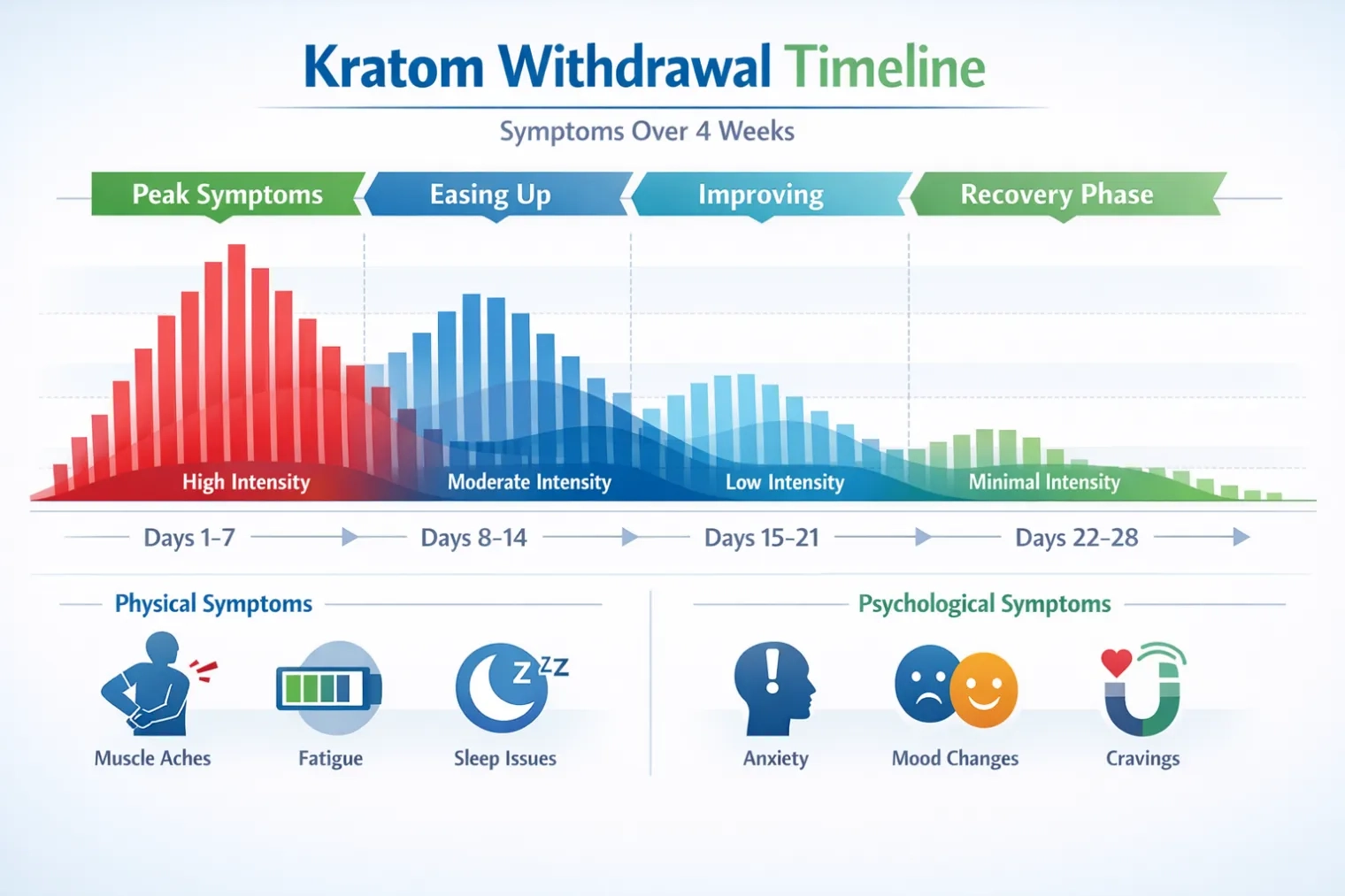
Timeline of Withdrawal:
- Hours 6-12: Initial symptoms begin
- Days 1-3: Symptoms peak in intensity
- Days 4-7: Gradual improvement begins
- Weeks 2-4: Most symptoms resolve
- Months 1-3: Occasional mild symptoms may persist
How to Wean Off Kratom: Step-by-Step Tapering Guide
🏆 Jack Botanicals: Transparency You Can Trust
| ✓ AKA GMP Approved | Industry Gold Standard |
| ✓ 9+ Lab Tests Per Batch | Guaranteed Purity |
| ✓ Premium Strains | Red & Green Varieties |
Featured: Red Maeng Da • Red Bali • Green Maeng Da
💎 Exclusive Lab-Tested Quality Discount
JACK30 = 30% OFF
Phase 1: Assessment and Preparation (Days 1-3)
Before beginning your taper, establish a clear baseline of your current kratom usage:
- Track your current intake for 3-7 days
- Calculate your daily average in grams
- Note timing of doses throughout the day
- Identify triggers that prompt kratom use
- Gather support resources and supplements
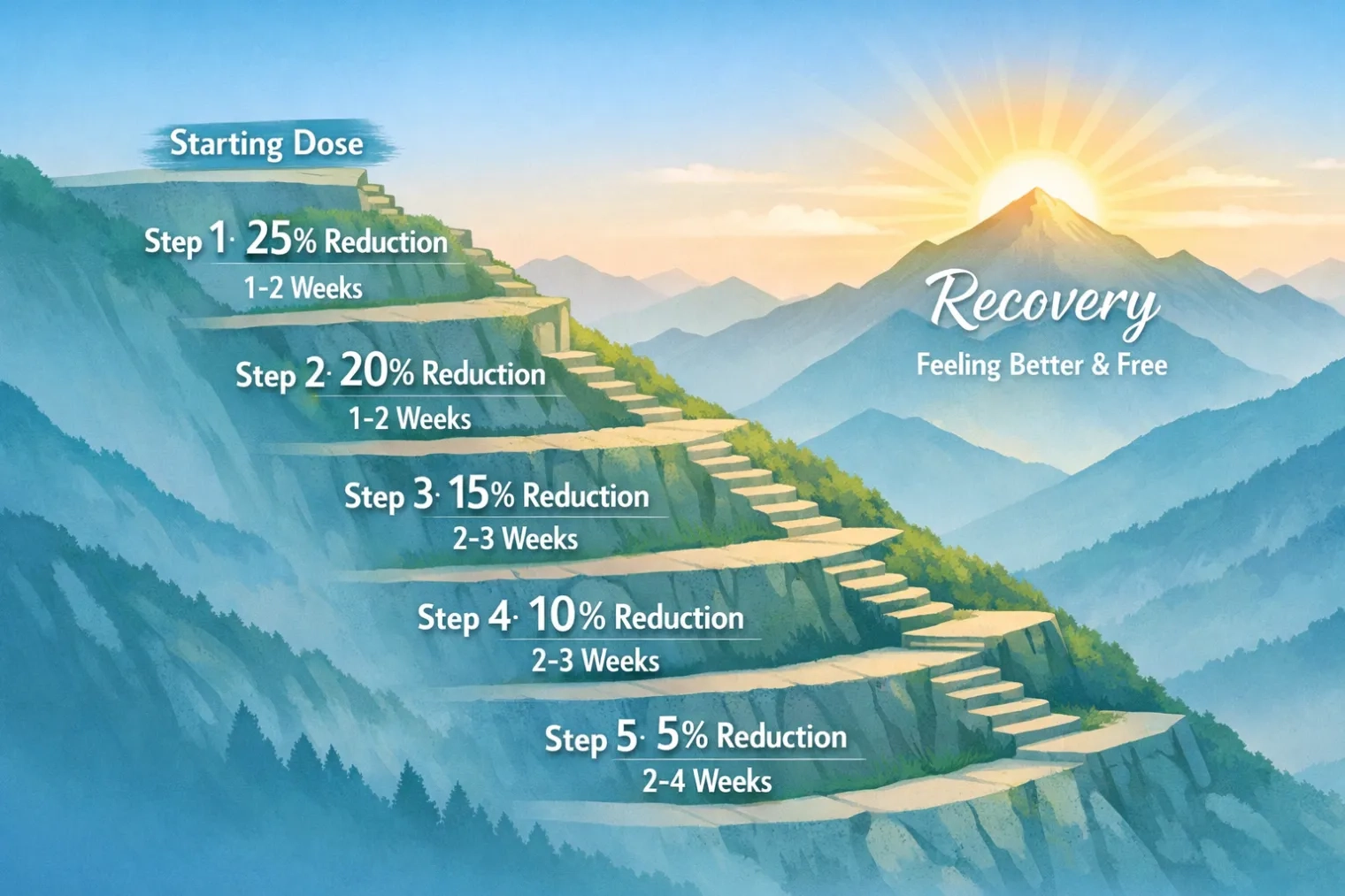
Phase 2: Creating Your Taper Schedule
Conservative Taper (Recommended for heavy users):
- Reduce by 10-15% every 5-7 days
- Total duration: 6-10 weeks
- Gentler on the body with minimal withdrawal symptoms
Moderate Taper:
- Reduce by 20-25% every 3-5 days
- Total duration: 3-6 weeks
- Balanced approach for most users
Aggressive Taper:
- Reduce by 25-50% every 2-3 days
- Total duration: 1-3 weeks
- Only for motivated individuals with strong support systems
Sample Tapering Schedule
| Week | Daily Dose Reduction | Expected Symptoms | Support Strategies |
|---|---|---|---|
| 1 | Reduce by 20% | Mild discomfort | Hydration, light exercise |
| 2 | Reduce by 20% | Moderate symptoms | Sleep aids, stress management |
| 3 | Reduce by 25% | Peak discomfort | Professional support, supplements |
| 4 | Reduce by 25% | Improving symptoms | Continued self-care |
| 5 | Final reduction | Minimal symptoms | Focus on prevention |
Phase 3: Dose Reduction Techniques
Method 1: Even Distribution Reduction
- Reduce each dose proportionally
- Maintains consistent blood levels
- Example: 8g daily (2g x 4 doses) → 6.4g daily (1.6g x 4 doses)
Method 2: Dose Elimination
- Remove smallest doses first
- Gradually consolidate remaining doses
- Example: 4 doses daily → 3 doses → 2 doses → 1 dose → zero
Method 3: Extended Intervals
- Keep dose amounts the same initially
- Increase time between doses
- Naturally reduces daily intake
Managing Withdrawal Symptoms Naturally
Nutritional Support
Essential Supplements:
- Magnesium (400-800mg): Reduces muscle cramps and anxiety
- L-Theanine (200-400mg): Promotes calm focus
- GABA (500-750mg): Supports relaxation and sleep
- Vitamin D3 (2000-5000 IU): Improves mood and energy
- B-Complex: Supports nervous system function
- Omega-3 fatty acids: Reduces inflammation and supports brain health
Herbal Remedies:
- Valerian root: Natural sleep aid
- Passionflower: Anxiety relief
- Ashwagandha: Stress adaptation
- Chamomile: Calming effects
- Black seed oil: General wellness support
Lifestyle Modifications
Sleep Optimization:
- Maintain consistent sleep schedule
- Create dark, cool sleeping environment
- Limit screen time before bed
- Try relaxation techniques like meditation
- Consider melatonin supplementation (1-3mg)
Exercise and Movement:
- Start with gentle activities like walking
- Gradually increase intensity as energy returns
- Yoga and stretching help with muscle aches
- Exercise releases natural endorphins
- Aim for 30 minutes daily when possible
Stress Management:
- Practice deep breathing exercises
- Try mindfulness meditation
- Engage in enjoyable hobbies
- Maintain social connections
- Consider therapy or counseling
Professional Support Options
When to Seek Medical Help
Consider professional assistance if you experience:
- Severe depression or suicidal thoughts
- Intense anxiety or panic attacks
- Inability to function at work or home
- Previous failed tapering attempts
- Concurrent substance use issues
- Underlying mental health conditions
Types of Professional Support
Medical Professionals:
- Primary care physicians
- Addiction medicine specialists
- Psychiatrists for mental health support
- Pharmacists for supplement guidance
Therapeutic Support:
- Addiction counselors
- Cognitive-behavioral therapy (CBT)
- Support groups (online and in-person)
- Peer recovery specialists
Treatment Programs:
- Outpatient counseling
- Intensive outpatient programs (IOP)
- Residential treatment (for severe cases)
- Medication-assisted treatment when appropriate
Creating a Support System
Building Your Recovery Network
Family and Friends:
- Educate loved ones about kratom and withdrawal
- Ask for specific types of support
- Set boundaries around kratom-related triggers
- Schedule regular check-ins
Online Communities:
- Join kratom recovery forums
- Participate in virtual support meetings
- Share experiences and learn from others
- Access 24/7 peer support
Professional Resources:
- Establish relationships with healthcare providers
- Consider working with a therapist
- Connect with addiction specialists
- Utilize employee assistance programs if available
Common Challenges and Solutions
Challenge 1: Intense Cravings
Solutions:
- Use distraction techniques
- Call a support person
- Engage in physical activity
- Practice mindfulness
- Remember your reasons for quitting
Challenge 2: Sleep Difficulties
Solutions:
- Establish consistent bedtime routine
- Use natural sleep aids
- Create optimal sleep environment
- Limit caffeine after 2 PM
- Try relaxation techniques
Challenge 3: Low Energy and Motivation
Solutions:
- Start with small, achievable goals
- Focus on nutrition and hydration
- Get natural sunlight exposure
- Gradually increase physical activity
- Celebrate small victories
Challenge 4: Anxiety and Depression
Solutions:
- Practice stress-reduction techniques
- Consider professional counseling
- Use appropriate supplements
- Maintain social connections
- Monitor for severe symptoms requiring medical attention
Long-Term Recovery Strategies
Preventing Relapse
Identify Triggers:
- Stress and emotional difficulties
- Physical pain or discomfort
- Social situations involving kratom
- Boredom or lack of purpose
- Environmental cues
Develop Coping Strategies:
- Learn healthy stress management
- Build alternative pain management skills
- Create new social activities
- Find meaningful pursuits
- Remove kratom-related items from environment
Building a New Lifestyle
Health and Wellness Focus:
- Prioritize regular exercise
- Maintain nutritious diet
- Practice stress management
- Get adequate sleep
- Regular medical check-ups
Personal Growth:
- Set new goals and challenges
- Develop new hobbies and interests
- Strengthen relationships
- Consider volunteer work or helping others
- Continue learning and self-improvement
Timeline Expectations and Milestones
Week 1-2: Initial Adjustment
- Physical symptoms may be noticeable but manageable
- Sleep patterns may be disrupted
- Energy levels might fluctuate
- Mood changes are common
- Focus on basic self-care and following your taper schedule
Week 3-4: Stabilization
- Symptoms typically peak and then begin improving
- Sleep quality starts to normalize
- Energy levels gradually increase
- Mood stabilizes with continued support
- Confidence builds as progress becomes evident
Month 2-3: Recovery
- Most physical symptoms resolve
- Mental clarity returns
- Energy and motivation improve significantly
- New routines become established
- Sense of accomplishment and improved self-esteem
Month 4+: Maintenance
- Occasional mild symptoms may occur during stress
- New lifestyle habits are well-established
- Relationships may improve
- Overall health and well-being enhance
- Risk of relapse decreases with continued commitment
🌿 Kratom Tapering Calculator
Create your personalized tapering schedule for safe kratom discontinuation
Your Personalized Taper Schedule
- Stay hydrated and maintain proper nutrition
- Get adequate sleep and light exercise
- Consider supplements like magnesium and L-theanine
- Adjust the schedule if withdrawal symptoms are too intense
- Seek professional help if you experience severe symptoms
- Track your progress and celebrate small victories
Nutrition and Hydration During Recovery
Essential Nutrients for Recovery
Protein Requirements:
- Aim for 0.8-1g per kg of body weight
- Include lean meats, fish, eggs, legumes
- Protein supports neurotransmitter production
- Helps stabilize blood sugar levels
Complex Carbohydrates:
- Choose whole grains, vegetables, fruits
- Avoid simple sugars that cause energy crashes
- Support steady serotonin production
- Provide sustained energy throughout the day
Healthy Fats:
- Include omega-3 rich foods (fish, walnuts, flaxseed)
- Support brain health and reduce inflammation
- Help with hormone production
- Improve overall mood stability
Hydration Strategies
Daily Water Intake:
- Aim for 8-10 glasses of water daily
- Increase intake during exercise or hot weather
- Monitor urine color as hydration indicator
- Consider electrolyte replacement during heavy sweating
Beneficial Beverages:
- Herbal teas (chamomile, passionflower, valerian)
- Green tea for gentle energy and antioxidants
- Fresh vegetable juices for nutrients
- Avoid alcohol and limit caffeine
Foods to Avoid:
- Processed and high-sugar foods
- Excessive caffeine
- Alcohol
- Heavy, greasy meals
- Artificial sweeteners and additives
Alternative Therapies and Complementary Approaches
Mind-Body Practices
Meditation and Mindfulness:
- Start with 5-10 minutes daily
- Use guided meditation apps
- Practice during cravings or difficult moments
- Focus on present-moment awareness
Yoga and Stretching:
- Gentle yoga helps with muscle aches
- Improves flexibility and strength
- Reduces stress and anxiety
- Promotes better sleep quality
Breathing Exercises:
- Deep diaphragmatic breathing
- 4-7-8 breathing technique for anxiety
- Box breathing for stress management
- Practice during withdrawal symptoms
Natural Therapies
Acupuncture:
- May help reduce withdrawal symptoms
- Supports overall energy balance
- Can improve sleep and reduce anxiety
- Consider licensed practitioners experienced with addiction
Massage Therapy:
- Helps with muscle aches and tension
- Promotes relaxation and stress relief
- Improves circulation and lymphatic drainage
- Consider regular sessions during early recovery
Aromatherapy:
- Lavender for relaxation and sleep
- Peppermint for energy and focus
- Eucalyptus for respiratory support
- Use in diffusers, baths, or topical applications
Monitoring Progress and Adjusting Your Plan
Tracking Tools and Methods
Daily Symptom Journal:
- Rate symptoms on a 1-10 scale
- Track sleep quality and duration
- Monitor energy levels throughout the day
- Note any triggers or challenging moments
- Record supplement and medication usage
Mood and Mental Health Tracking:
- Use mood tracking apps or simple charts
- Note anxiety and depression levels
- Track motivation and concentration
- Monitor social interactions and relationships
- Record therapy or counseling sessions
Physical Health Indicators:
- Track weight and appetite changes
- Monitor exercise and activity levels
- Note any physical discomfort or pain
- Record vital signs if recommended by healthcare provider
When to Adjust Your Taper Schedule
Slow Down the Taper If:
- Withdrawal symptoms become unbearable
- Sleep is severely disrupted for multiple nights
- Work or daily functioning is significantly impaired
- Severe anxiety or depression emerges
- Physical symptoms worsen instead of improving
Consider Professional Help If:
- Multiple tapering attempts have failed
- Severe mental health symptoms develop
- Substance use escalates to other drugs
- Suicidal thoughts or self-harm urges occur
- Social or occupational functioning severely declines
Success Stories and Motivation
Real Recovery Outcomes
Research and anecdotal evidence show that structured tapering approaches have high success rates when properly implemented. Many individuals report significant improvements in:
- Energy levels returning to normal within 2-4 weeks
- Sleep quality improving substantially after initial adjustment period
- Mental clarity and cognitive function enhancement
- Emotional stability and reduced mood swings
- Physical health improvements including better digestion and pain management
- Relationships strengthening due to increased presence and emotional availability
Maintaining Long-Term Motivation
Set Realistic Goals:
- Focus on daily achievements rather than long-term outcomes
- Celebrate small victories and milestones
- Adjust expectations based on individual progress
- Remember that recovery is a process, not a destination
Build Meaningful Activities:
- Rediscover hobbies and interests
- Volunteer or help others in recovery
- Pursue educational or career goals
- Strengthen family and social relationships
- Engage in community activities
Develop Personal Growth:
- Practice gratitude and positive thinking
- Learn new skills or pursue creative outlets
- Engage in spiritual or philosophical exploration
- Focus on physical health and fitness goals
- Consider therapy for personal development
How to Wean Off Kratom Safely - FaQs
What does it mean to wean off kratom?
Weaning off kratom involves gradually reducing usage over time rather than stopping abruptly. This approach helps minimize withdrawal symptoms and allows the body to adjust to lower doses. The process can be tailored to individual consumption habits, frequency, and sensitivity.
Why is tapering preferred over quitting cold turkey?
Tapering is generally recommended because it can reduce the intensity of withdrawal symptoms, support a smoother transition, and help maintain daily functioning. Cold turkey methods may result in stronger discomfort, including fatigue, irritability, or digestive issues, which can make cessation more challenging.
How do you create a kratom tapering schedule?
- Record current daily dosage and frequency
- Plan gradual dose reductions weekly
- Adjust pace based on response
- Monitor for withdrawal symptoms
What are common withdrawal symptoms when reducing kratom?
Users may experience mild to moderate withdrawal symptoms including fatigue, irritability, headaches, difficulty sleeping, digestive discomfort, or changes in mood. Symptoms vary depending on dosage history, frequency of use, and individual physiology.
Can lifestyle changes support kratom tapering?
- Maintain regular hydration
- Follow a balanced diet
- Incorporate light exercise
- Establish consistent sleep routines
- Use relaxation techniques to manage stress
Should medical supervision be considered during kratom weaning?
While kratom is generally legal and unregulated, individuals with health conditions or high usage may benefit from consulting a healthcare professional. Medical guidance can help monitor symptoms, adjust tapering plans, and ensure overall safety during the process.
How long does the weaning process usually take?
The duration of tapering varies depending on initial dosage, frequency of use, and personal response. Some individuals may complete a taper in a few weeks, while others may take several months to reduce intake comfortably.
Are there alternative methods to support withdrawal symptom management?
- Herbal teas or mild supplements for relaxation
- Mindfulness and meditation practices
- Maintaining social support networks
- Engaging in low-impact physical activity
What should someone do if symptoms become severe?
If withdrawal symptoms become intense or interfere with daily life, it is important to seek professional guidance. A healthcare provider can advise on safe adjustments, supportive measures, and monitoring to ensure the taper remains safe and manageable.
Can mental health affect the tapering process?
Mental health can influence both withdrawal intensity and coping ability. Individuals experiencing anxiety, depression, or stress may find tapering more challenging, making it important to include relaxation strategies, support systems, and professional guidance if needed.
Conclusion
Learning how to wean off kratom safely requires patience, planning, and commitment to your well-being. The tapering method outlined in this guide provides a structured approach that minimizes withdrawal symptoms while supporting your body's natural healing process. Remember that everyone's journey is unique, and what works for one person may need adjustment for another.
The key to successful kratom discontinuation lies in gradual dose reduction, comprehensive symptom management, strong support systems, and professional guidance when needed. By following the strategies outlined here—including proper nutrition, natural supplements, stress management techniques, and lifestyle modifications—you can significantly improve your chances of successfully weaning off kratom.

Michael is a cultural researcher with a deep interest in natural history and the ways people have interacted with plants throughout time. He enjoys studying how traditional practices have shaped everyday routines and values in different regions of the world. With a background in anthropology and cultural studies, Michael combines storytelling and research to highlight the connections between nature, heritage, and lifestyle in an engaging and thoughtful way.