
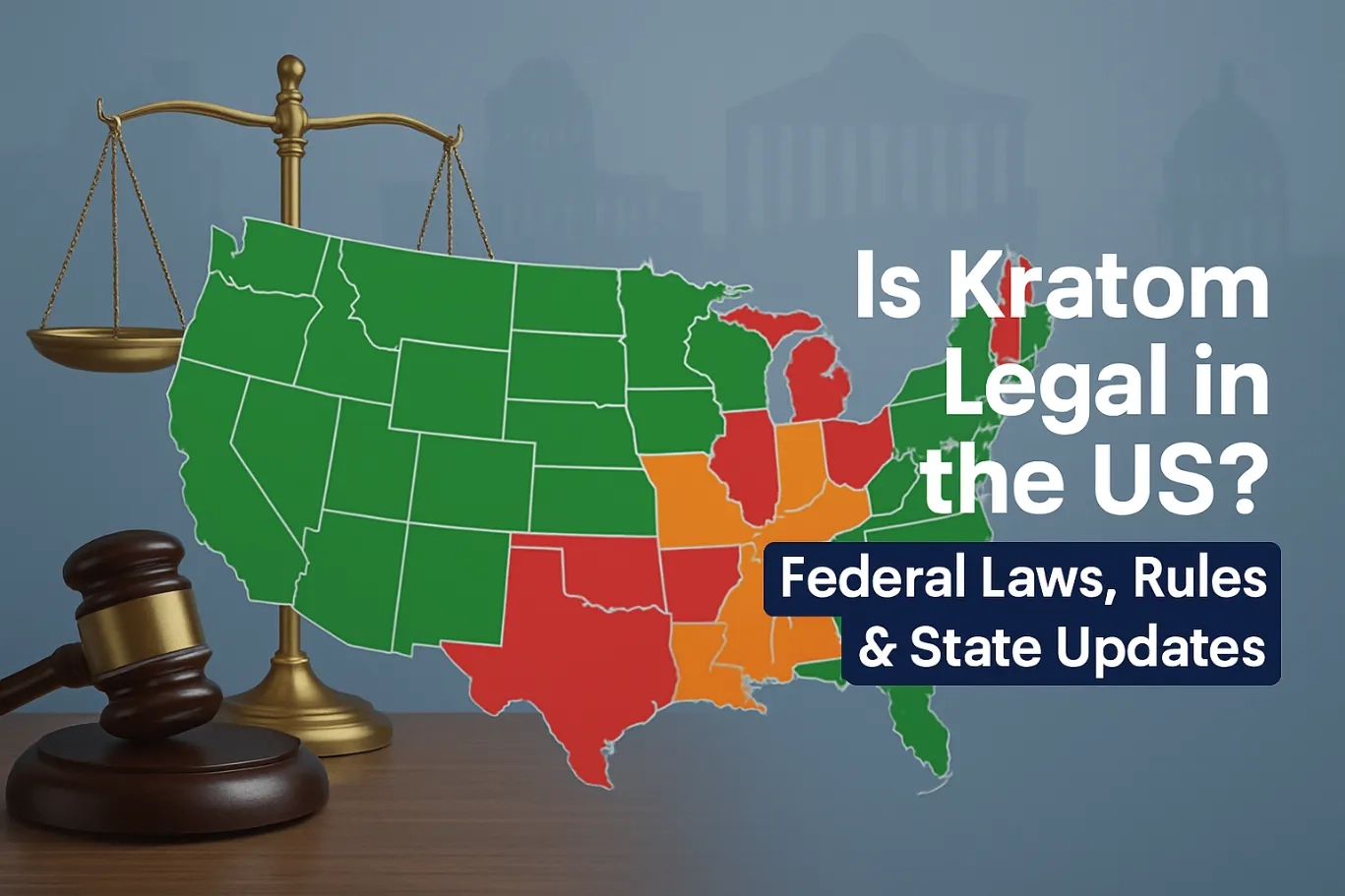
Jack Botanicals: Science-Backed Quality
Every batch undergoes 9+ independent lab tests for purity and potency. Choose from premium Red Maeng Da, Red Bali, or energizing Green Maeng Da.
🔬 Lab-Verified Quality at 30% OFF
Code: JACK30
The legal landscape surrounding kratom in the United States remains as complex as a patchwork quilt, with federal agencies, state legislatures, and local municipalities each weaving their own threads of regulation. While millions of Americans use kratom for various purposes, the question “Is kratom legal in the US?” doesn’t have a simple yes or no answer. The botanical substance exists in a legal gray area at the federal level, while individual states have crafted their own rules that range from complete prohibition to regulated acceptance.
- Federal Status: Kratom is not federally scheduled but remains under DEA scrutiny and FDA opposition
- State Variations: Six states have banned kratom entirely, while others have implemented age restrictions or quality controls
- Local Laws: Cities and counties may have their own kratom regulations that differ from state law
- Regulatory Trends: More states are moving toward regulation rather than prohibition through kratom consumer protection acts
- Legal Risks: Possession and use legality varies significantly by location, requiring careful research before purchase or consumption
Understanding Kratom’s Federal Legal Status
At the federal level, kratom’s legal status remains undefined by traditional drug scheduling. The Drug Enforcement Administration (DEA) has not placed kratom (Mitragyna speciosa) on the Controlled Substances Act’s schedule, meaning it’s not federally banned. However, this doesn’t mean federal agencies embrace the botanical.
DEA’s Position on Kratom
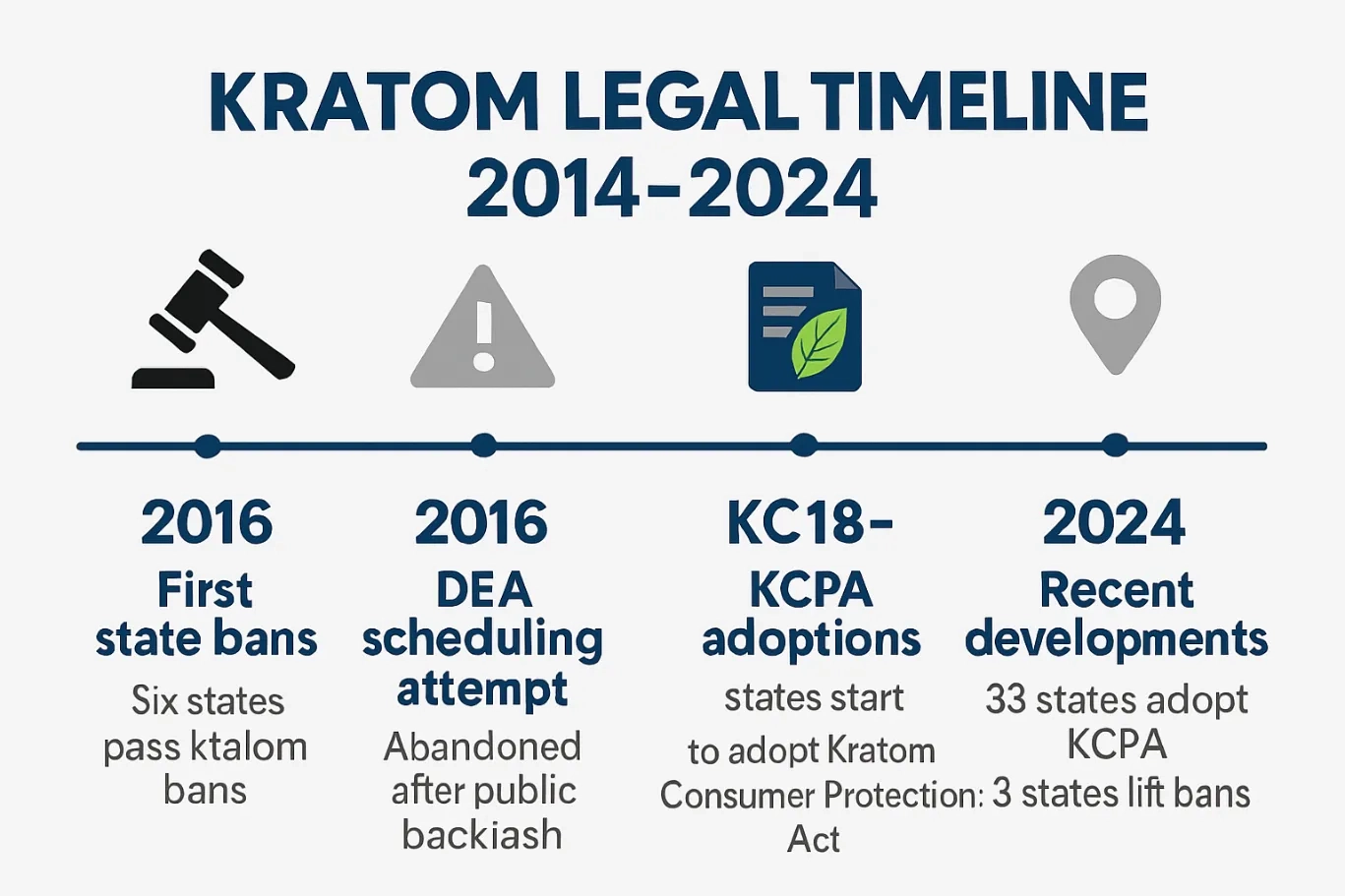
The DEA first attempted to emergency schedule kratom in 2016, proposing to classify it as a Schedule I substance alongside heroin and LSD. Public outcry, scientific community pushback, and congressional intervention forced the agency to withdraw this proposal. Since then, the DEA has maintained kratom on its “drugs of concern” list while continuing to monitor its use patterns and safety profile.
FDA’s Stance and Import Alerts
The Food and Drug Administration has taken a more aggressive stance against kratom. The agency has:
- Issued warning letters to kratom vendors making health claims
- Implemented import alerts allowing customs to detain kratom shipments
- Published safety communications warning about kratom’s risks
- Conducted research on kratom’s pharmacology and abuse potential
Despite lacking explicit authority to ban kratom outright, the FDA’s actions have created significant regulatory pressure on the industry.
Congressional Interest and Protection Efforts
Several members of Congress have shown interest in protecting kratom access. The Kratom Consumer Protection Act has been introduced at the federal level, though it hasn’t gained sufficient traction for passage. This legislation would establish federal quality standards while preventing arbitrary scheduling.
State-by-State Kratom Legality Breakdown
Understanding whether kratom is legal in the US requires examining each state’s individual approach. The legal landscape varies dramatically across state lines.
States Where Kratom is Banned
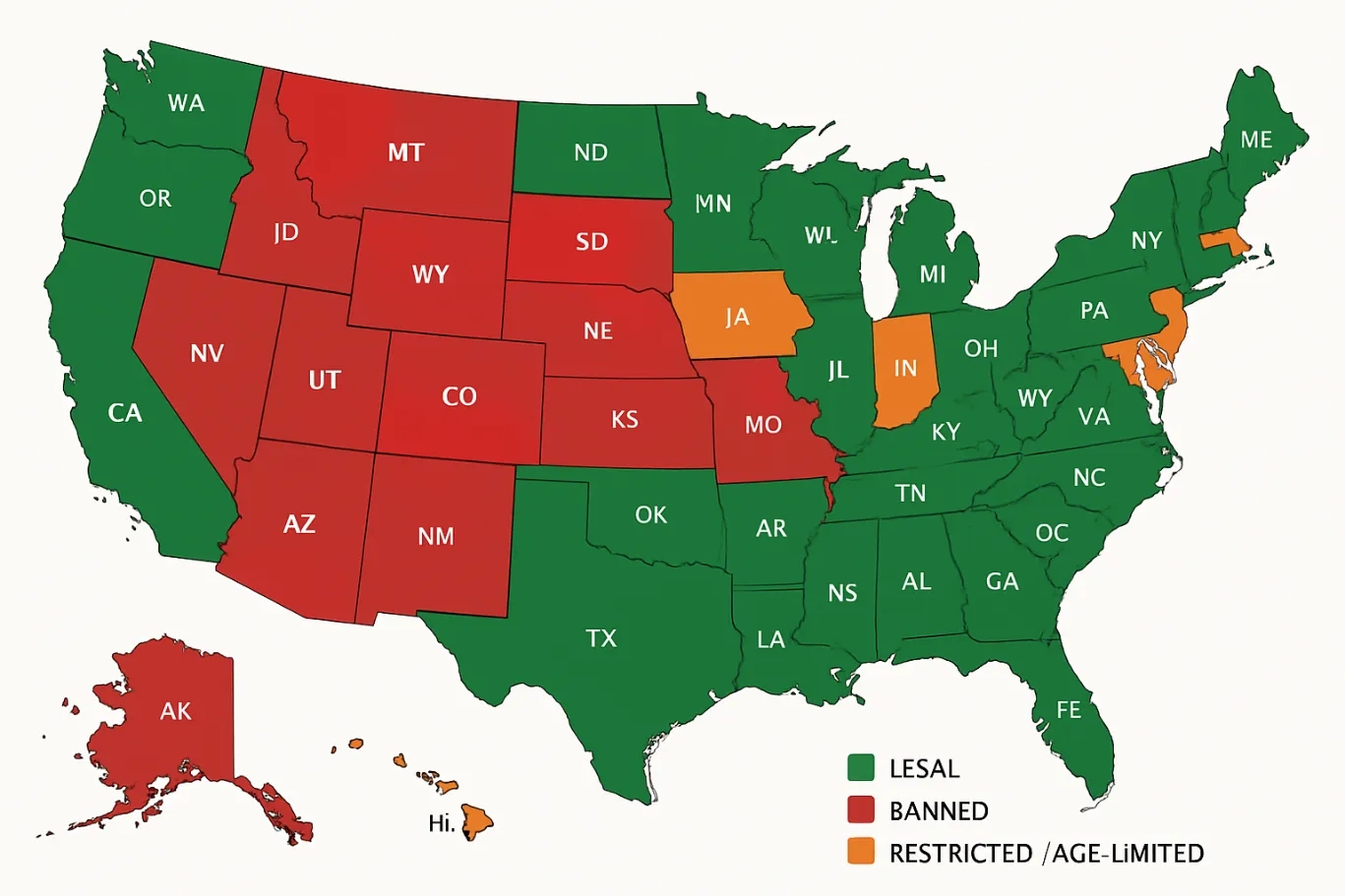
Six states have implemented complete kratom prohibitions:
🏆 Jack Botanicals: Transparency You Can Trust
| ✓ AKA GMP Approved | Industry Gold Standard |
| ✓ 9+ Lab Tests Per Batch | Guaranteed Purity |
| ✓ Premium Strains | Red & Green Varieties |
Featured: Red Maeng Da • Red Bali • Green Maeng Da
💎 Exclusive Lab-Tested Quality Discount
JACK30 = 30% OFF
| State | Ban Effective Date | Legal Status |
|---|---|---|
| Alabama | May 2016 | Completely banned |
| Arkansas | February 2016 | Completely banned |
| Indiana | April 2014 | Completely banned |
| Rhode Island | July 2017 | Completely banned |
| Vermont | July 2021 | Completely banned |
| Wisconsin | December 2014 | Completely banned |
In these states, kratom possession, sale, and distribution are illegal and may result in criminal charges.
States with Age Restrictions
Many states allow kratom but restrict sales to adults:
- Colorado: 21+ only
- Nevada: 21+ only
- Illinois: 18+ only
- New Hampshire: 18+ only
- Utah: 18+ only
States with Kratom Consumer Protection Acts
Several states have passed comprehensive regulation through Kratom Consumer Protection Acts (KCPA):
- Arizona (2019)
- Georgia (2019)
- Nevada (2019)
- Utah (2019)
- Florida (2020)
- Texas (2021)
- Oklahoma (2021)
These laws establish quality standards, testing requirements, labeling mandates, and age restrictions while keeping kratom legal.
Local Municipality Laws and Ordinances
Even in states where kratom remains legal, local governments may impose their own restrictions. Cities and counties across the country have enacted various kratom ordinances.
Notable City and County Bans
Some significant local kratom prohibitions include:
California:
- San Diego (banned 2016-2018, later repealed)
- Oceanside
- Several counties have considered restrictions
Florida:
- Sarasota County (banned 2014)
- Various municipalities despite state-level legality
Colorado:
- Denver maintains 21+ age restrictions
- Some counties have additional regulations
Why Local Laws Matter
Local ordinances can create legal complications even in kratom-friendly states. Residents must research both state and local laws to ensure compliance. Understanding local kratom availability becomes crucial for consumers navigating these complex regulations.
The Role of Kratom Consumer Protection Acts
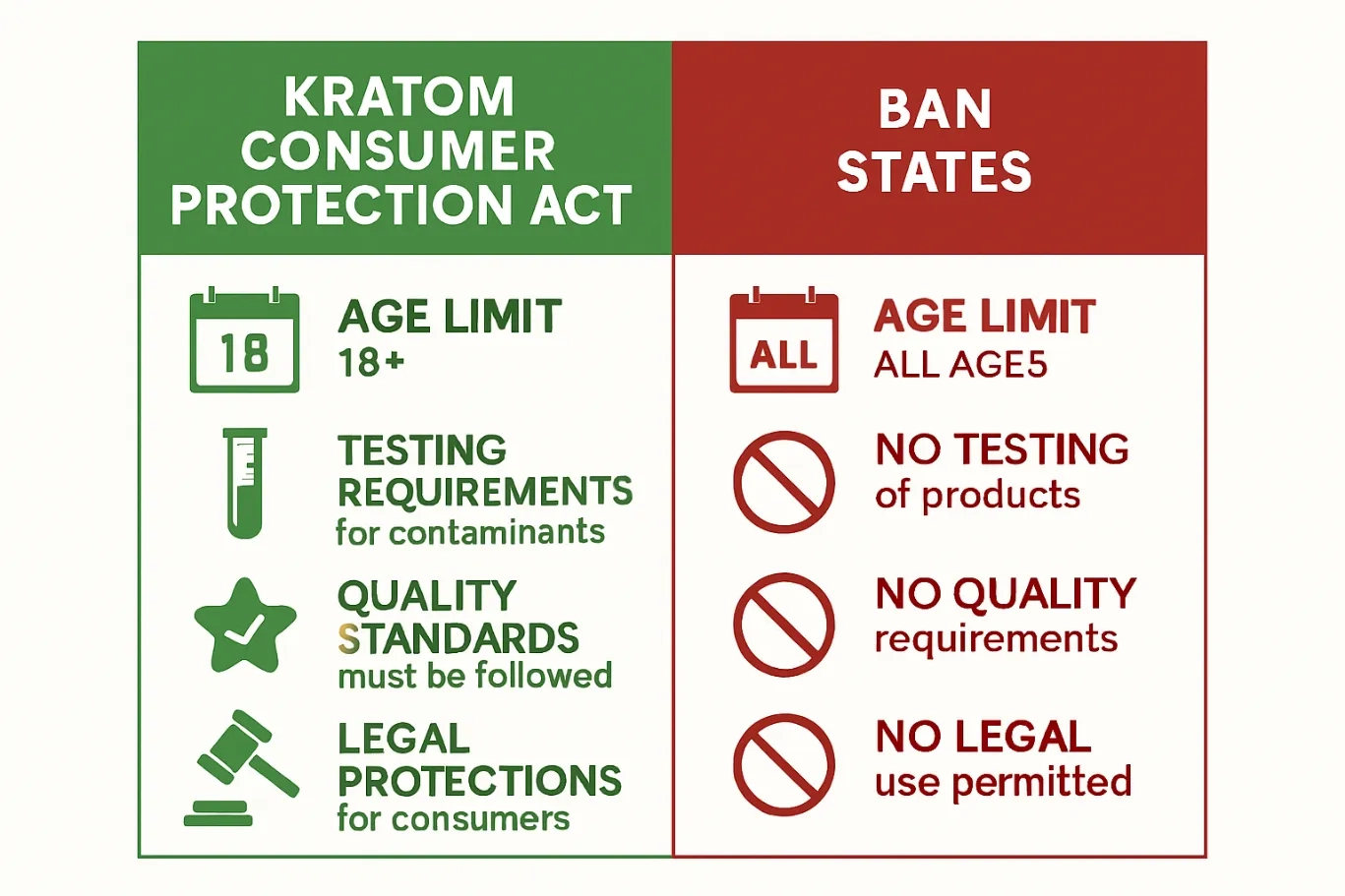
Kratom Consumer Protection Acts represent the most comprehensive approach to kratom regulation. These state-level laws provide a framework for legal kratom sales while ensuring consumer safety.
Key KCPA Provisions
Most KCPAs include similar elements:
Age Restrictions: Typically 18+ or 21+ only
Testing Requirements: Mandatory testing for contaminants
Labeling Standards: Clear ingredient lists and warnings
Prohibited Additives: Bans on synthetic compounds
Vendor Licensing: Registration requirements for sellers
Quality Controls: Good manufacturing practice standards
Benefits of KCPA Framework
The KCPA model offers several advantages:
✅ Legal Certainty: Clear rules for consumers and vendors
✅ Safety Standards: Protection from contaminated products
✅ Industry Legitimacy: Professional regulatory framework
✅ Consumer Confidence: Quality assurance measures
✅ Prevents Prohibition: Proactive regulation vs. reactive bans
Federal Agencies’ Ongoing Kratom Investigations

Multiple federal agencies continue studying kratom’s safety, efficacy, and regulatory needs.
National Institute on Drug Abuse Research
NIDA has funded extensive kratom research examining:
- Abuse potential studies in laboratory settings
- Pharmacological profiles of kratom alkaloids
- Withdrawal symptoms and dependency risks
- Therapeutic potential for opioid use disorder
Centers for Disease Control Monitoring
The CDC tracks kratom-related adverse events through:
- Poison control center reports
- Emergency department visit data
- Mortality surveillance systems
- Public health investigations
Current Research Findings
Recent federal research has produced mixed findings:
- Some studies suggest lower abuse potential than traditional opioids
- Others highlight withdrawal symptoms and dependency risks
- Research indicates potential therapeutic benefits for pain and opioid withdrawal
- Safety concerns focus on product contamination rather than pure kratom
Legal Challenges and Court Cases
Several significant legal challenges have shaped kratom’s regulatory landscape.
Industry Lawsuits Against FDA
Kratom advocacy groups and vendors have filed multiple lawsuits challenging FDA actions:
- Import detention challenges
- Warning letter appeals
- First Amendment claims regarding health information
- Due process arguments against arbitrary enforcement
State-Level Legal Challenges
Some state kratom bans have faced court challenges:
- Constitutional arguments about interstate commerce
- Equal protection claims
- Due process challenges to emergency scheduling
- Scientific evidence disputes
Interstate Commerce and Shipping Considerations
Kratom’s legal status creates complex interstate commerce issues.
Shipping Restrictions
Many kratom vendors face shipping challenges:
- Payment processors often refuse kratom transactions
- Shipping companies may restrict kratom deliveries
- State border enforcement varies
- International imports face FDA detention risks
Banking and Financial Services
The kratom industry encounters significant financial obstacles:
- Bank account closures
- Credit card processing difficulties
- Investment funding challenges
- Insurance coverage limitations
Recent Legislative Developments and Trends
The kratom regulatory landscape continues evolving rapidly.
2023-2024 Legislative Activity
Recent state legislative sessions have seen:
- New KCPA introductions in multiple states
- Amendment efforts to existing bans
- Local ordinance challenges
- Federal legislation reintroduction attempts
Emerging Regulatory Trends
Several patterns are emerging:
✅ Regulation over prohibition: More states choosing KCPA frameworks
✅ Industry professionalization: Quality standards becoming standard
✅ Scientific research: Increased federal research funding
✅ Public health approach: Focus on harm reduction vs. criminalization
International Perspectives and Comparisons
Understanding global kratom regulation provides context for US policy debates.
International Kratom Status
Different countries have adopted varying approaches:
- Thailand: Recently legalized after decades of prohibition
- Malaysia: Considering legalization despite current ban
- European Union: Mixed approach by individual countries
- Australia: Scheduled as controlled substance
- Canada: Legal but regulated as natural health product
Lessons from International Models
International experiences offer insights:
- Prohibition effectiveness: Limited success in reducing use
- Regulation benefits: Better quality control and safety
- Cultural factors: Traditional use patterns influence policy
- Economic impacts: Legal markets create jobs and tax revenue
Workplace and Employment Considerations
Kratom’s legal status doesn’t necessarily protect employment rights.
Drug Testing Policies
Many employers maintain kratom restrictions:
- Pre-employment screening may include kratom
- Random testing policies often prohibit kratom
- Safety-sensitive positions frequently ban kratom use
- Federal contractors may follow federal guidance
Professional Licensing Issues
Licensed professionals face additional considerations:
- Medical professionals may face licensing board scrutiny
- Commercial drivers must follow DOT regulations
- Law enforcement officers often prohibited from kratom use
- Military personnel subject to UCMJ restrictions
Several factors will likely influence kratom’s legal future.
Potential Federal Developments
Possible federal actions include:
- Formal scheduling by DEA (though less likely after 2016)
- FDA regulatory pathway development
- Congressional legislation passage
- Research mandate expansion
State-Level Trends
State regulations will likely continue evolving:
- More KCPA adoptions expected
- Ban reversals possible in some states
- Local ordinance proliferation
- Interstate compact development potential
🗺️ US Kratom Legal Status Checker
Consumer Safety and Quality Considerations
Understanding kratom’s legal status includes recognizing quality and safety factors.
Product Quality Concerns
Legal kratom markets still face quality challenges:
- Contamination risks from heavy metals and pathogens
- Adulteration with synthetic compounds
- Inconsistent potency across products
- Labeling inaccuracies regarding alkaloid content
Safe Consumption Practices
Consumers in legal jurisdictions should prioritize safety:
- Research vendors thoroughly before purchasing
- Request lab testing results for products
- Start with low doses to assess individual tolerance
- Avoid mixing with other substances
- Consult healthcare providers about potential interactions
For comprehensive guidance on responsible use, readers can explore how to consume kratom safely.
Industry Impact and Economic Considerations
Legal kratom markets generate significant economic activity.
Market Size and Growth
The legal kratom industry has experienced substantial growth:
- Estimated market value exceeds $1 billion annually
- Consumer base includes millions of regular users
- Vendor networks span thousands of businesses
- Employment opportunities across the supply chain
Tax Revenue and Regulation Benefits
States with legal, regulated kratom markets benefit from:
💰 Sales tax revenue from legitimate businesses
💰 Business licensing fees and regulatory compliance
💰 Job creation in manufacturing and retail
💰 Reduced enforcement costs compared to prohibition
Advocacy and Political Landscape
The kratom advocacy movement has significantly influenced policy outcomes.
Key Advocacy Organizations
Several organizations work to protect kratom access:
- American Kratom Association (AKA): Leading advocacy group
- Botanical Education Alliance: Research and education focused
- Kratom Trade Association: Industry standards organization
- State-level groups: Local advocacy organizations
Political Strategies and Success
Advocacy groups have achieved success through:
✅ Grassroots mobilization of kratom consumers
✅ Scientific research funding and promotion
✅ Legislative relationship building
✅ Media engagement and public education
✅ Coalition building with other stakeholders
Medical and Scientific Perspectives
The medical community’s views on kratom continue evolving.
Healthcare Provider Attitudes
Medical professionals express varying perspectives:
- Pain specialists show increasing interest in kratom research
- Addiction medicine doctors debate kratom’s role in treatment
- Primary care physicians seek guidance on patient kratom use
- Pharmacologists study kratom’s unique alkaloid profile
Research Priorities and Findings
Current scientific priorities include:
🔬 Clinical trials for specific medical conditions
🔬 Safety studies examining long-term use effects
🔬 Pharmacokinetic research on alkaloid metabolism
🔬 Interaction studies with common medications
International Trade and Supply Chain Issues
Kratom’s legal status affects international trade relationships.
Import/Export Challenges
Legal kratom businesses face supply chain obstacles:
- Customs detention risks for imported kratom
- Banking restrictions complicating international payments
- Quality control challenges across international suppliers
- Regulatory compliance varying by source country
Source Country Relationships
Most kratom originates from Southeast Asia:
- Indonesia: Largest kratom supplier globally
- Malaysia: Significant producer despite domestic restrictions
- Thailand: Emerging legal market and exporter
- Myanmar: Growing kratom cultivation region
Technology and Innovation in Kratom Industry
Legal markets drive technological advancement.
Testing and Quality Assurance
Technology improvements include:
- Advanced laboratory testing for contaminants
- Blockchain tracking for supply chain transparency
- Standardized extraction methods
- Mobile testing capabilities for rapid results
E-commerce and Distribution
Digital innovations affect kratom commerce:
- Online marketplace platforms
- Subscription services for regular consumers
- Mobile apps for product information
- Digital payment solutions addressing banking restrictions
Law Enforcement Perspectives and Practices
Police and prosecutors approach kratom differently across jurisdictions.
Enforcement Priorities
Law enforcement agencies typically:
- Focus resources on clearly illegal substances
- Avoid kratom cases in legal jurisdictions
- Coordinate with regulatory agencies on quality issues
- Educate officers about local kratom laws
Prosecution Patterns
District attorneys generally:
- Decline prosecution in legally ambiguous cases
- Prioritize public safety over possession charges
- Collaborate with health departments on contamination issues
- Focus on unlawful sales to minors
Consumer Rights and Legal Protections
Legal kratom users enjoy certain protections and rights.
Employment Protections
Workers in legal kratom states may have:
- Limited employment protections (varies by state)
- Medical privacy rights regarding kratom use
- Disability accommodation potential for medical users
- Union representation for workplace kratom policies
Housing and Civil Rights
Kratom consumers may face:
- Housing discrimination despite legal status
- Child custody considerations in family court
- Professional licensing scrutiny in regulated fields
- Insurance coverage limitations for kratom-related issues
Future Research and Development Needs
Scientific advancement will influence kratom’s legal future.
Priority Research Areas
Critical research needs include:
🔬 Standardized dosing guidelines development
🔬 Drug interaction comprehensive studies
🔬 Therapeutic potential clinical trials
🔬 Addiction liability comparative assessments
🔬 Quality standards optimization research
Funding and Institutional Support
Research advancement requires:
- Federal funding allocation increases
- Academic institution participation expansion
- Industry collaboration with researchers
- International cooperation on studies
Best Practices for Staying Legally Compliant
Kratom consumers must navigate complex legal landscapes carefully.
Legal Compliance Checklist
Before purchasing or using kratom:
✅ Research current state and local laws
✅ Verify vendor licensing and compliance
✅ Check product testing and labeling
✅ Understand workplace policies and restrictions
✅ Consult legal counsel if uncertain about regulations
Staying Informed About Changes
Legal landscapes change rapidly:
- Subscribe to advocacy organization updates
- Follow state legislative sessions
- Monitor federal agency announcements
- Join local kratom consumer groups
- Consult legal professionals when needed
For specific state information, readers can check resources about kratom legality in Nebraska and Las Vegas kratom laws for examples of detailed local research.
Is Kratom Legal in the US? – FaQs
Is kratom legal at the federal level in the United States?
Kratom is legal at the federal level in the United States. The U.S. Drug Enforcement Administration (DEA) has not classified it as a controlled substance, allowing kratom to be sold, purchased, and possessed legally across most states, subject to local or state-specific regulations.
Are there any states where kratom is banned?
Yes, several states have restricted or banned kratom entirely. Examples include:
- Alabama
- Arkansas
- Indiana
- Rhode Island
- Vermont
- Wisconsin
Are there any cities or counties with kratom restrictions?
Even in states where kratom is legal, certain cities or counties may restrict its sale or possession. Examples include:
- San Diego, California
- Denver, Colorado
- Miami-Dade, Florida
Is kratom legal for sale in retail stores?
In most states where kratom is legal, it can be sold in retail stores, herbal shops, and smoke shops. Sellers must comply with state and local laws, including age restrictions, labeling, and other regulations that may apply.
What are the age requirements for buying kratom in the US?
Most vendors require customers to be at least 18 or 21 years old depending on state law and store policy. Age verification is commonly required for both online and in-person purchases to comply with local regulations.
Can kratom be shipped across state lines?
Kratom can be shipped across state lines in the U.S. to states where it is legal. Shipping to states or areas where kratom is banned is prohibited, and reputable vendors verify shipping addresses to ensure compliance.
Are there federal regulations on kratom labeling or safety?
Currently, the FDA monitors kratom products but does not classify it as a controlled substance. While there are no mandatory federal labeling laws specific to kratom, reputable vendors often provide ingredient transparency and safety information.
How can I check if kratom is legal in my state?
- Visit state government websites for controlled substance listings
- Check local city or county ordinances
- Consult official legal resources or state health departments
- Review updates from reputable kratom advocacy organizations
Can kratom legality change over time?
Yes, kratom legality can change at the state or local level. Some states have considered bans, restrictions, or regulations that may alter legal status. Staying informed through government updates or advocacy groups is recommended for buyers and sellers.
Are there any federal bills or regulations pending for kratom?
Over the years, various federal bills and proposals have been discussed regarding kratom, but no federal law has banned it. Legislative activity may occur, so following news and legal updates is important for anyone interested in kratom legality.
Conclusion
The question “Is kratom legal in the US?” reveals the complexity of America’s evolving drug policy landscape. While kratom remains federally unscheduled, the patchwork of state and local regulations creates a challenging environment for consumers, businesses, and policymakers alike.
The trend toward regulation rather than prohibition suggests a maturing approach to kratom policy. States implementing Kratom Consumer Protection Acts demonstrate that comprehensive regulation can address safety concerns while preserving access for adult consumers. This framework offers a middle path between unrestricted markets and outright prohibition.

Michael is a cultural researcher with a deep interest in natural history and the ways people have interacted with plants throughout time. He enjoys studying how traditional practices have shaped everyday routines and values in different regions of the world. With a background in anthropology and cultural studies, Michael combines storytelling and research to highlight the connections between nature, heritage, and lifestyle in an engaging and thoughtful way.