
Jack Botanicals: Science-Backed Quality
Every batch undergoes 9+ independent lab tests for purity and potency. Choose from premium Red Maeng Da, Red Bali, or energizing Green Maeng Da.
🔬 Lab-Verified Quality at 30% OFF
Code: JACK30
Thailand’s relationship with kratom has undergone a dramatic transformation in recent years. Is kratom legal in Thailand? The answer might surprise you. After decades of prohibition, Thailand made headlines in 2018 by becoming one of the first countries to reverse its ban on this traditional botanical. This groundbreaking decision marked a significant shift in Southeast Asian drug policy and opened new doors for both research and regulated use.
Understanding Thailand’s kratom laws is crucial for travelers, researchers, and anyone interested in the plant’s legal status worldwide. The country’s approach to kratom regulation provides valuable insights into how traditional plants can be reintegrated into modern legal frameworks while maintaining public safety standards.
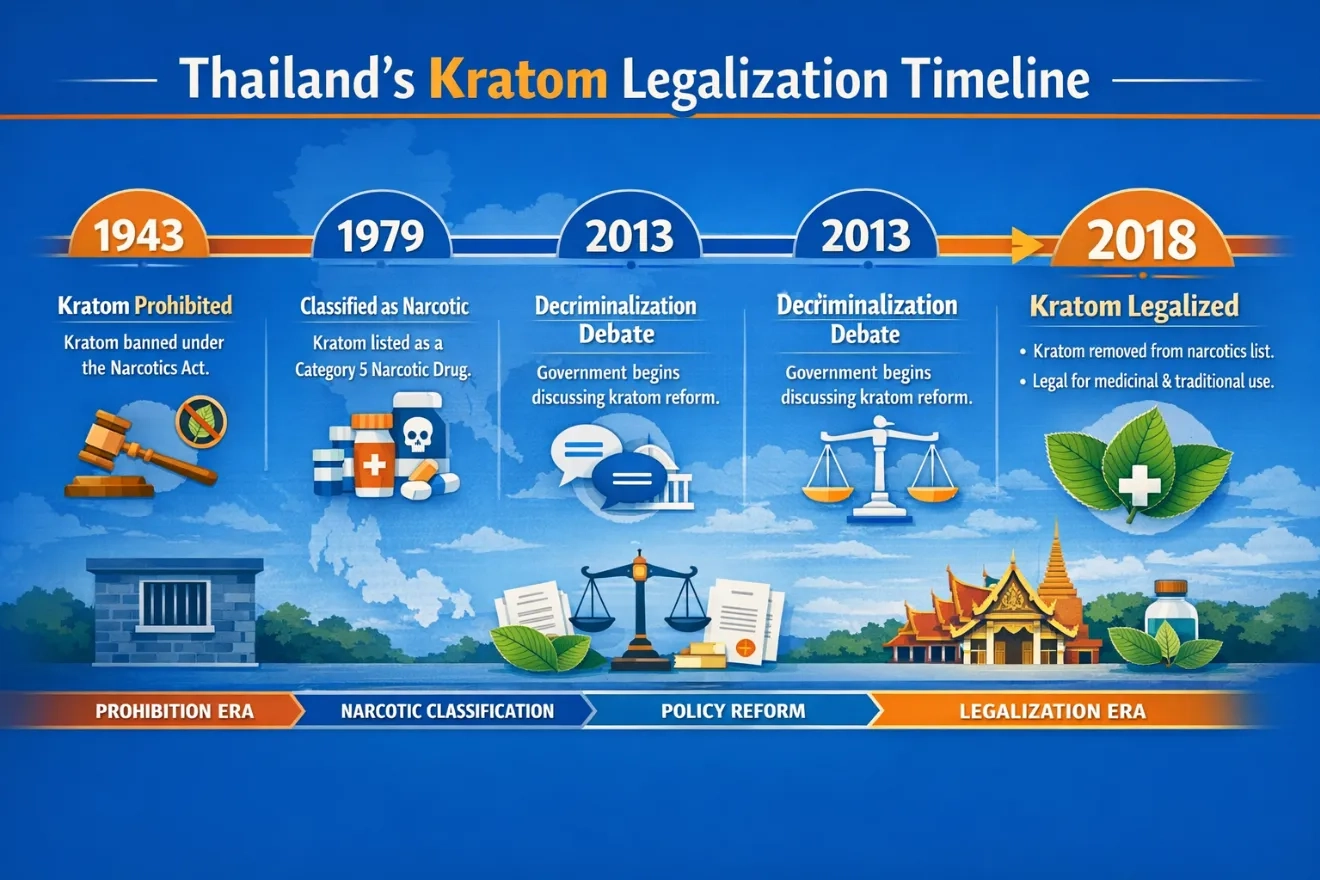
- Kratom is legal in Thailand as of 2018, reversing a 79-year prohibition period
- Age restrictions apply – only individuals 18 years and older can legally possess and use kratom
- Regulated framework exists with specific licensing requirements for cultivation, distribution, and sale
- Traditional use is protected while commercial activities require proper permits and compliance
- International travelers should understand import/export restrictions and carry proper documentation
Historical Background of Kratom in Thailand
Traditional Use and Cultural Significance
Kratom (Mitragyna speciosa) has deep roots in Thai culture, with indigenous communities using the plant for centuries. Traditional workers, particularly laborers and farmers, consumed kratom leaves to combat fatigue and increase productivity during long work days. The plant held significant cultural and medicinal value in rural Thai communities.
The 1943 Prohibition
In 1943, Thailand banned kratom under the Kratom Act, making possession and use illegal. This prohibition lasted for 79 years and was primarily driven by concerns about potential abuse and competition with government-controlled opium trade. The ban criminalized a plant that had been safely used for generations.
Path to Legalization
The journey toward legalization began gaining momentum in the 2010s as researchers and policymakers recognized the potential benefits of kratom. Public health officials, traditional medicine practitioners, and international pressure contributed to a growing movement for reform.
Current Legal Status: Is Kratom Legal in Thailand?
2018 Legalization Milestone
Yes, kratom is legal in Thailand following the landmark decision in August 2018. The Thai parliament voted to remove kratom from the country’s narcotics list, making it the first Southeast Asian nation to reverse such a prohibition. This historic vote represented a major shift in drug policy and traditional medicine recognition.
Legal Framework Overview
Thailand’s current kratom laws operate under a regulated legalization model that includes:
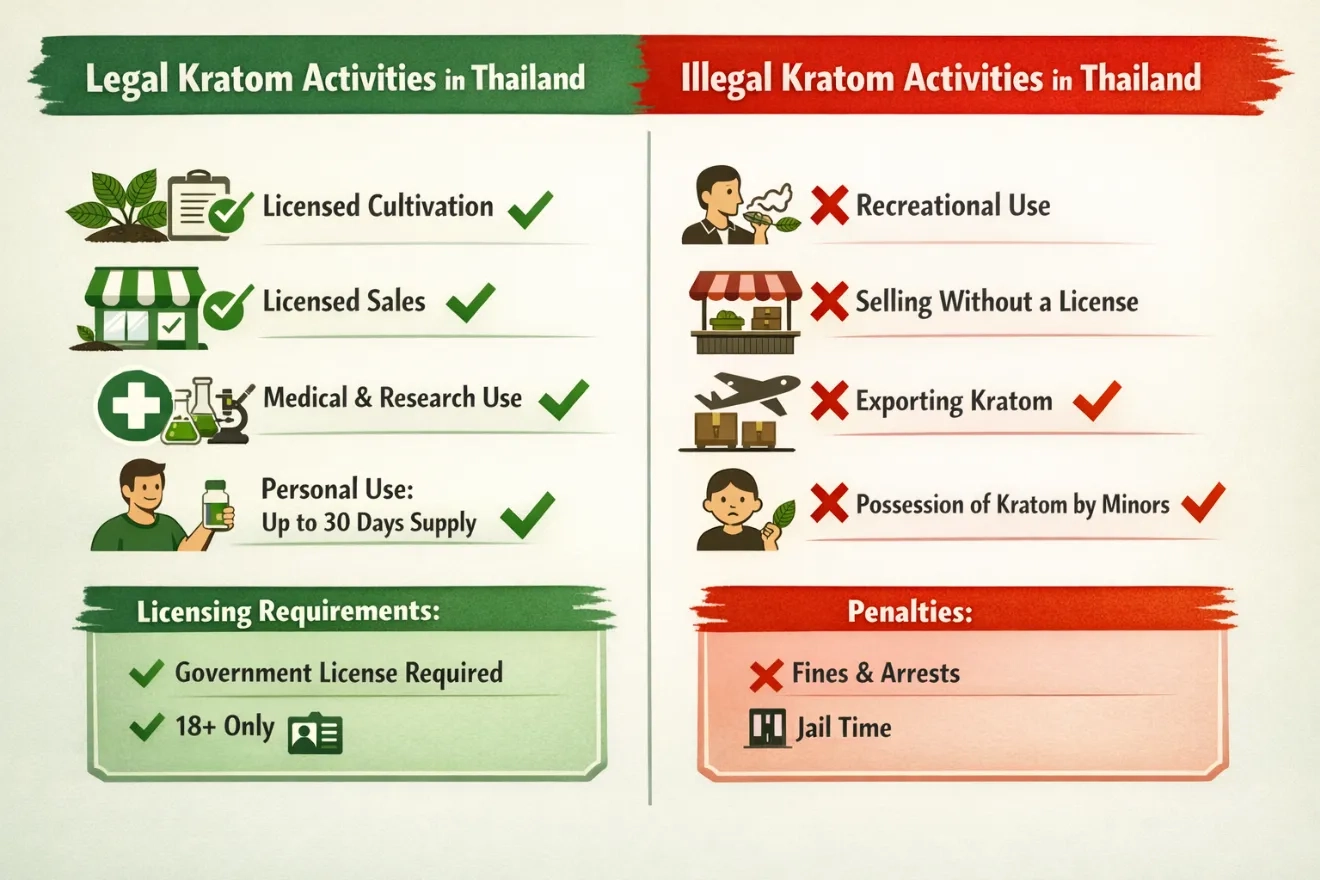
- Personal use protection for adults 18 and older
- Traditional medicine integration within healthcare systems
- Commercial licensing requirements for businesses
- Quality control standards for products
- Import/export regulations for international trade
Age Restrictions and Personal Use Regulations
🏆 Jack Botanicals: Transparency You Can Trust
| ✓ AKA GMP Approved | Industry Gold Standard |
| ✓ 9+ Lab Tests Per Batch | Guaranteed Purity |
| ✓ Premium Strains | Red & Green Varieties |
Featured: Red Maeng Da • Red Bali • Green Maeng Da
💎 Exclusive Lab-Tested Quality Discount
JACK30 = 30% OFF
Minimum Age Requirements
Thailand enforces strict age restrictions for kratom use:
- 18 years minimum for legal possession and consumption
- Parental consent required for minors in medical contexts
- Educational programs in schools about responsible use
- Penalties for underage use including fines and counseling
Personal Possession Limits
While personal use is legal, Thailand maintains reasonable limits:
- Reasonable quantities for personal consumption
- No specific weight limits but must demonstrate personal use intent
- Home cultivation allowed for personal use only
- Sharing restrictions – cannot distribute to minors
Public Consumption Guidelines
Kratom consumption in Thailand follows standard public decency rules:
- Private consumption preferred over public use
- Workplace policies may restrict use during work hours
- Driving restrictions similar to alcohol impairment laws
- Tourist areas may have specific guidelines
Commercial Regulations and Licensing
Cultivation Licensing
Commercial kratom cultivation requires proper licensing:
Requirements Include:
- Valid agricultural permits
- Land use documentation
- Quality control protocols
- Regular government inspections
- Compliance with organic standards
Distribution and Retail Permits
Businesses selling kratom must obtain specific permits:
- Retail licenses for direct consumer sales
- Wholesale permits for bulk distribution
- Export licenses for international trade
- Quality assurance certifications
- Tax registration and compliance
Product Standards and Quality Control
Thailand maintains strict quality standards:
- Purity testing for contaminants
- Potency verification of active compounds
- Packaging requirements with proper labeling
- Storage standards to maintain quality
- Batch tracking for safety recalls
Medical and Research Applications
Traditional Medicine Integration
Thailand actively promotes kratom integration in traditional medicine:
- Hospital programs offering kratom-based treatments
- Research initiatives studying therapeutic applications
- Practitioner training for medical professionals
- Patient education about proper use and dosage
Understanding kratom’s medical applications can help those seeking pain relief alternatives, as research continues to expand in Thailand’s regulated environment.
Scientific Research Programs
The legalization opened doors for extensive research:
Current Research Areas:
- Pain management applications
- Addiction treatment potential
- Mental health benefits
- Agricultural optimization
- Pharmaceutical development
International Travel and Import/Export Rules

Traveling to Thailand with Kratom
International travelers should understand import regulations:
- Prescription documentation may be required
- Quantity limitations for personal use
- Customs declarations must be accurate
- Source country legality affects import approval
- Medical necessity documentation helpful
Exporting Kratom from Thailand
Thailand allows kratom export under specific conditions:
- Export licenses required for commercial quantities
- Destination country laws must permit import
- Quality certificates from Thai authorities
- Proper documentation for customs clearance
- Compliance verification with international standards
For those interested in understanding kratom’s federal legal status in other countries, it’s important to research destination-specific laws before traveling.
Enforcement and Penalties
Compliance Monitoring
Thai authorities actively monitor kratom compliance:
- Regular inspections of licensed facilities
- Random testing of products in market
- Consumer complaint investigation systems
- Border control monitoring for illegal imports
- Online sales oversight and regulation
Penalties for Violations
Violations of kratom laws carry specific penalties:
Minor Violations:
- Warning notices
- Small fines
- Mandatory education programs
- Temporary license suspension
Serious Violations:
- Substantial fines
- License revocation
- Criminal charges
- Import/export bans
Underage Use Consequences
Special provisions address underage kratom use:
- Educational counseling for first offenses
- Parental notification requirements
- Community service options
- Rehabilitation programs for problematic use
Regional Comparison and International Impact
Southeast Asian Influence
Thailand’s legalization influenced regional policy:
- Malaysia considering similar reforms
- Indonesia reviewing traditional use policies
- Myanmar studying Thai regulatory model
- Vietnam researching medical applications
- Philippines examining cultivation potential
Global Policy Implications
Thailand’s approach provides a model for other nations:
Key Lessons:
- Regulated legalization can work effectively
- Traditional use knowledge valuable for policy
- Economic benefits support sustainable programs
- Public health outcomes improve with regulation
- International cooperation enhances success
Those interested in learning more about kratom’s legal landscape can explore federal legal considerations and how different jurisdictions approach regulation.
🇹🇭 Thailand Kratom Legal Status Checker
Economic Impact and Market Development
Agricultural Sector Growth
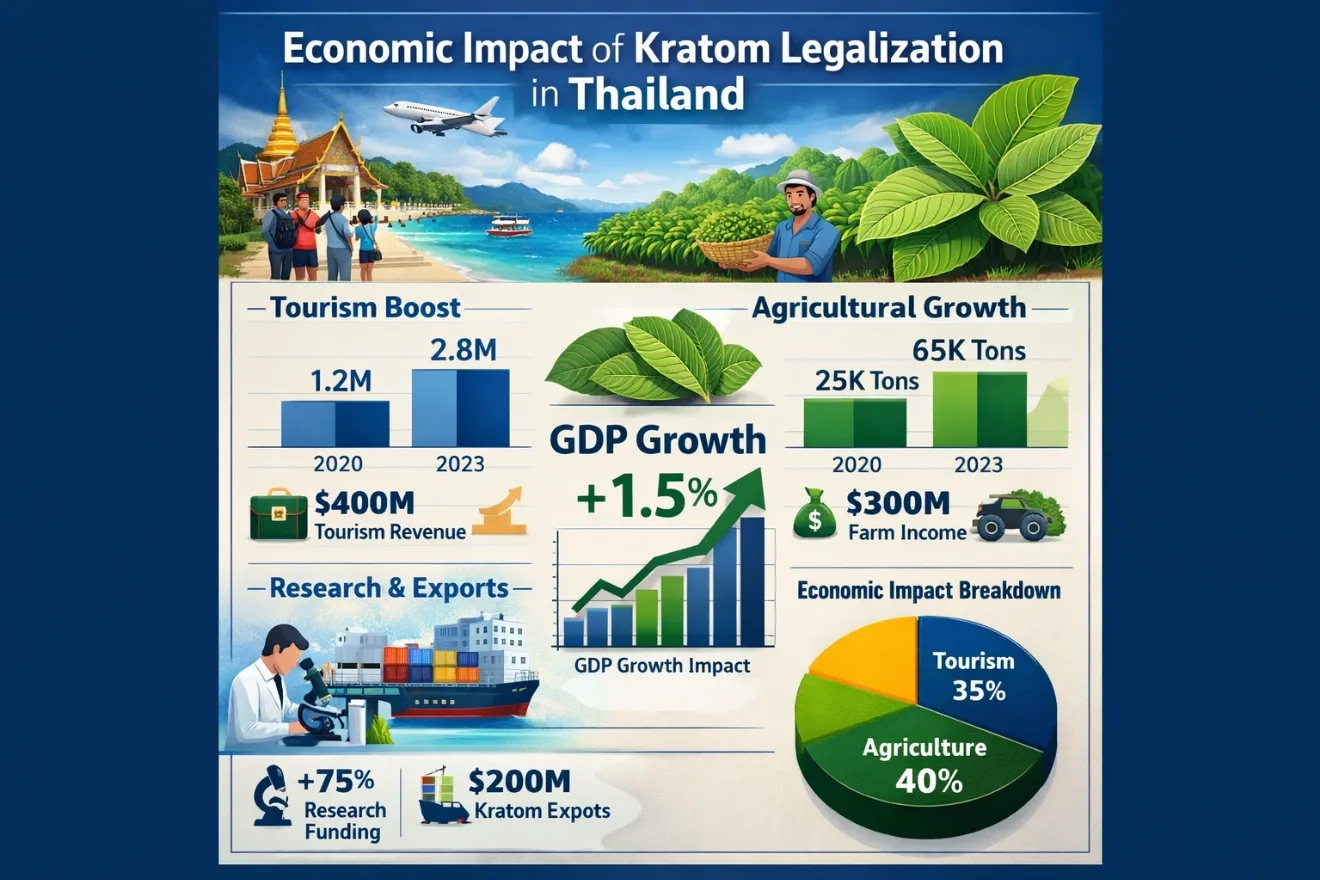
Thailand’s kratom legalization has created significant economic opportunities:
Economic Benefits Include:
- Farmer income diversification through kratom cultivation
- Export revenue generation to international markets
- Job creation in processing and distribution
- Rural development in traditional growing regions
- Tax revenue from regulated businesses
Tourism and Medical Tourism
Kratom legalization has influenced Thailand’s tourism sector:
- Medical tourism growth for kratom-based treatments
- Cultural tourism highlighting traditional plant medicine
- Research tourism attracting international scientists
- Wellness retreats incorporating kratom therapy
- Educational programs for international visitors
Investment and Innovation
The regulated market attracts investment:
- Research facilities development
- Processing technology advancement
- Quality testing laboratory expansion
- Product innovation for medical applications
- Sustainable farming practice implementation
Public Health and Safety Considerations
Monitoring and Surveillance
Thailand maintains comprehensive public health monitoring:
Safety Measures Include:
- Adverse event reporting systems
- Usage pattern studies among population
- Quality control testing of market products
- Public education campaigns about safe use
- Healthcare provider training programs
Harm Reduction Strategies
The government implements evidence-based harm reduction:
- Dosage guidelines for safe consumption
- Drug interaction warnings and education
- Addiction treatment services when needed
- Mental health support for problematic use
- Community outreach programs in rural areas
For individuals seeking information about kratom withdrawal, Thailand’s healthcare system provides resources and support.
Research and Development Priorities
Thailand prioritizes specific research areas:
Current Focus Areas:
- Long-term health effects studies
- Optimal dosage determination
- Drug interaction research
- Addiction potential assessment
- Therapeutic benefit validation
Future Outlook and Policy Evolution
Regulatory Refinements
Thailand continues refining its kratom regulations:
- Policy adjustments based on implementation experience
- International cooperation with other countries
- Technology integration for better monitoring
- Stakeholder engagement with communities and businesses
- Evidence-based updates from ongoing research
International Leadership Role
Thailand positions itself as a regional leader:
Leadership Initiatives:
- Sharing regulatory expertise with other nations
- Hosting international conferences on kratom policy
- Collaborating on research projects
- Developing international standards
- Supporting evidence-based policy development
Market Expansion Potential
The kratom market shows significant growth potential:
- Pharmaceutical development opportunities
- International export market expansion
- Product diversification into various formats
- Medical integration advancement
- Technology innovation in cultivation and processing
Practical Guidelines for Compliance
For Individuals
Personal users should follow these guidelines:
Best Practices:
- Verify age eligibility before possession or use
- Purchase from licensed vendors only
- Maintain reasonable quantities for personal use
- Respect public consumption guidelines
- Stay informed about regulation updates
For Businesses
Commercial operators must ensure compliance:
- Obtain proper licensing before operations
- Implement quality control systems
- Maintain accurate records of all transactions
- Follow labeling requirements for products
- Submit to regular inspections by authorities
For Researchers
Scientific researchers should:
- Secure research permits before beginning studies
- Follow ethical guidelines for human subjects
- Collaborate with Thai institutions when possible
- Share findings with regulatory authorities
- Maintain international standards for research quality
Those interested in specific kratom varieties can learn about red dragon kratom and its applications within Thailand’s regulated framework.
Common Misconceptions and Clarifications
Myth vs. Reality
Several misconceptions exist about Thailand’s kratom laws:
Common Myths:
- ❌ “Kratom is completely unregulated in Thailand”
- ❌ “Anyone can sell kratom without permits”
- ❌ “There are no age restrictions”
- ❌ “All kratom products are automatically legal”
- ❌ “International laws don’t apply to Thai kratom”
Reality Check:
- ✅ Kratom operates under specific regulations
- ✅ Commercial activities require proper licensing
- ✅ Age restrictions strictly enforced (18+)
- ✅ Products must meet quality standards
- ✅ International laws still apply for import/export
Legal vs. Regulated
Understanding the distinction between legal and regulated:
- Legal status means kratom is not prohibited
- Regulated framework means specific rules apply
- Compliance required for all legal activities
- Penalties exist for violations
- Ongoing oversight ensures public safety
Resources and Support
Government Resources
Official information sources include:
- Ministry of Public Health regulations and updates
- Department of Agriculture cultivation guidelines
- Customs Department import/export procedures
- Tourism Authority visitor information
- Legal Aid Society assistance for questions
Professional Support
Various professionals can provide guidance:
Available Support:
- Legal consultants specializing in drug law
- Agricultural advisors for cultivation
- Medical professionals for therapeutic use
- Business consultants for commercial ventures
- Research coordinators for scientific studies
Educational Programs
Thailand offers various educational opportunities:
- University courses on traditional medicine
- Training programs for healthcare providers
- Workshops for farmers and cultivators
- Conferences on kratom research
- Public seminars on responsible use
For those exploring different kratom options, resources about white kali kratom effects provide valuable information for informed decisions.
Is Kratom Legal in Thailand? – Frequently Asked Questions
As of 2021, kratom is legal in Thailand after being decriminalized through legislative changes. The Thai government removed kratom from its list of controlled substances, making it legal to possess, use, and trade kratom within the country. This marked a significant policy shift from decades of prohibition that began in 1943.
The legalization allows for regulated cultivation, processing, and distribution of kratom products. However, the government has established specific guidelines and regulations that must be followed for commercial operations and personal use.
Thailand legalized kratom in August 2021 when the Narcotics Act was amended to remove kratom from Category 5 of controlled substances. This decision was driven by several factors including recognition of kratom’s traditional medicinal uses, economic opportunities, and mounting evidence that kratom poses relatively low health risks compared to other substances.
The government also recognized that criminalization had been ineffective, as kratom use remained widespread despite decades of prohibition. The legalization was part of broader drug policy reforms aimed at treating drug issues as public health matters rather than purely criminal ones.
Yes, while kratom is legal, Thailand has implemented several restrictions. The sale of kratom to minors under 18 years old is prohibited. Additionally, kratom cannot be mixed with other controlled substances or sold in combination with alcohol or other drugs.
Commercial kratom operations must comply with licensing requirements and quality standards set by the Food and Drug Administration. Public consumption in certain areas may also be restricted, and driving under the influence of kratom could still result in legal consequences.
Yes, tourists can legally purchase and use kratom in Thailand following the same regulations that apply to Thai citizens. Visitors can buy kratom from licensed vendors and consume it for personal use without legal concerns.
However, tourists should be aware that kratom remains illegal in many other countries. Attempting to transport kratom across international borders could result in serious legal consequences in destination countries where it remains prohibited. It’s crucial to research the laws of your home country and any transit countries before traveling with kratom products.
Kratom has been used traditionally in Thailand for centuries, particularly among manual laborers who chewed the leaves to combat fatigue and increase productivity. It was commonly used in southern Thailand and was deeply integrated into local culture and traditional medicine.
In 1943, Thailand banned kratom under the Kratom Act, primarily due to concerns that it was competing with the government’s opium trade revenue. The ban remained in effect for nearly 80 years, during which possession and use carried criminal penalties including fines and imprisonment. Despite prohibition, traditional use continued in many rural areas.
Thailand regulates kratom commerce through a licensing system administered by the Food and Drug Administration (FDA). Commercial cultivators, processors, and retailers must obtain proper licenses and comply with good manufacturing practices and quality control standards.
The government has established guidelines for kratom product labeling, packaging, and marketing. Export of kratom products requires additional permits and must comply with international trade regulations. The regulatory framework aims to ensure product safety while supporting the development of a legitimate kratom industry.
Violations of kratom regulations in Thailand can result in various penalties depending on the nature and severity of the offense. Selling kratom to minors, operating without proper licenses, or mixing kratom with controlled substances can result in fines, license revocation, and potentially criminal charges.
While simple possession and use are legal, violations of commercial regulations or safety standards may result in fines ranging from thousands to hundreds of thousands of Thai baht. Serious violations involving public safety or large-scale illegal operations could result in imprisonment and significant financial penalties.
Kratom legalization has created new economic opportunities in Thailand, particularly for rural farmers who can now legally cultivate kratom trees. The emerging kratom industry has generated employment in cultivation, processing, retail, and export sectors, contributing to local economic development.
Socially, legalization has reduced the criminalization of traditional practices and eliminated the legal risks faced by users who relied on kratom for traditional medicine or labor-related purposes. The policy change has also positioned Thailand as a potential leader in the global kratom market, attracting international business interest and research opportunities.
Conclusion
Is kratom legal in Thailand? Absolutely yes, but within a carefully regulated framework that prioritizes public safety and traditional use rights. Thailand’s groundbreaking approach to kratom legalization represents a successful model of evidence-based drug policy reform that other nations are studying and potentially adopting.

Christopher is an avid researcher with an interest in ethnobotany, folklore, and the role of plants in shaping cultural identity. His curiosity has led him to study traditions from multiple regions, discovering the values and meanings attached to natural resources. Christopher enjoys presenting this knowledge in ways that encourage thoughtful reflection and appreciation. His goal is to foster awareness of how deeply nature and human culture remain intertwined over time.