
Jack Botanicals: Science-Backed Quality
Every batch undergoes 9+ independent lab tests for purity and potency. Choose from premium Red Maeng Da, Red Bali, or energizing Green Maeng Da.
🔬 Lab-Verified Quality at 30% OFF
Code: JACK30
Oregon’s kratom landscape has undergone significant changes in recent years, leaving many consumers wondering about the current legal status of this botanical substance. Is kratom legal in Oregon? The answer is more nuanced than a simple yes or no, as the state has implemented specific regulations that govern its sale, distribution, and consumption while maintaining its legal status for adults.
Unlike states that have imposed outright bans, Oregon has taken a regulatory approach to kratom, establishing age restrictions, quality standards, and licensing requirements for processors and vendors. This comprehensive framework aims to protect consumers while allowing legal access to kratom products for those who choose to use them.
- Kratom remains legal in Oregon for adults 21 and older, with specific regulatory frameworks in place
- Age restrictions prohibit kratom sales to anyone under 21 years of age
- Processor licensing requirements ensure quality control and safety standards for kratom products
- Labeling and testing mandates protect consumers from contaminated or adulterated products
- Local ordinances may impose additional restrictions beyond state law
Current Legal Status of Kratom in Oregon 🌲
Is kratom legal in Oregon as of 2025? Yes, kratom maintains its legal status in Oregon, but with important caveats. The state has not classified kratom as a controlled substance, allowing adults to purchase, possess, and consume kratom products legally. However, Oregon has implemented one of the most comprehensive regulatory frameworks for kratom in the United States.
The Oregon Health Authority oversees kratom regulation under the state’s food and drug safety programs. This regulatory approach represents a middle ground between complete prohibition and unrestricted access, focusing on consumer protection and product safety rather than criminalization.
Federal vs. State Jurisdiction
While kratom remains unscheduled at the federal level, individual states maintain the authority to regulate or ban kratom within their borders. Oregon’s decision to regulate rather than prohibit kratom reflects a harm-reduction approach that acknowledges the botanical’s widespread use while implementing safeguards.
The Food and Drug Administration (FDA) has not approved kratom for any medical use, and the Drug Enforcement Administration (DEA) has considered but not implemented federal scheduling. This regulatory uncertainty at the federal level makes state-level legislation particularly important for consumers and businesses.
Oregon’s Age Restrictions and Consumer Protections 🔞
🏆 Jack Botanicals: Transparency You Can Trust
| ✓ AKA GMP Approved | Industry Gold Standard |
| ✓ 9+ Lab Tests Per Batch | Guaranteed Purity |
| ✓ Premium Strains | Red & Green Varieties |
Featured: Red Maeng Da • Red Bali • Green Maeng Da
💎 Exclusive Lab-Tested Quality Discount
JACK30 = 30% OFF
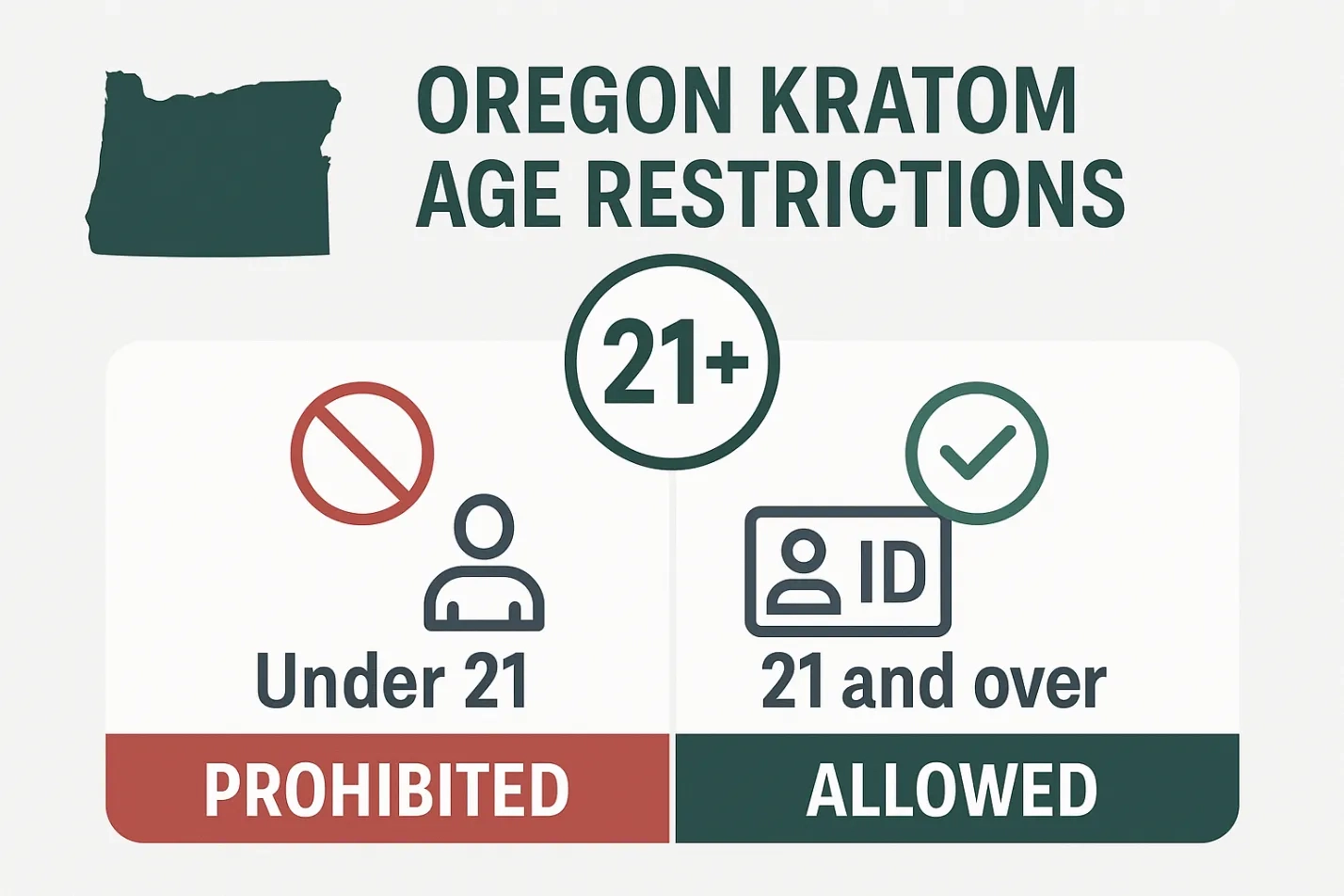
One of the most significant aspects of Oregon’s kratom legislation is the 21-year minimum age requirement for purchasing kratom products. This age restriction aligns with Oregon’s approach to other regulated substances and reflects concerns about kratom use among younger populations.
Age Verification Requirements
Retailers must implement robust age verification systems, including:
- Photo identification checks for all kratom purchases
- Digital age verification for online sales with Oregon delivery
- Staff training on proper identification procedures
- Record keeping of verification processes
Consumer Safety Protections
Oregon’s kratom laws include several consumer protection measures:
Labeling Requirements:
- Clear ingredient lists and kratom alkaloid content
- Batch numbers for product traceability
- Manufacturing and expiration dates
- Health warnings and usage guidelines
Quality Standards:
- Prohibition of synthetic additives or adulterants
- Heavy metal and contaminant testing requirements
- Good manufacturing practice compliance
- Third-party laboratory verification
Understanding what kind of kratom to buy and strain types becomes particularly important when navigating Oregon’s regulated market, as consumers can expect higher quality standards but should still make informed choices.
🌿 Oregon Kratom Legal Compliance Checker
Processor Licensing and Industry Regulations 📋
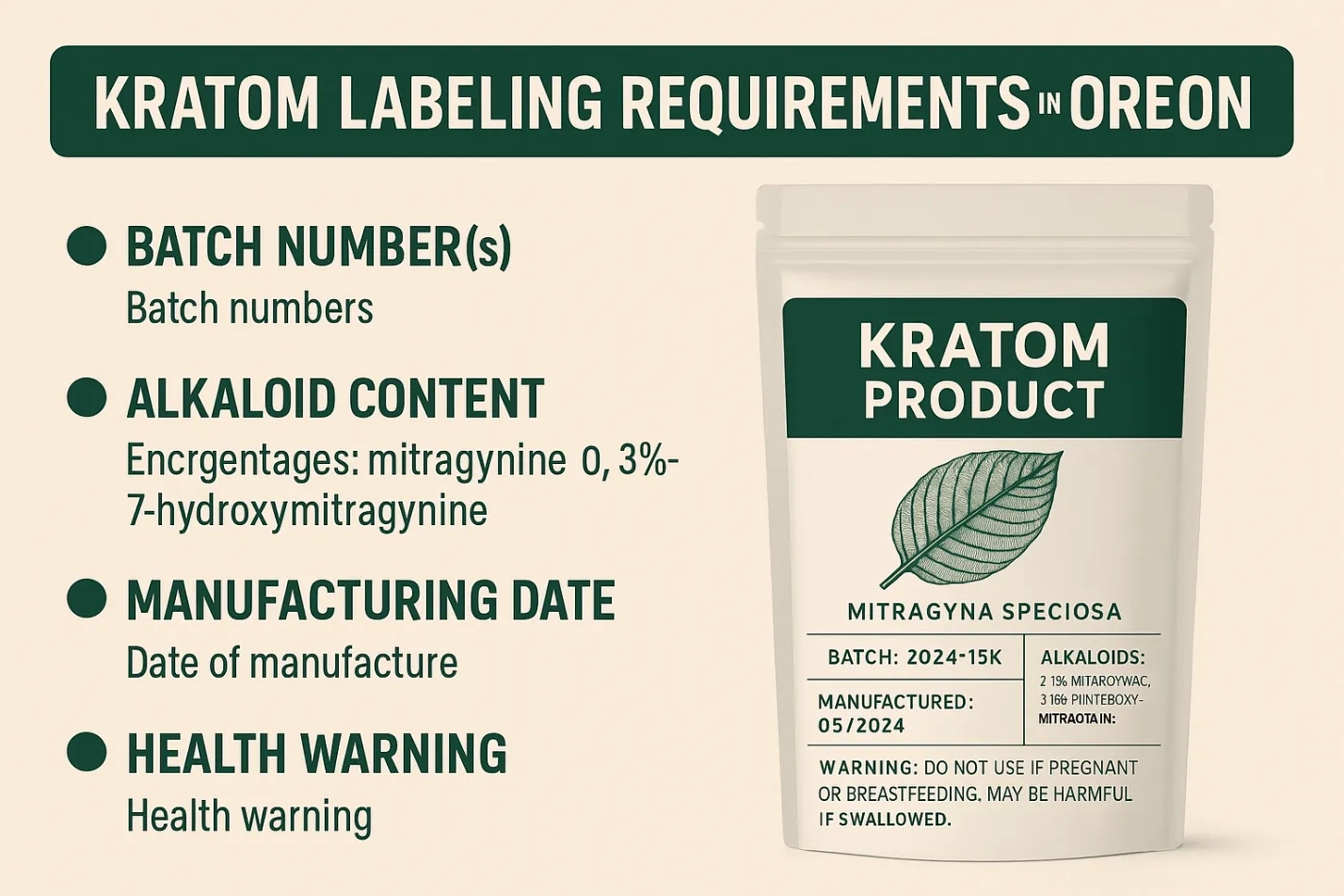
Oregon’s kratom industry operates under a comprehensive licensing system designed to ensure product quality and consumer safety. Processor licensing requirements represent one of the most stringent regulatory frameworks for kratom in the United States.
Licensing Requirements for Kratom Processors
Initial Licensing Process:
- Application submission with detailed business plans
- Background checks for all key personnel
- Facility inspections and compliance verification
- Payment of licensing fees and bonds
- Demonstration of quality control procedures
Ongoing Compliance Obligations:
- Annual license renewals and fee payments
- Regular facility inspections by state authorities
- Maintenance of detailed production records
- Implementation of recall procedures
- Staff training and certification programs
Manufacturing Standards and Testing
Oregon’s processor regulations mandate strict manufacturing standards:
Good Manufacturing Practices (GMP):
- Sanitary facility conditions and equipment maintenance
- Employee hygiene and training requirements
- Raw material sourcing and verification
- Production process documentation
- Finished product testing and quality assurance
Laboratory Testing Requirements:
- Heavy metals screening (lead, mercury, cadmium, arsenic)
- Microbial contamination testing (salmonella, E. coli, yeast, mold)
- Pesticide and herbicide residue analysis
- Alkaloid content verification (mitragynine and 7-hydroxymitragynine)
- Foreign matter detection and purity confirmation
When considering clean kratom vendor reviews, Oregon’s regulatory framework provides additional assurance that licensed processors meet stringent quality standards.
Distribution and Retail Regulations
Licensed processors must also comply with distribution requirements:
Supply Chain Management:
- Seed-to-sale tracking systems
- Wholesale distribution records
- Retail partner verification
- Product recall capabilities
- Inventory management protocols
Retail Partner Requirements:
- Age verification systems implementation
- Staff training on kratom regulations
- Proper product storage and handling
- Customer education materials
- Compliance with labeling requirements
Labeling, Testing, and Quality Control Standards 🧪
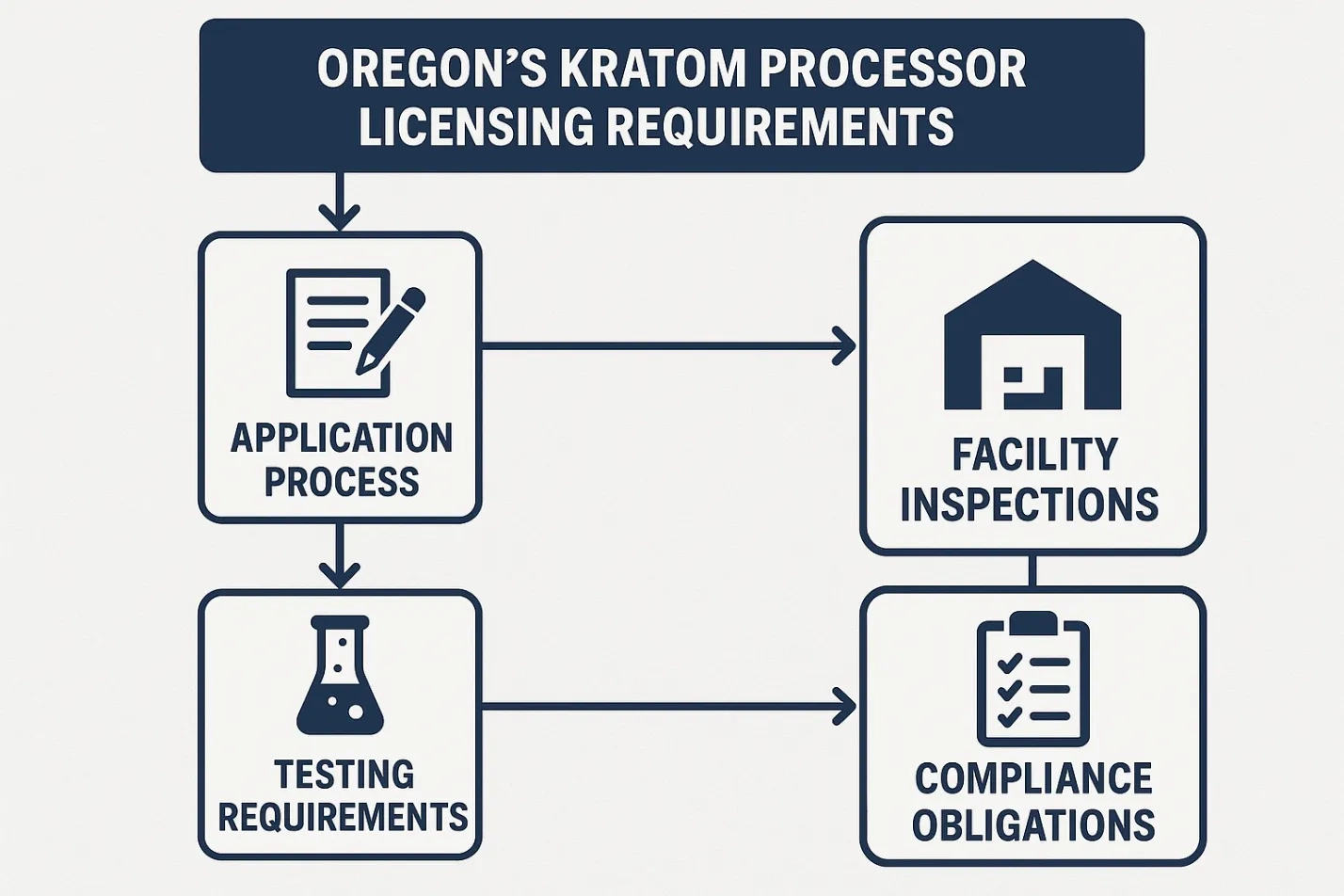
Oregon’s kratom quality control standards represent some of the most comprehensive in the nation, focusing on consumer protection and product transparency.
Mandatory Labeling Information
All kratom products sold in Oregon must include:
Primary Label Requirements:
- Product name and kratom strain designation
- Net weight or volume measurements
- Processor license number and contact information
- Manufacturing date and expiration date
- Batch or lot number for traceability
Ingredient and Content Disclosure:
- Complete ingredient list in descending order by weight
- Alkaloid content ranges (mitragynine and 7-hydroxymitragynine)
- Serving size recommendations
- Country of origin for kratom leaves
- Processing method information
Health and Safety Warnings:
- “Not for use by minors under 21”
- “Not evaluated by the FDA”
- “Consult healthcare provider before use”
- “Do not use if pregnant or nursing”
- “May cause drowsiness or dizziness”
Testing Protocols and Frequency
Pre-Market Testing Requirements:
- Every batch must undergo comprehensive testing before sale
- Testing must be conducted by state-approved laboratories
- Results must be available for regulatory inspection
- Failed batches must be destroyed or remediated
Ongoing Quality Monitoring:
- Random sampling and testing by state authorities
- Annual facility audits and inspections
- Consumer complaint investigations
- Market surveillance programs
Understanding how long kratom takes to work and onset time becomes more predictable with Oregon’s standardized testing and labeling requirements, as consumers can better understand alkaloid content and potency.
Contamination Prevention Measures
Oregon’s regulations address common kratom contamination concerns:
Heavy Metal Limits:
- Lead: Maximum 1.0 ppm
- Mercury: Maximum 0.1 ppm
- Cadmium: Maximum 0.3 ppm
- Arsenic: Maximum 1.5 ppm
Microbial Safety Standards:
- Salmonella: Not detected in 25g sample
- E. coli: Less than 10 CFU/g
- Total yeast and mold: Less than 1,000 CFU/g
- Pathogenic bacteria: Not detected
Local Ordinances and Municipal Restrictions 🏛️
While kratom remains legal at the state level, local ordinances may impose additional restrictions or requirements beyond Oregon’s state regulations.
City-Level Regulations
Several Oregon municipalities have implemented their own kratom policies:
Portland:
- Follows state regulations without additional restrictions
- Business licensing requirements for kratom retailers
- Zoning restrictions for kratom shops
- Advertising and signage limitations
Eugene:
- Additional age verification requirements
- Restrictions on kratom advertising near schools
- Enhanced record-keeping obligations
- Public consumption prohibitions
Salem:
- Increased penalties for sales to minors
- Mandatory retailer education programs
- Enhanced labeling requirements
- Regular compliance inspections
County-Level Considerations
Multnomah County:
- Health department oversight of kratom retailers
- Additional consumer protection measures
- Enhanced complaint investigation procedures
- Public health monitoring programs
Washington County:
- Business registration requirements
- Tax obligations for kratom sales
- Consumer education initiatives
- Coordination with state regulatory authorities
Compliance Strategies for Consumers and Businesses
For Consumers:
- Research local laws before purchasing kratom
- Verify retailer licensing status
- Understand local consumption restrictions
- Stay informed about regulatory changes
For Businesses:
- Obtain all required local permits and licenses
- Implement comprehensive compliance programs
- Maintain detailed records of all transactions
- Establish relationships with regulatory authorities
Penalties and Enforcement Mechanisms ⚖️
Oregon’s kratom enforcement system includes both civil and criminal penalties for violations of state regulations.
Civil Penalties and Administrative Actions
Licensing Violations:
- First offense: Warning letter and corrective action plan
- Second offense: $1,000-$5,000 fine and probationary period
- Third offense: License suspension or revocation
- Serious violations: Immediate license suspension
Product Safety Violations:
- Contaminated products: Immediate recall and destruction
- Labeling violations: $500-$2,500 per violation
- Testing failures: Product quarantine and retesting requirements
- Repeat violations: Enhanced penalties and monitoring
Criminal Penalties
Age-Related Violations:
- Sale to minors: Class A misdemeanor
- First offense: Up to $6,250 fine
- Subsequent offenses: Up to $125,000 fine and 1 year imprisonment
- Enhanced penalties for sales near schools
Unlicensed Operations:
- Operating without proper licensing: Class C felony
- Fines up to $125,000 and 5 years imprisonment
- Asset forfeiture for illegal operations
- Permanent prohibition from kratom industry
Enforcement Priorities
State Enforcement Focus:
- Unlicensed processors and distributors
- Sales to minors and age verification failures
- Product safety and contamination issues
- Fraudulent labeling and misrepresentation
Consumer Protection Emphasis:
- Investigation of consumer complaints
- Market surveillance and testing programs
- Education and outreach initiatives
- Coordination with federal authorities
Comparing Oregon’s approach with other states, such as understanding whether kratom is legal in Pennsylvania, highlights the importance of comprehensive regulatory frameworks versus outright prohibition.
Comparison with Federal Law and Other States 🗺️
Oregon’s regulatory approach to kratom contrasts significantly with both federal policy and other state approaches across the United States.
Federal Legal Landscape
Current Federal Status:
- Kratom remains unscheduled under the Controlled Substances Act
- FDA has not approved kratom for any medical use
- DEA has issued import alerts but no scheduling actions
- Congressional interest in kratom regulation continues
Federal vs. Oregon Approach:
- Oregon focuses on regulation rather than prohibition
- State requirements exceed federal oversight
- Comprehensive testing and licensing systems
- Consumer protection emphasis over restriction
State-by-State Comparison
States with Similar Regulatory Approaches:
- Nevada: Age restrictions and labeling requirements
- Utah: Processor registration and testing mandates
- Georgia: Manufacturing standards and quality control
- Arizona: Consumer protection and industry oversight
States with Prohibition:
- Alabama: Complete kratom ban since 2016
- Arkansas: Scheduled as controlled substance
- Indiana: Prohibited with criminal penalties
- Wisconsin: Banned with enforcement mechanisms
States with Minimal Regulation:
- Texas: Legal with minimal oversight
- Florida: Legal in most areas with local variations
- Colorado: Legal with basic regulations
- California: Legal with limited state involvement
Regulatory Trends and Future Outlook
Industry Standardization:
- Movement toward comprehensive regulatory frameworks
- Adoption of Good Manufacturing Practices
- Enhanced testing and quality control standards
- Consumer protection focus
Federal Considerations:
- Potential federal scheduling discussions
- Congressional oversight and investigation
- Interstate commerce implications
- Public health monitoring initiatives
Consumer Rights and Responsibilities 👥
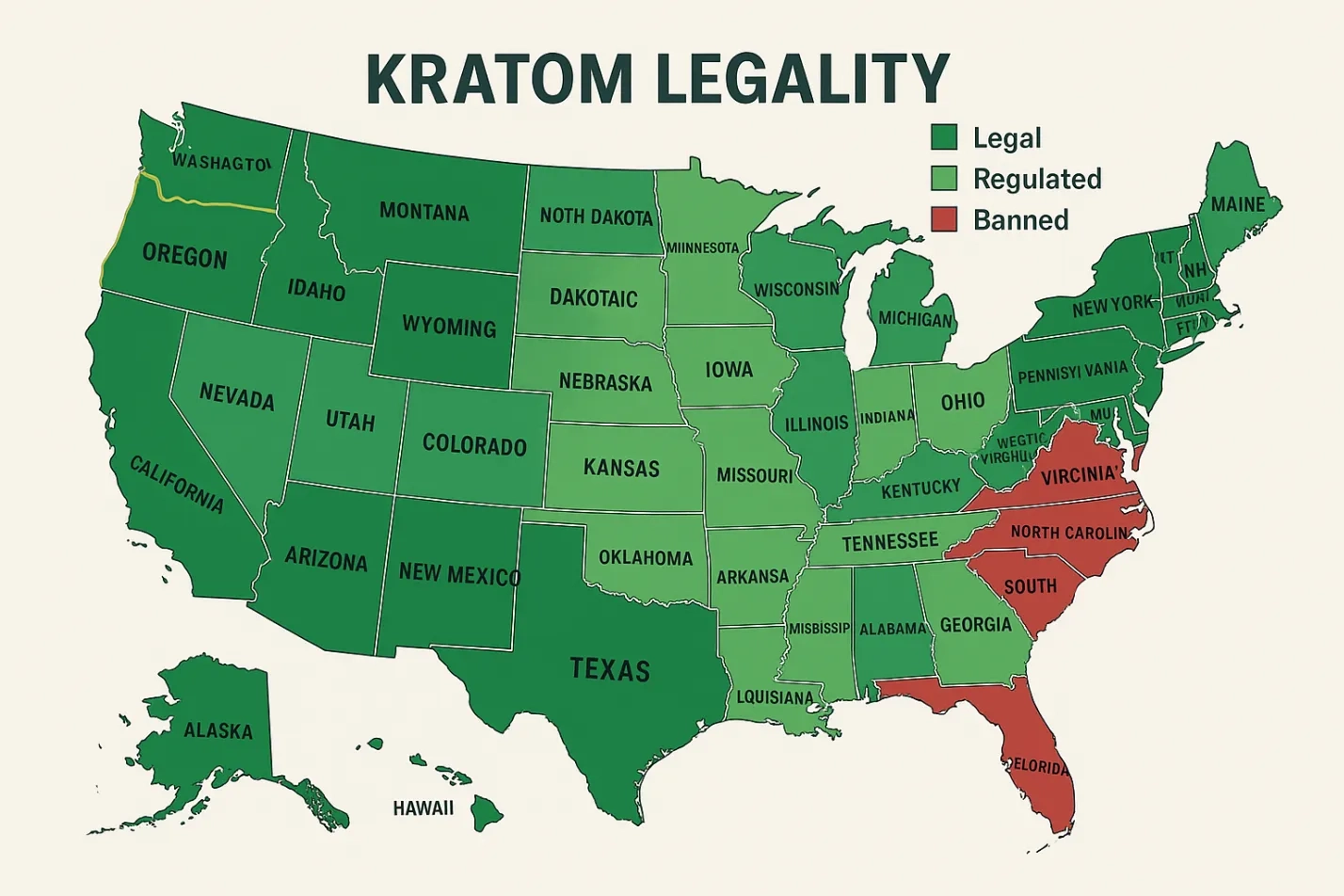
Oregon’s kratom regulations establish clear rights and responsibilities for consumers within the regulated market.
Consumer Rights Under Oregon Law
Product Quality Assurance:
- Right to tested and verified kratom products
- Access to laboratory testing results
- Protection from contaminated or adulterated products
- Recall notification and remedy procedures
Information Access:
- Complete ingredient and content disclosure
- Manufacturing and expiration date information
- Processor licensing verification
- Complaint and feedback mechanisms
Privacy Protection:
- Confidential purchase records
- Limited data sharing with authorities
- Protection of personal health information
- Secure transaction processing
Consumer Responsibilities
Age Verification Compliance:
- Provide valid identification when purchasing
- Honest disclosure of age and eligibility
- Respect for retailer verification procedures
- Understanding of legal consequences for violations
Informed Use and Safety:
- Read and understand product labeling
- Follow recommended serving sizes
- Consult healthcare providers when appropriate
- Report adverse reactions or product issues
Legal Compliance:
- Understand local and state regulations
- Comply with possession and use restrictions
- Avoid sales or distribution to minors
- Stay informed about regulatory changes
Complaint and Reporting Procedures
Product Quality Issues:
- Contact Oregon Health Authority for contamination concerns
- Report adverse reactions to healthcare providers
- Document product information and batch numbers
- Preserve evidence for investigation purposes
Regulatory Violations:
- Report unlicensed sellers to state authorities
- Document age verification failures
- Report misleading advertising or labeling
- Cooperate with enforcement investigations
When exploring options for purchasing kratom, consumers should consider where to buy kratom from licensed Oregon processors to ensure compliance with state regulations.
Kratom Legal Status in Oregon
Frequently Asked Questions
Yes, kratom is currently legal in Oregon for adults 18 and older. The state has not enacted any specific bans on kratom possession, sale, or consumption, making it one of the states where kratom remains accessible to consumers.
Oregon law requires buyers to be at least 18 years old to purchase kratom. Most reputable vendors will verify age before selling kratom products to ensure compliance with state regulations.
Yes, kratom is available in various retail locations across Oregon, including smoke shops, herbal stores, and some convenience stores. Online purchases and shipping to Oregon addresses are also legal and widely available.
Currently, there are no known city-level bans on kratom within Oregon. However, local regulations can change, so it’s advisable to check with local authorities if you’re unsure about specific municipal rules in your area.
Since kratom is unregulated by the FDA, quality can vary significantly between vendors. Look for suppliers who provide lab testing results, practice good manufacturing standards, and offer transparent information about their products’ origins and processing methods.
While kratom is currently legal, laws can change through legislative action. Stay informed about potential regulatory changes by following kratom advocacy organizations and monitoring Oregon state legislature proceedings that might affect kratom’s legal status.
Resources and Additional Information 📚
Oregon residents and visitors seeking kratom information can access various official and educational resources.
Official Government Resources
Oregon Health Authority:
- Kratom regulation information and updates
- Processor licensing applications and status
- Consumer complaint and reporting procedures
- Educational materials and safety information
Oregon Department of Agriculture:
- Food safety and manufacturing oversight
- Laboratory testing requirements and procedures
- Import and export regulation information
- Industry guidance and compliance assistance
Local Government Resources:
- City and county ordinance information
- Local licensing and permit requirements
- Zoning and business operation guidelines
- Consumer protection services
Industry and Consumer Organizations
Kratom Trade Organizations:
- American Kratom Association advocacy and education
- Botanical Education Alliance research and information
- Industry best practices and standards development
- Legislative monitoring and advocacy efforts
Consumer Advocacy Groups:
- Product safety and quality monitoring
- Consumer rights and protection advocacy
- Education and awareness programs
- Support for responsible use policies
Educational and Research Resources
Academic Institutions:
- Oregon State University research programs
- University of Oregon public health studies
- Portland State University policy analysis
- Community college education programs
Healthcare Resources:
- Oregon Medical Association guidance
- Poison control center information
- Addiction treatment and support services
- Healthcare provider education programs
Legal and Compliance Assistance
Legal Resources:
- Oregon State Bar attorney referral services
- Regulatory compliance consulting services
- Business licensing and permit assistance
- Consumer rights and protection services
Professional Services:
- Laboratory testing and quality assurance
- Regulatory compliance consulting
- Business development and licensing assistance
- Marketing and advertising guidance
For comprehensive information about kratom options and industry developments, Huntington Blogs provides ongoing coverage of kratom news, vendor reviews, and regulatory updates.
Conclusion
Is kratom legal in Oregon? Yes, kratom remains legal in Oregon for adults 21 and older, but within a comprehensive regulatory framework that prioritizes consumer safety and product quality. Oregon’s approach represents a balanced middle ground between prohibition and unrestricted access, implementing age restrictions, processor licensing requirements, and stringent quality control standards.
The state’s regulatory system includes mandatory testing for contaminants, detailed labeling requirements, and licensing obligations for processors and distributors. These measures protect consumers while allowing legal access to kratom products for qualified adults. Local ordinances may impose additional restrictions, making it essential for consumers and businesses to understand both state and local requirements.

Jessica has a lifelong fascination with the relationship between people and the natural environment. She explores how different societies preserve and pass down their knowledge of plant use and cultural rituals. With a foundation in sociology and history, Jessica aims to bridge traditional wisdom with contemporary perspectives. Her work highlights the beauty of diversity in practices and the importance of preserving stories that connect humans with nature across generations.