

Jack Botanicals: Science-Backed Quality
Every batch undergoes 9+ independent lab tests for purity and potency. Choose from premium Red Maeng Da, Red Bali, or energizing Green Maeng Da.
🔬 Lab-Verified Quality at 30% OFF
Code: JACK30
The question “Is Kratom legal in the US?” has become increasingly urgent as millions of Americans explore this Southeast Asian botanical for wellness purposes. While kratom remains federally legal in most states, the legal landscape is complex and constantly evolving, with some states implementing complete bans and others establishing strict regulations that could land unsuspecting consumers in legal trouble.
Understanding kratom’s legal status isn’t just about avoiding fines—it’s about protecting your rights, ensuring product safety, and making informed decisions about this controversial plant that has sparked heated debates between advocates, regulators, and health officials across the nation.
- Federal Status: Kratom is not federally scheduled but faces ongoing DEA scrutiny and potential future restrictions
- State Variations: Six states have banned kratom entirely, while others have age restrictions or specific regulations
- Local Laws Matter: Cities and counties can impose their own kratom restrictions even in legal states
- Safe Purchasing: Only buy from reputable vendors who follow Good Manufacturing Practices and provide lab testing
- Stay Informed: Kratom laws change frequently, requiring regular monitoring of both state and local regulations
Current Federal Legal Status of Kratom
At the federal level, kratom remains legal throughout the United States as of now. The Drug Enforcement Administration (DEA) has not classified kratom’s active compounds—mitragynine and 7-hydroxymitragynine—as controlled substances under the Controlled Substances Act. However, this status remains precarious and subject to change.
The Food and Drug Administration (FDA) has taken a more aggressive stance against kratom, issuing multiple warnings about its safety and attempting to restrict imports. The FDA has:
- Seized kratom shipments at international borders
- Issued warning letters to kratom vendors making health claims
- Conducted studies linking kratom to adverse events and deaths
- Recommended against kratom use for any purpose
DEA’s Position and Potential Changes
The DEA has considered scheduling kratom multiple times, most notably in 2016 when they announced plans to classify it as a Schedule I substance. However, unprecedented public opposition led to the withdrawal of this proposal. The agency continues to monitor kratom and could initiate emergency scheduling at any time.
Congressional involvement has also shaped kratom’s federal status. Several lawmakers have introduced legislation both supporting and restricting kratom access, creating an ongoing political battle that affects the plant’s legal standing.
State-by-State Kratom Legal Status
Understanding where kratom is legal requires examining each state’s individual laws, as regulations vary significantly across the country. The legal landscape includes states with complete bans, age restrictions, and full legality.
States Where Kratom is Banned
Six states have implemented complete kratom bans, making possession, sale, and use illegal:
🏆 Jack Botanicals: Transparency You Can Trust
| ✓ AKA GMP Approved | Industry Gold Standard |
| ✓ 9+ Lab Tests Per Batch | Guaranteed Purity |
| ✓ Premium Strains | Red & Green Varieties |
Featured: Red Maeng Da • Red Bali • Green Maeng Da
💎 Exclusive Lab-Tested Quality Discount
JACK30 = 30% OFF
| State | Ban Effective Date | Penalties |
|---|---|---|
| Alabama | May 2016 | Misdemeanor charges possible |
| Arkansas | February 2016 | Controlled substance violations |
| Indiana | April 2014 | Criminal penalties apply |
| Rhode Island | July 2017 | Misdemeanor for possession |
| Vermont | July 2016 | Regulated as controlled substance |
| Wisconsin | December 2014 | Schedule I classification |
States with Age Restrictions and Regulations
Several states have implemented the Kratom Consumer Protection Act (KCPA), which regulates rather than bans kratom:
🏛️ KCPA States:
- Arizona
- Georgia
- Nevada
- Oklahoma
- Utah
These states typically require:
- Minimum age of 18 for purchase
- Product labeling requirements
- Contamination testing standards
- Registration of kratom vendors
Local and Municipal Kratom Laws
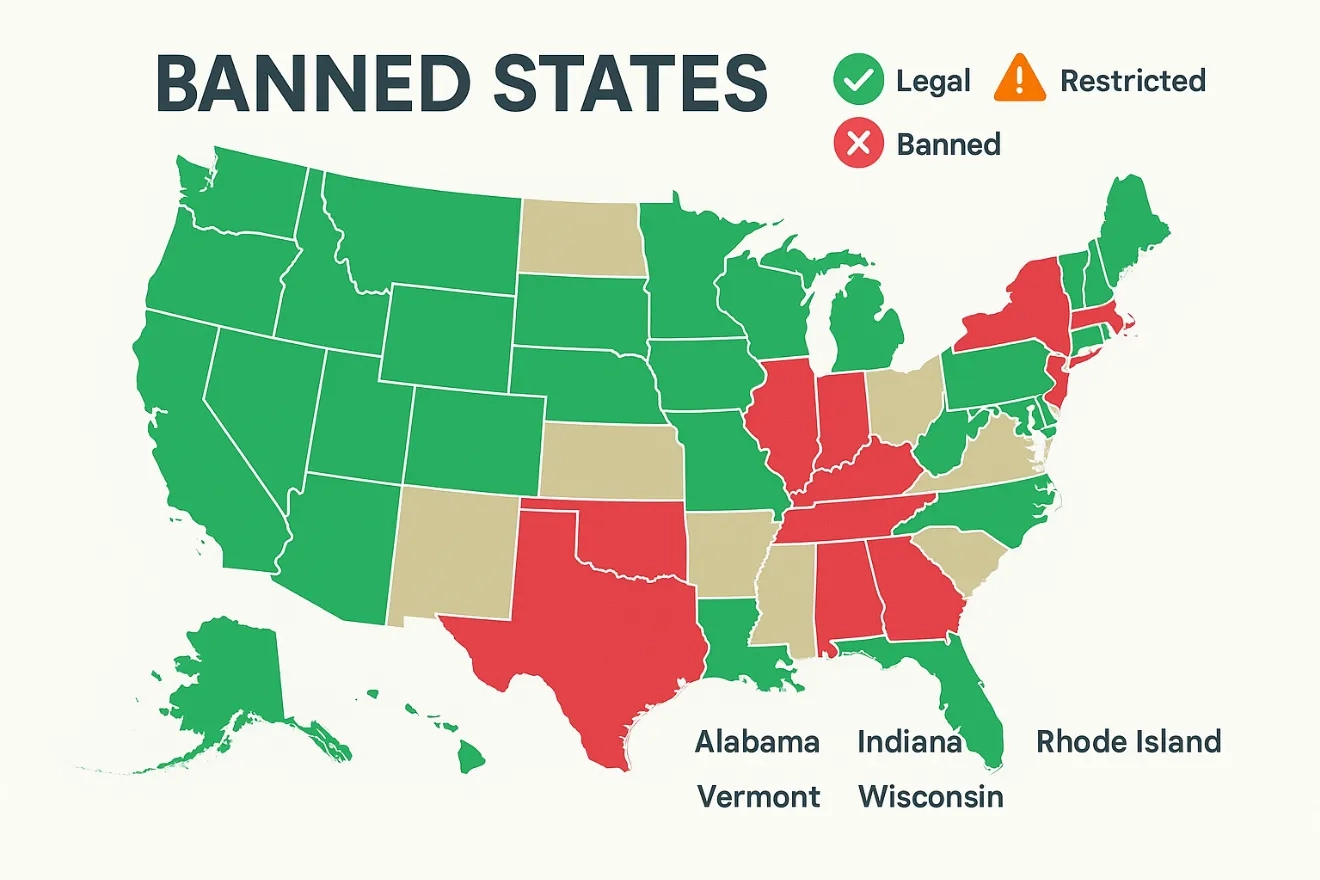
Even in states where kratom is legal, local governments can impose their own restrictions. Cities and counties across the nation have enacted kratom bans or regulations that supersede state law.
Major Cities with Kratom Restrictions
🏙️ Cities with Kratom Bans:
- San Diego, California
- Jerseyville, Illinois
- Franklin, Tennessee
- Union County, North Carolina
How to Check Local Laws
Before purchasing or using kratom, verify local regulations by:
- Contacting city hall or local government offices
- Checking municipal codes online
- Consulting local law enforcement for clarification
- Reviewing county ordinances in addition to city laws
Local laws can change rapidly, making it essential to stay updated on regulations in your specific area.
FDA Oversight and Import Restrictions
The FDA treats kratom as an unapproved drug and unsafe food additive, leading to:
Import Alerts: The FDA maintains an import alert allowing detention of kratom shipments without physical examination
Vendor Warnings: Companies receive warning letters for making health claims about kratom
Safety Concerns: The agency cites potential for abuse, addiction, and serious health effects
Good Manufacturing Practices (GMP)
Reputable kratom vendors follow GMP standards to ensure product quality and safety:
- Facility cleanliness and sanitation protocols
- Employee training and hygiene requirements
- Quality control testing procedures
- Documentation and record-keeping standards
- Contamination prevention measures
When considering where to buy kratom capsules online, prioritize vendors who demonstrate GMP compliance.
Safe and Legal Kratom Purchase Guidelines
Purchasing kratom safely and legally requires careful vendor selection and understanding of product quality indicators. The unregulated nature of the kratom market makes due diligence essential.
Identifying Reputable Vendors
✅ Signs of Trustworthy Kratom Vendors:
- Third-party lab testing with publicly available results
- Transparent sourcing information about kratom origins
- Clear labeling with accurate alkaloid content
- Responsive customer service and educational resources
- Professional packaging and proper storage recommendations
- Compliance documentation showing adherence to applicable laws
Red Flags to Avoid
❌ Warning Signs of Questionable Vendors:
- Health claims about kratom’s medical benefits
- Unrealistic pricing significantly below market rates
- Poor website quality with limited contact information
- No lab testing or unwillingness to provide test results
- Pressure tactics or aggressive marketing approaches
- Mixed products containing kratom plus other substances
For detailed vendor analysis, consider reading about trusted kratom vendors to understand what makes a supplier reliable.
Product Quality and Testing Standards
High-quality kratom should meet specific testing standards:
🧪 Essential Lab Tests:
- Heavy metals (lead, mercury, cadmium, arsenic)
- Microbials (bacteria, yeast, mold, E. coli, Salmonella)
- Pesticides and chemical contaminants
- Alkaloid content (mitragynine and 7-hydroxymitragynine levels)
- Adulterants to ensure pure kratom without additives
Understanding Kratom Strains and Products
Different kratom strains and product forms have varying legal considerations:
Popular Kratom Strains:
- Red strains: Red Bali, Red Maeng Da, Gold Hulu Kapuas
- Green strains: Green Malay, Green Thai, Green Indo
- White strains: White Borneo, White Sumatra, White Horn
Product Forms:
- Powder: Most common and versatile form
- Capsules: Convenient but may have dosing considerations
- Extracts: Concentrated forms requiring careful measurement
Understanding proper kratom measurements helps ensure appropriate usage and compliance with local regulations.
🇺🇸 US Kratom Legal Status Checker
Check kratom legality by state and filter by legal status
Avoiding Common Legal Pitfalls
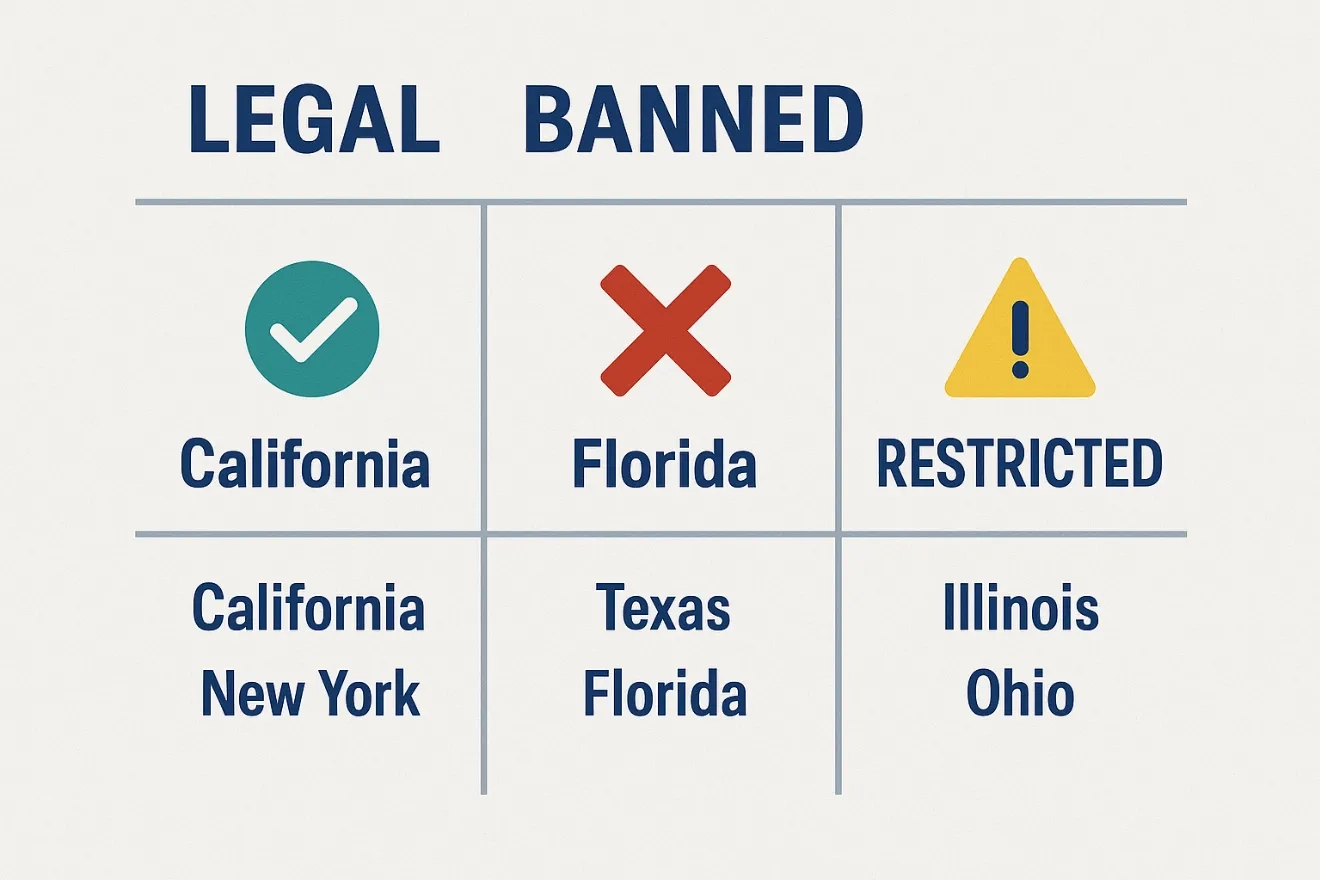
Many kratom users unknowingly violate laws due to misunderstanding regulations or failing to stay updated on legal changes. Avoiding these pitfalls protects consumers from legal consequences and ensures responsible kratom use.
Traveling with Kratom
Interstate travel with kratom requires careful planning and legal awareness:
✈️ Air Travel Considerations:
- Check destination laws before traveling
- Carry original packaging with clear labeling
- Research airport policies in departure and arrival cities
- Avoid connecting flights through states where kratom is banned
- Carry documentation about kratom’s legal status if questioned
🚗 Ground Transportation:
- Plan routes carefully to avoid banned states
- Understand possession limits in restricted states
- Keep receipts showing legal purchase
- Research local laws at your destination
International Considerations
Kratom’s legal status varies dramatically worldwide, with many countries maintaining strict prohibitions:
Countries Where Kratom is Banned:
- Australia
- Denmark
- Finland
- Malaysia
- Myanmar
- Poland
- Romania
- Sweden
- Thailand (recently legalized for medical use)
- United Kingdom
Never attempt to transport kratom internationally without thorough research of destination country laws, as penalties can be severe.
Age Restrictions and Compliance
Even in legal states, age restrictions commonly apply:
- Minimum age 18 in most regulated states
- ID verification required for purchases
- Parental consent laws may apply in some areas
- Online age verification systems used by reputable vendors
Understanding safe kratom purchasing practices helps ensure compliance with age and other legal requirements.
Kratom Quality Standards and Consumer Protection
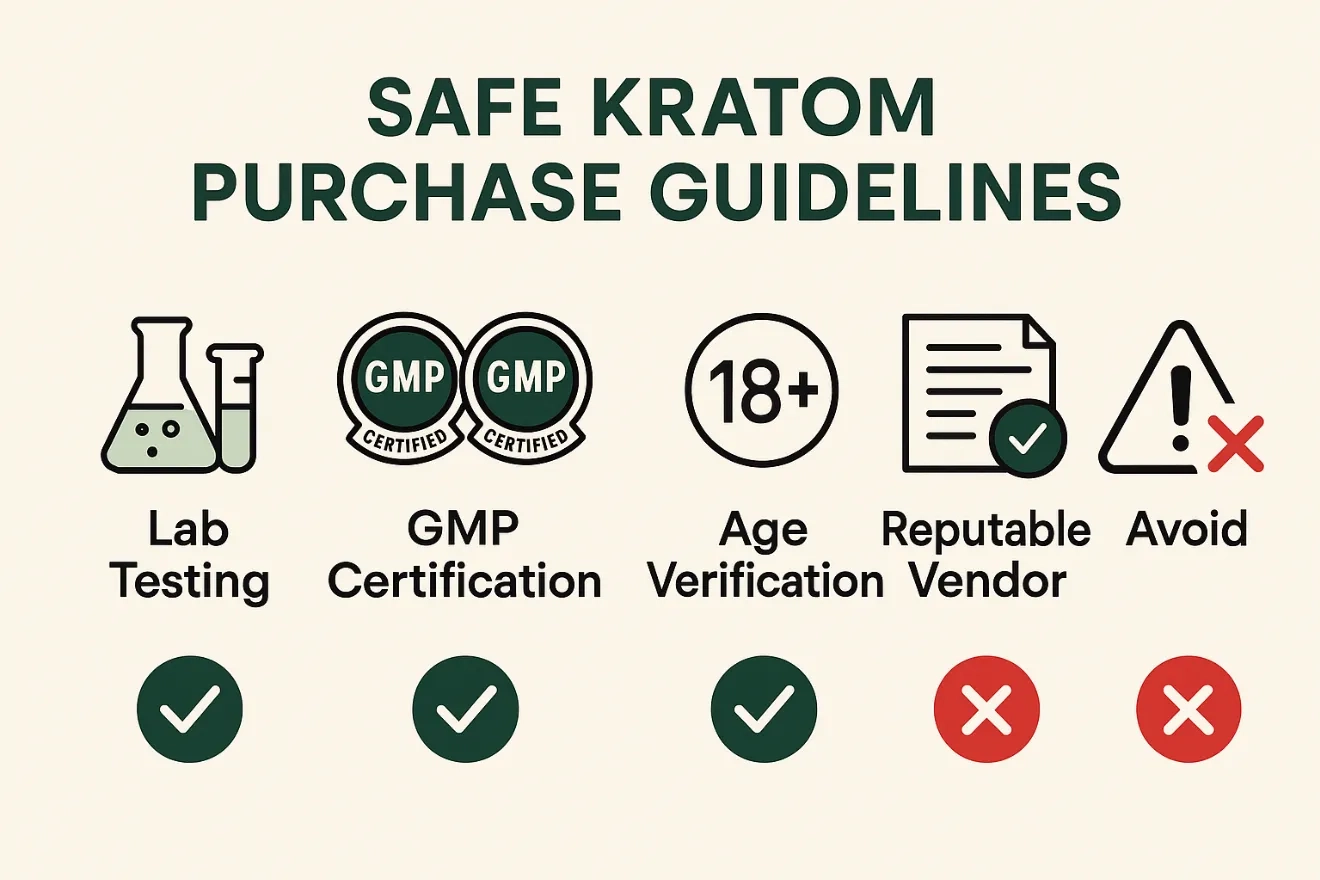
As kratom remains largely unregulated, consumer protection depends heavily on industry self-regulation and informed purchasing decisions. Understanding quality standards helps consumers identify safe, legal products.
Good Manufacturing Practices (GMP) Standards
Essential GMP components for kratom:
🏭 Facility Requirements:
- Clean manufacturing environments with contamination controls
- Proper storage conditions maintaining product integrity
- Equipment maintenance and calibration protocols
- Employee training and hygiene standards
- Pest control and sanitation procedures
📋 Documentation Standards:
- Batch tracking from source to sale
- Quality control records for each production run
- Supplier verification and sourcing documentation
- Customer complaint handling procedures
- Recall procedures for contaminated products
Third-Party Testing Requirements
Comprehensive testing should include:
🧪 Safety Testing:
- Heavy metals: Lead, mercury, cadmium, arsenic below safe limits
- Microbials: E. coli, Salmonella, yeast, mold within acceptable ranges
- Pesticides: Screening for agricultural chemical residues
- Adulterants: Verification of pure kratom without additives
📊 Potency Testing:
- Alkaloid profiling: Mitragynine and 7-hydroxymitragynine levels
- Consistency verification across batches
- Strain authentication confirming labeled varieties
- Moisture content ensuring proper preservation
When researching vendors, avoid platforms like Amazon due to their kratom policies. Learn more about why you can’t buy kratom on Amazon and the associated risks.
Understanding Kratom’s Relationship with Other Botanicals
Kratom’s legal status often gets compared to other botanical substances, helping consumers understand the broader regulatory landscape for plant-based products.
Kratom vs. Other Botanical Supplements
Legal comparison with similar botanicals:
| Botanical | Legal Status | Regulation Level |
|---|---|---|
| Kratom | Federally legal, state variations | Minimal federal oversight |
| Kava | Generally legal | FDA dietary supplement rules |
| CBD | Legal with restrictions | Heavily regulated by states |
| Kanna | Legal | Limited regulation |
| Blue Lotus | Legal | Minimal oversight |
Understanding what kratom and kava are helps contextualize kratom’s legal treatment compared to other traditional botanicals.
Regulatory Trends Affecting Botanicals
Industry-wide regulatory movements:
- Increased FDA oversight of botanical supplements
- State-level regulation of psychoactive plants
- International scheduling affecting import/export
- Quality standards development across the industry
- Consumer protection legislation for botanical products
Consumer Rights and Legal Protections
Understanding consumer rights regarding kratom helps users navigate legal challenges and ensures access to quality products within the bounds of applicable laws.
Right to Information
Consumers have the right to:
- Accurate labeling of kratom products
- Lab testing results for safety verification
- Source information about kratom origins
- Clear legal status information from vendors
- Honest marketing without misleading health claims
Vendor Responsibilities
Reputable kratom vendors should provide:
📋 Legal Compliance:
- Age verification systems for online sales
- Shipping restrictions to comply with state laws
- Accurate documentation of product contents
- Proper labeling meeting applicable standards
- Legal disclaimers about kratom’s regulatory status
🛡️ Consumer Protection:
- Return policies for unsatisfactory products
- Customer service for questions and concerns
- Privacy protection for personal information
- Secure payment processing systems
- Educational resources about responsible use
Kratom Legal Status FAQ
Conclusion
The question “Is kratom legal in the US?” requires a nuanced understanding of federal, state, and local regulations that continue to evolve rapidly. While kratom remains federally legal, six states have implemented complete bans, and many others have established age restrictions and regulatory frameworks through Kratom Consumer Protection Acts.
The kratom legal landscape will likely continue changing as more states consider regulation, federal agencies evaluate scheduling decisions, and advocacy efforts promote consumer protection standards. By staying informed and making responsible choices, kratom users can navigate this complex legal environment while supporting efforts to maintain legal access to this traditional botanical.

Jessica has a lifelong fascination with the relationship between people and the natural environment. She explores how different societies preserve and pass down their knowledge of plant use and cultural rituals. With a foundation in sociology and history, Jessica aims to bridge traditional wisdom with contemporary perspectives. Her work highlights the beauty of diversity in practices and the importance of preserving stories that connect humans with nature across generations.