
Jack Botanicals: Science-Backed Quality
Every batch undergoes 9+ independent lab tests for purity and potency. Choose from premium Red Maeng Da, Red Bali, or energizing Green Maeng Da.
🔬 Lab-Verified Quality at 30% OFF
Code: JACK30
Millions of kratom users worldwide face a critical decision when they want to reduce or stop their usage: quit cold turkey and risk severe withdrawal symptoms, or learn how to taper off kratom safely and methodically. The difference between these approaches can mean the distinction between unbearable discomfort and a manageable transition back to kratom-free living.
Kratom withdrawal can be surprisingly challenging, with symptoms ranging from physical discomfort to emotional turbulence. However, with the right tapering strategy, proper planning, and evidence-based techniques, users can significantly minimize withdrawal symptoms while maintaining their daily responsibilities and quality of life.
- Gradual reduction is safer: Tapering off kratom slowly reduces withdrawal severity compared to stopping abruptly
- Structured schedules work best: Following a systematic reduction plan with specific dosage decreases improves success rates
- Support systems matter: Professional guidance, peer support, and family involvement significantly enhance tapering outcomes
- Symptom management is crucial: Proper nutrition, exercise, and natural supplements can ease withdrawal discomfort
- Timeline varies by individual: Tapering duration depends on usage history, dosage levels, and personal physiology
Understanding Kratom Dependence and Withdrawal
What Happens During Kratom Dependence
Kratom contains alkaloids, primarily mitragynine and 7-hydroxymitragynine, that interact with opioid receptors in the brain. Regular use leads to tolerance, requiring higher doses to achieve the same effects. Over time, the brain adapts to kratom’s presence, creating physical dependence.
When kratom use stops suddenly, the brain struggles to maintain normal function without these alkaloids, triggering withdrawal symptoms. Understanding this process helps explain why learning how to taper off kratom gradually allows the brain time to readjust naturally.
Common Kratom Withdrawal Symptoms
Withdrawal symptoms typically appear within 12-24 hours after the last dose and can include:
Physical Symptoms:
- Muscle aches and joint pain 🦴
- Nausea and digestive issues
- Runny nose and watery eyes
- Hot and cold flashes
- Tremors and restlessness
- Fatigue and weakness
Psychological Symptoms:
- Anxiety and panic attacks
- Depression and mood swings
- Irritability and agitation
- Sleep disturbances
- Difficulty concentrating
- Cravings for kratom
Factors Affecting Withdrawal Severity
Several factors influence withdrawal intensity:
🏆 Jack Botanicals: Transparency You Can Trust
| ✓ AKA GMP Approved | Industry Gold Standard |
| ✓ 9+ Lab Tests Per Batch | Guaranteed Purity |
| ✓ Premium Strains | Red & Green Varieties |
Featured: Red Maeng Da • Red Bali • Green Maeng Da
💎 Exclusive Lab-Tested Quality Discount
JACK30 = 30% OFF
| Factor | Impact on Withdrawal |
|---|---|
| Daily Dosage | Higher doses = more severe symptoms |
| Duration of Use | Longer use = extended withdrawal period |
| Frequency | Multiple daily doses = increased dependence |
| Kratom Strain | Different strains affect receptor binding differently |
| Individual Physiology | Metabolism and genetics influence severity |
| Mental Health | Pre-existing conditions can complicate withdrawal |
Creating Your Kratom Tapering Plan
Step 1: Assess Your Current Usage
Before beginning your taper, accurately document your kratom consumption:
- Daily dosage (in grams)
- Frequency (times per day)
- Timing of doses
- Strain types used
- Duration of regular use
This baseline information helps create a realistic tapering schedule and track progress effectively.
Step 2: Choose Your Tapering Method
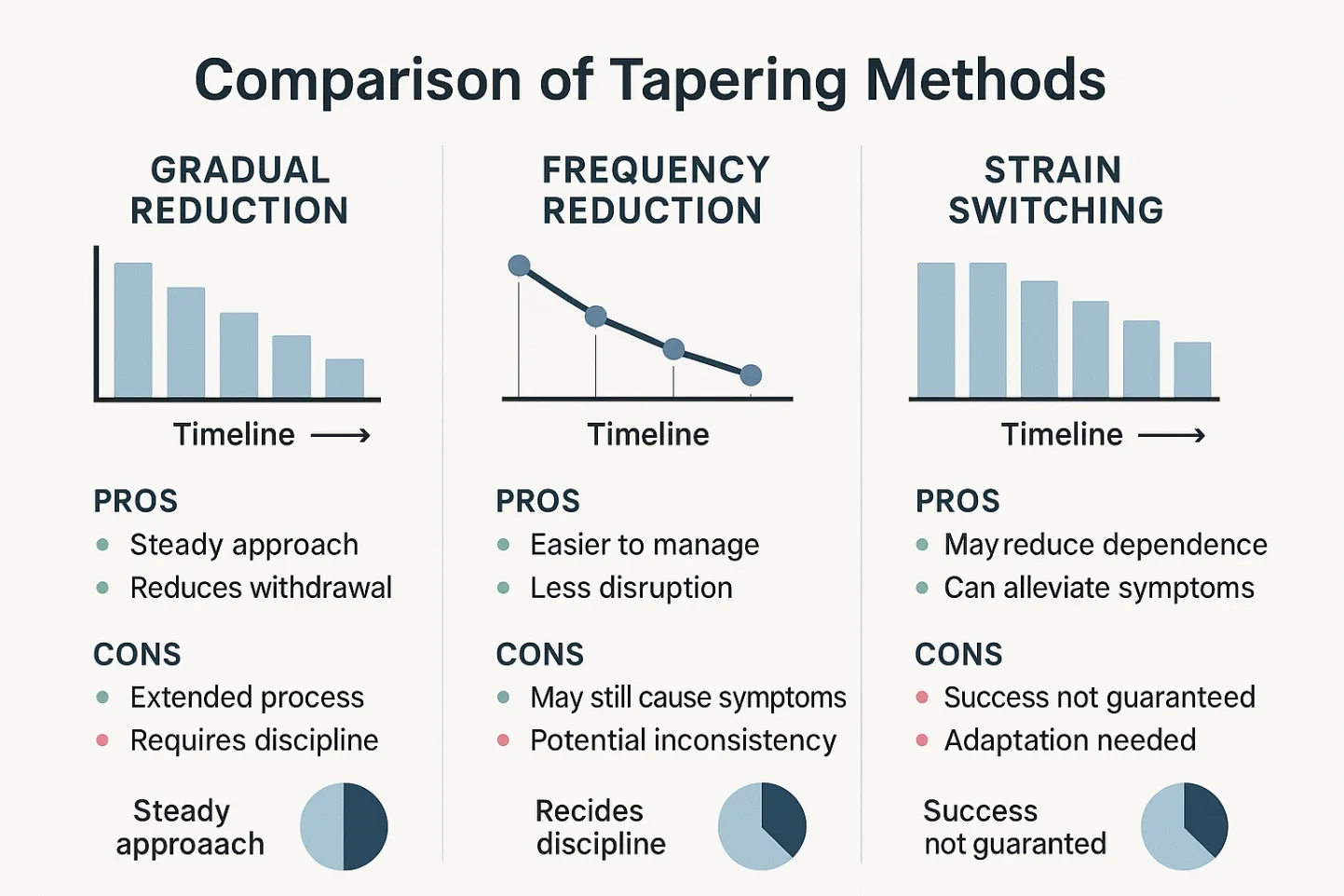
Gradual Dose Reduction Method:
Reduce your daily kratom intake by 10-25% every 3-7 days. This method works well for most users and allows the body to adjust gradually.
Frequency Reduction Method:
Maintain dose sizes but eliminate one daily dose every few days. This approach helps break dosing habits while managing withdrawal symptoms.
Strain Switching Method:
Transition to milder kratom strains before reducing doses. Some users find certain strains easier to taper from than others.
Step 3: Set Realistic Timeline Goals
Most successful kratom tapers take 2-8 weeks, depending on starting dosage and individual factors. Rushing the process often leads to relapse, while extending it unnecessarily can reduce motivation.
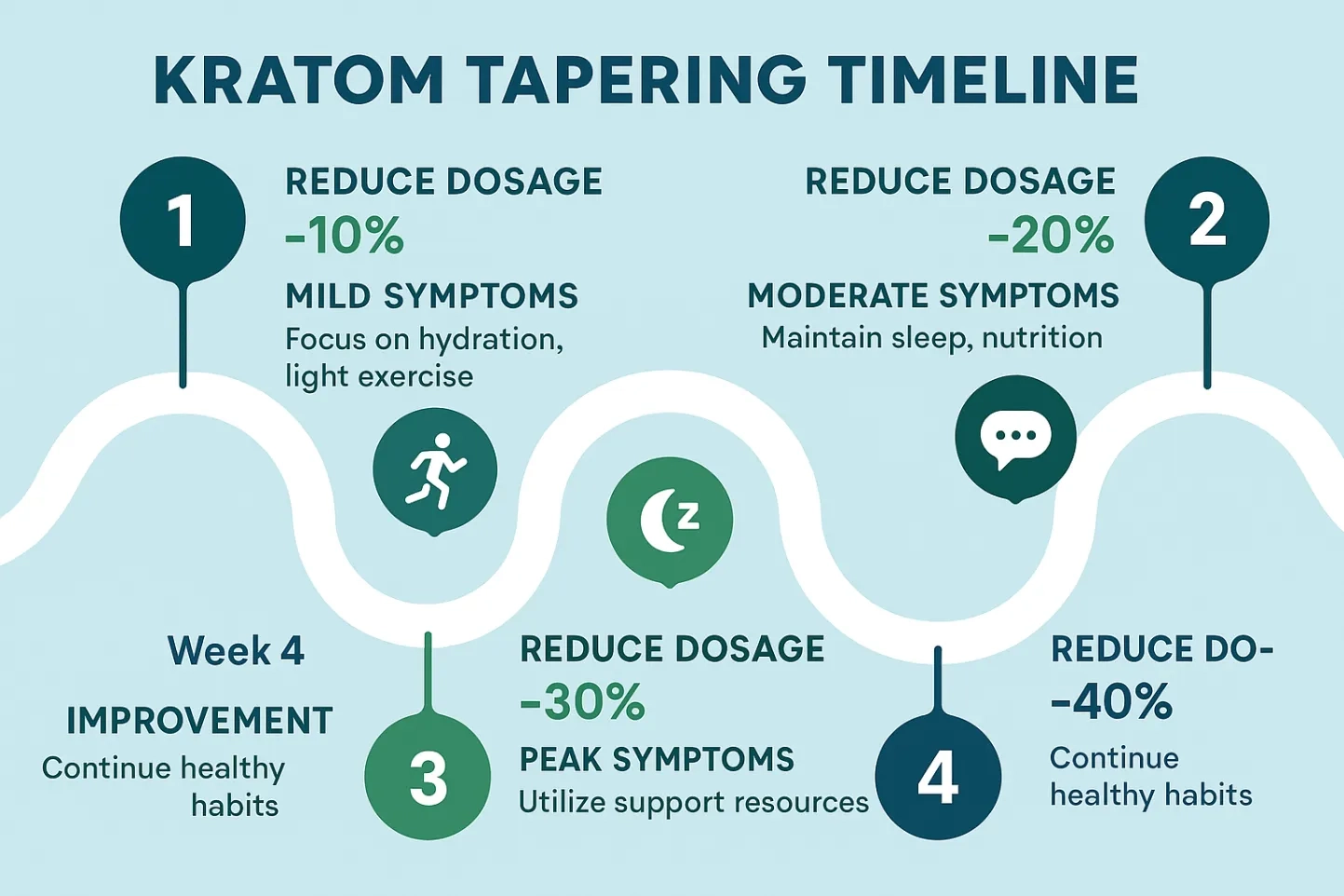
Sample 4-Week Tapering Schedule:
| Week | Daily Dose Reduction | Expected Symptoms |
|---|---|---|
| Week 1 | Reduce by 25% | Mild discomfort, slight cravings |
| Week 2 | Reduce by another 25% | Moderate symptoms, sleep issues |
| Week 3 | Reduce by 30% | Peak withdrawal symptoms |
| Week 4 | Final 20% to zero | Gradual symptom improvement |
🌿 Kratom Tapering Schedule Calculator
Your Personalized Tapering Schedule
Managing Withdrawal Symptoms During Tapering
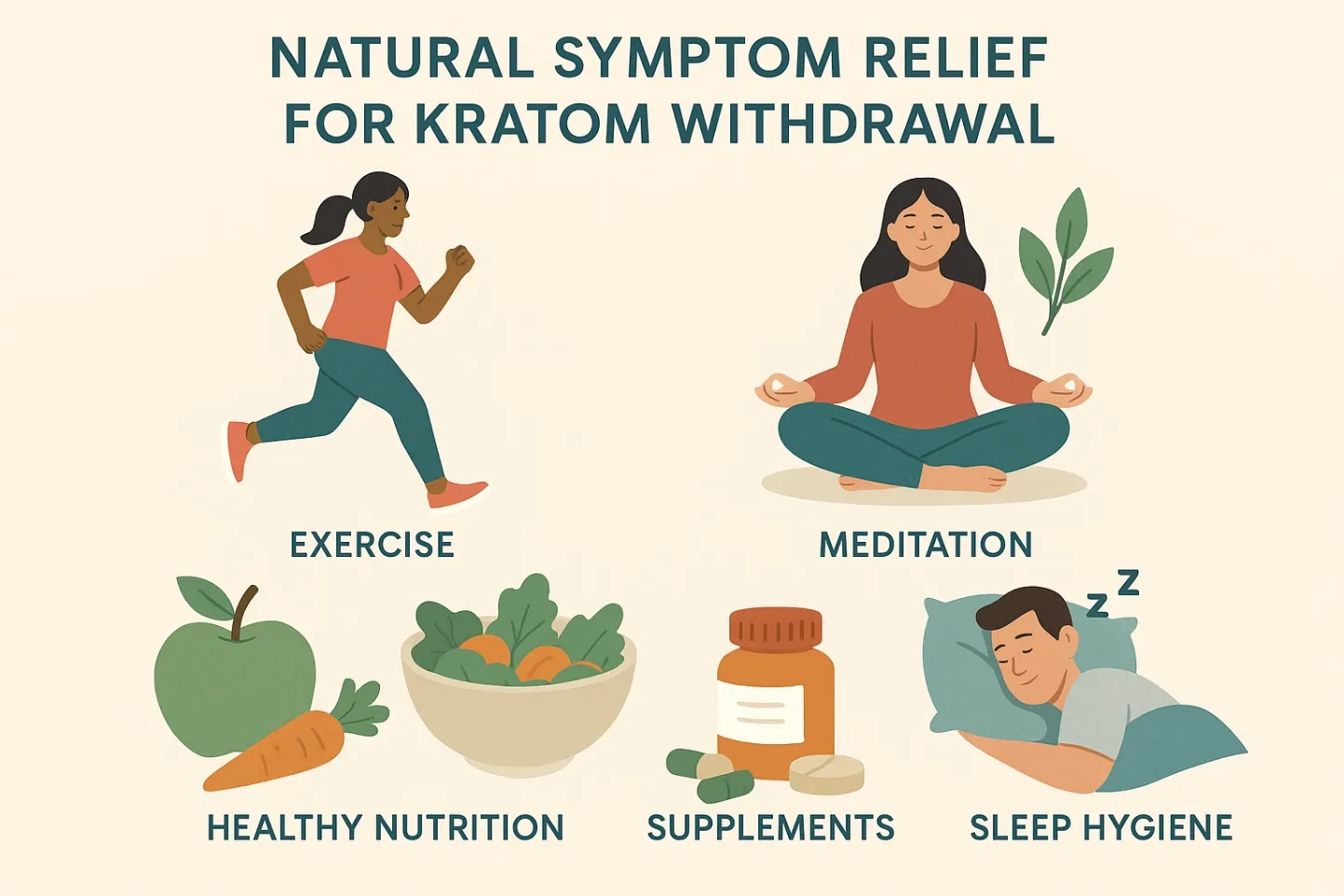
Natural Symptom Relief Strategies
Physical Symptom Management:
🏃♂️ Exercise and Movement:
Regular physical activity helps manage withdrawal symptoms by:
- Releasing natural endorphins
- Improving sleep quality
- Reducing anxiety and depression
- Boosting energy levels
Start with light activities like walking or yoga, gradually increasing intensity as symptoms improve.
🥗 Nutritional Support:
Proper nutrition plays a crucial role in recovery:
- Hydration: Drink plenty of water to combat dehydration
- Protein: Supports neurotransmitter production
- Complex carbohydrates: Stabilize blood sugar and mood
- Vitamins and minerals: Replenish depleted nutrients
🛌 Sleep Hygiene:
Quality sleep accelerates healing and reduces symptom severity:
- Maintain consistent sleep schedule
- Create comfortable sleep environment
- Avoid caffeine after 2 PM
- Practice relaxation techniques before bed
Supplement Support for Kratom Tapering
While not substitutes for proper medical care, certain supplements may ease withdrawal symptoms:
| Supplement | Potential Benefits | Typical Dosage |
|---|---|---|
| Magnesium | Muscle relaxation, sleep support | 200-400mg daily |
| L-Theanine | Anxiety reduction, calm focus | 100-200mg twice daily |
| Ashwagandha | Stress adaptation, mood support | 300-500mg daily |
| Valerian Root | Sleep improvement, relaxation | 300-600mg before bed |
| Vitamin D | Mood support, immune function | 1000-2000 IU daily |
Important Note: Always consult healthcare providers before starting any supplement regimen, especially when tapering off kratom.
Psychological Support Strategies
Mindfulness and Meditation:
Regular mindfulness practice helps manage cravings and emotional symptoms:
- Deep breathing exercises: Reduce anxiety and panic
- Progressive muscle relaxation: Ease physical tension
- Guided meditation: Improve focus and emotional regulation
Cognitive Behavioral Techniques:
- Thought challenging: Question negative or catastrophic thinking
- Behavioral activation: Engage in rewarding activities
- Distraction techniques: Redirect attention from cravings
Professional Support and Resources
When to Seek Medical Help
Consider professional assistance if experiencing:
- Severe depression or suicidal thoughts
- Uncontrollable anxiety or panic attacks
- Persistent insomnia lasting more than a week
- Severe physical symptoms affecting daily function
- Previous unsuccessful tapering attempts
Types of Professional Support
Medical Supervision:
Healthcare providers can:
- Monitor vital signs during withdrawal
- Prescribe medications for severe symptoms
- Adjust tapering schedules based on progress
- Address co-occurring mental health conditions
Addiction Counseling:
Professional counselors offer:
- Personalized coping strategies
- Relapse prevention planning
- Underlying issue identification
- Long-term recovery support
Support Groups:
Peer support provides:
- Shared experiences and understanding
- Accountability and motivation
- Practical tips and strategies
- Ongoing encouragement
Common Tapering Mistakes to Avoid
Mistake 1: Reducing Too Quickly
The Problem: Aggressive dose reductions often trigger severe withdrawal symptoms, leading to relapse.
The Solution: Follow a gradual reduction schedule, allowing 3-7 days between dose decreases for body adjustment.
Mistake 2: Inconsistent Dosing
The Problem: Irregular dosing schedules make tapering unpredictable and symptoms harder to manage.
The Solution: Maintain consistent timing and measurement of doses throughout the tapering process.
Mistake 3: Ignoring Lifestyle Factors
The Problem: Neglecting sleep, nutrition, and stress management undermines tapering success.
The Solution: Implement comprehensive lifestyle changes supporting recovery and symptom management.
Mistake 4: Lack of Support System
The Problem: Attempting to taper alone increases difficulty and reduces success rates.
The Solution: Build a support network including family, friends, and potentially professional help.
Mistake 5: All-or-Nothing Thinking
The Problem: Viewing minor setbacks as complete failures leads to abandoning tapering efforts.
The Solution: Expect some challenges and view them as learning opportunities rather than failures.
Long-term Success Strategies
Building Healthy Habits
Stress Management:
Develop healthy stress coping mechanisms:
- Regular exercise routine
- Mindfulness or meditation practice
- Hobbies and creative outlets
- Social connections and support
Routine Development:
Create structure replacing kratom use:
- Consistent daily schedule
- Productive morning routines
- Evening relaxation rituals
- Weekend activity planning
Relapse Prevention
Identifying Triggers:
Common relapse triggers include:
- High stress situations
- Emotional difficulties
- Social pressure
- Physical pain or illness
- Boredom or lack of purpose
Developing Coping Strategies:
- Immediate responses: Deep breathing, calling support person
- Short-term strategies: Exercise, distraction activities
- Long-term planning: Lifestyle changes, ongoing support
Monitoring Progress
Track your journey with:
- Daily symptom logs: Monitor improvement patterns
- Mood tracking: Identify emotional patterns
- Sleep quality records: Assess recovery progress
- Energy level monitoring: Gauge physical improvement
Alternative Approaches and Considerations
Strain Switching Strategy
Some users find success switching to milder kratom strains before tapering. Different kratom varieties have varying alkaloid profiles that may produce less severe withdrawal symptoms.
Potential Benefits:
- Gentler transition process
- Reduced withdrawal severity
- Maintained functionality during taper
Considerations:
- May prolong overall tapering time
- Requires access to different strains
- Individual responses vary significantly
Micro-Tapering Method
This approach involves very small, frequent dose reductions:
- Reduce doses by 5-10% every few days
- Extends tapering timeline but minimizes symptoms
- Requires precise measurement tools
- Best for sensitive individuals or high-dose users
Cross-Tapering Considerations
Important Warning: Never attempt to substitute kratom with other substances without medical supervision. This includes:
- Prescription opioids
- Alcohol
- Other psychoactive substances
Such substitutions can create new dependencies and complicate recovery.
Cost Considerations During Tapering
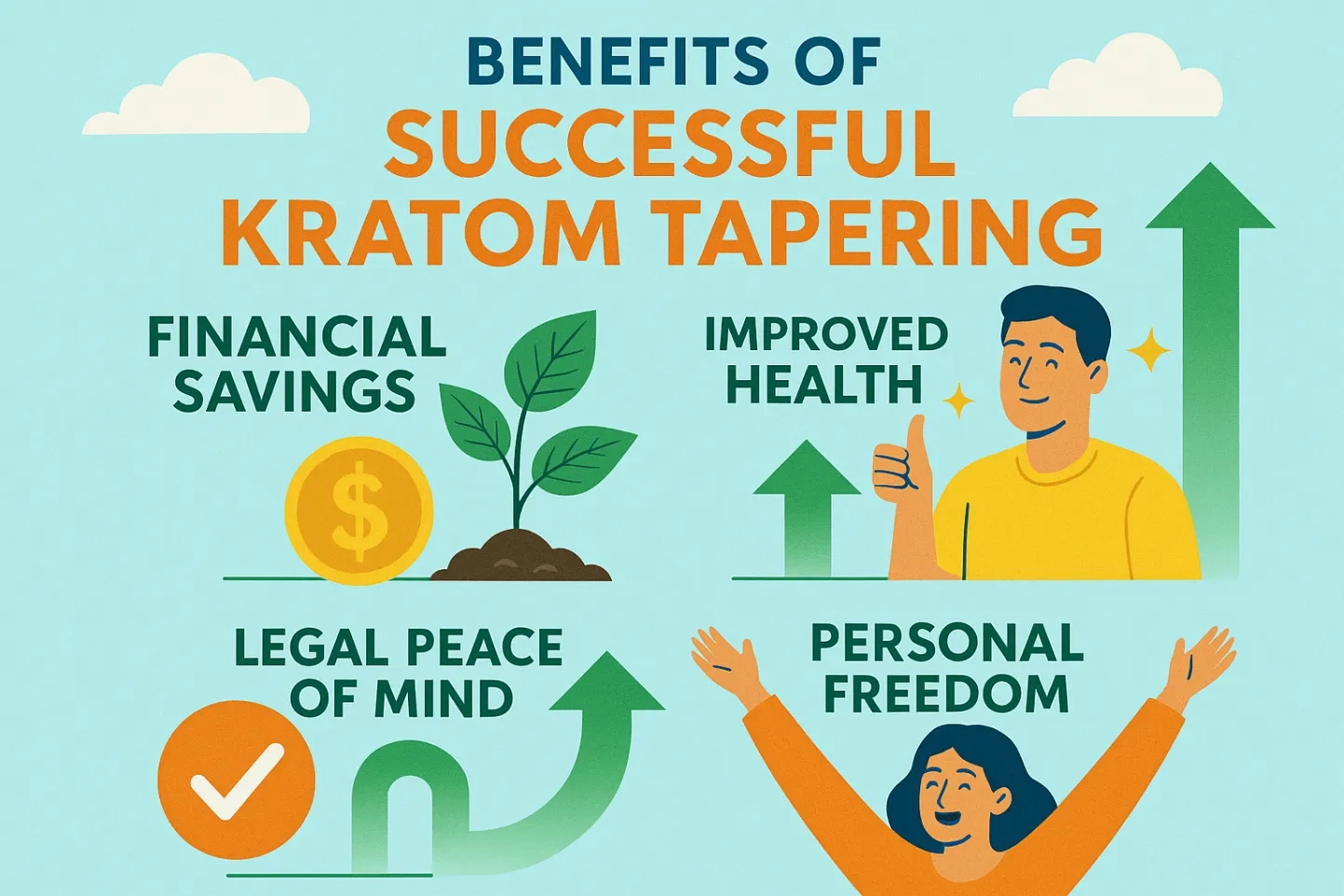
Understanding the financial aspects of kratom use can provide additional motivation for tapering. Kratom costs vary significantly based on quality, source, and quantity purchased.
Financial Benefits of Tapering:
- Reduced monthly kratom expenses
- Elimination of vendor research time and costs
- No more concerns about finding reliable sources
- Freedom from price fluctuations
Calculate your potential savings by tracking current kratom expenses and projecting the financial benefits of successful tapering.
Legal and Safety Considerations
Understanding Legal Status
Kratom legality varies by location, and state regulations continue evolving. Tapering off kratom eliminates concerns about:
- Changing legal status
- Travel restrictions
- Workplace policies
- Legal complications
Quality and Safety Issues
Regular kratom use involves ongoing quality concerns:
- Contamination risks
- Inconsistent potency
- Unknown additives
- Lack of regulation
Tapering eliminates these safety uncertainties while improving overall health and well-being.
Creating Your Support Network
Family and Friends
Educating Your Support System:
Help loved ones understand:
- What kratom is and why you're tapering
- Expected withdrawal symptoms and timeline
- How they can provide support
- When to seek professional help
Specific Support Requests:
- Emotional support during difficult moments
- Help with daily responsibilities during peak symptoms
- Accountability for tapering schedule adherence
- Assistance with healthy lifestyle changes
Online Communities and Resources
Benefits of Online Support:
- 24/7 availability
- Anonymous participation options
- Diverse experiences and perspectives
- Practical tips and strategies
Choosing Quality Communities:
Look for groups that emphasize:
- Evidence-based approaches
- Professional guidance respect
- Positive, supportive atmosphere
- Harm reduction principles
Professional Resources
Healthcare Providers:
- Primary care physicians
- Addiction medicine specialists
- Mental health counselors
- Psychiatrists (if needed for co-occurring conditions)
Finding Qualified Professionals:
- Research credentials and experience
- Ask about kratom knowledge
- Inquire about tapering support experience
- Verify insurance coverage and costs
Measuring Success and Progress
Short-term Milestones
Week 1-2 Achievements:
- Successful dose reductions without major setbacks
- Maintained daily functioning
- Implemented support strategies
- Tracked symptoms accurately
Week 3-4 Progress:
- Noticeable symptom improvement
- Increased energy and motivation
- Better sleep quality
- Reduced cravings intensity
Long-term Success Indicators
1-3 Month Markers:
- Stable mood without kratom
- Restored natural energy levels
- Improved relationships
- Financial savings accumulation
6-12 Month Goals:
- Complete physical recovery
- Established healthy coping mechanisms
- Strong support network maintenance
- Continued personal growth
Celebrating Achievements
Recognition Strategies:
- Track milestones in a journal
- Share successes with support network
- Reward progress with healthy treats
- Reflect on positive changes regularly
Avoiding Complacency:
- Continue healthy habits long-term
- Maintain support connections
- Stay aware of potential triggers
- Plan for ongoing personal development
Kratom Tapering FAQ
A safe kratom taper typically takes 2-4 weeks, depending on your current usage and individual tolerance. Reduce your dose by 25-50% every 3-5 days to minimize withdrawal symptoms while allowing your body to adjust gradually.
Common withdrawal symptoms include restlessness, irritability, muscle aches, runny nose, insomnia, and mood swings. These symptoms are typically mild to moderate and peak within 2-3 days before gradually subsiding.
Gradual tapering is strongly recommended over quitting cold turkey. Tapering reduces withdrawal intensity and increases your chances of success by allowing your brain chemistry to readjust slowly to lower kratom levels.
Stay hydrated, exercise regularly, maintain good sleep hygiene, and consider natural supplements like magnesium or valerian root. Hot baths, meditation, and staying busy with activities can also help manage discomfort during the taper process.
Start by tracking your current daily intake, then reduce by 25% every 3-5 days. Keep a journal to monitor symptoms and adjust the pace if needed. Set specific times for doses and stick to your schedule to maintain consistency throughout the taper.
Seek professional help if you experience severe depression, anxiety, or physical symptoms that interfere with daily life. Also consult a healthcare provider if you've tried tapering multiple times unsuccessfully or have underlying health conditions.
Conclusion
Learning how to taper off kratom successfully requires patience, planning, and persistence. The journey from dependence to freedom involves more than simply reducing doses—it requires comprehensive lifestyle changes, strong support systems, and evidence-based strategies for managing withdrawal symptoms.
The key elements for successful kratom tapering include creating a realistic reduction schedule, implementing natural symptom management techniques, building robust support networks, and maintaining focus on long-term health and well-being. While the process can be challenging, thousands of individuals have successfully tapered off kratom using these proven methods.

Michael is a cultural researcher with a deep interest in natural history and the ways people have interacted with plants throughout time. He enjoys studying how traditional practices have shaped everyday routines and values in different regions of the world. With a background in anthropology and cultural studies, Michael combines storytelling and research to highlight the connections between nature, heritage, and lifestyle in an engaging and thoughtful way.